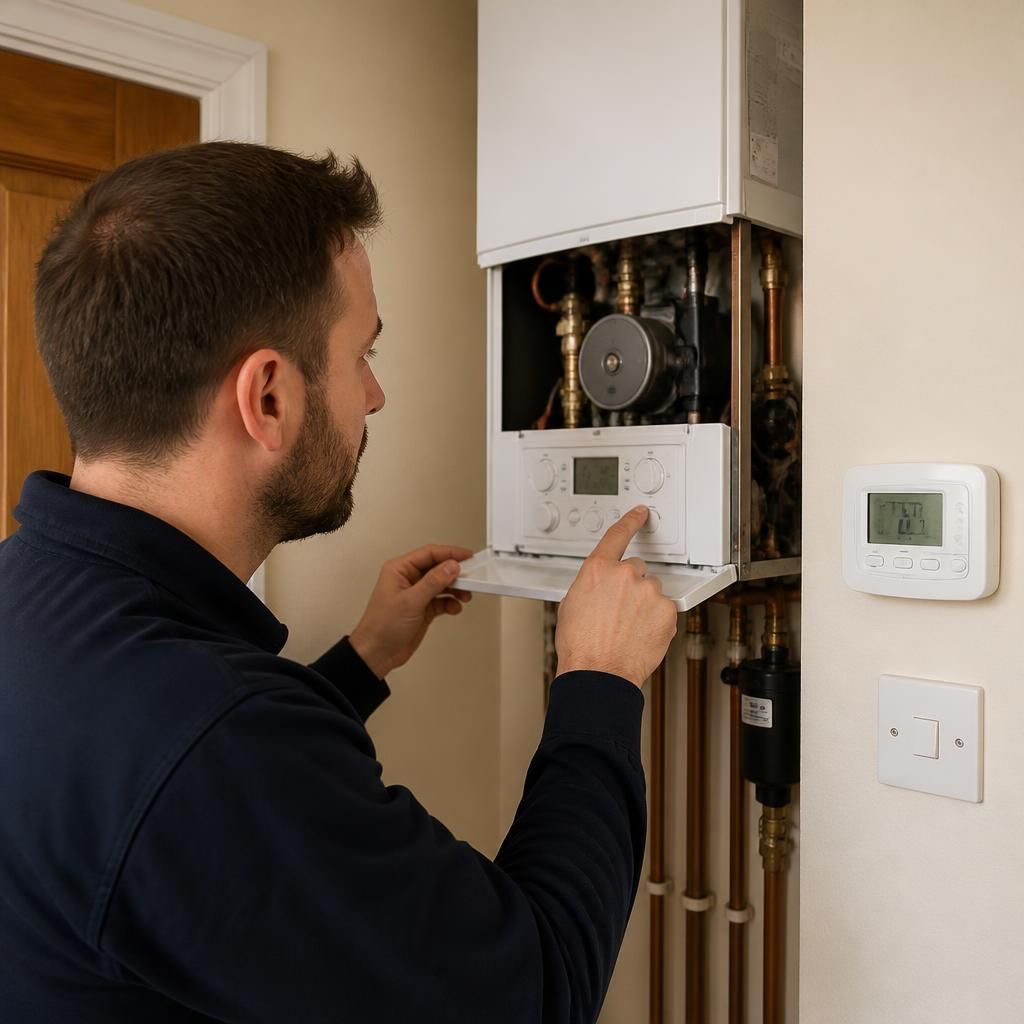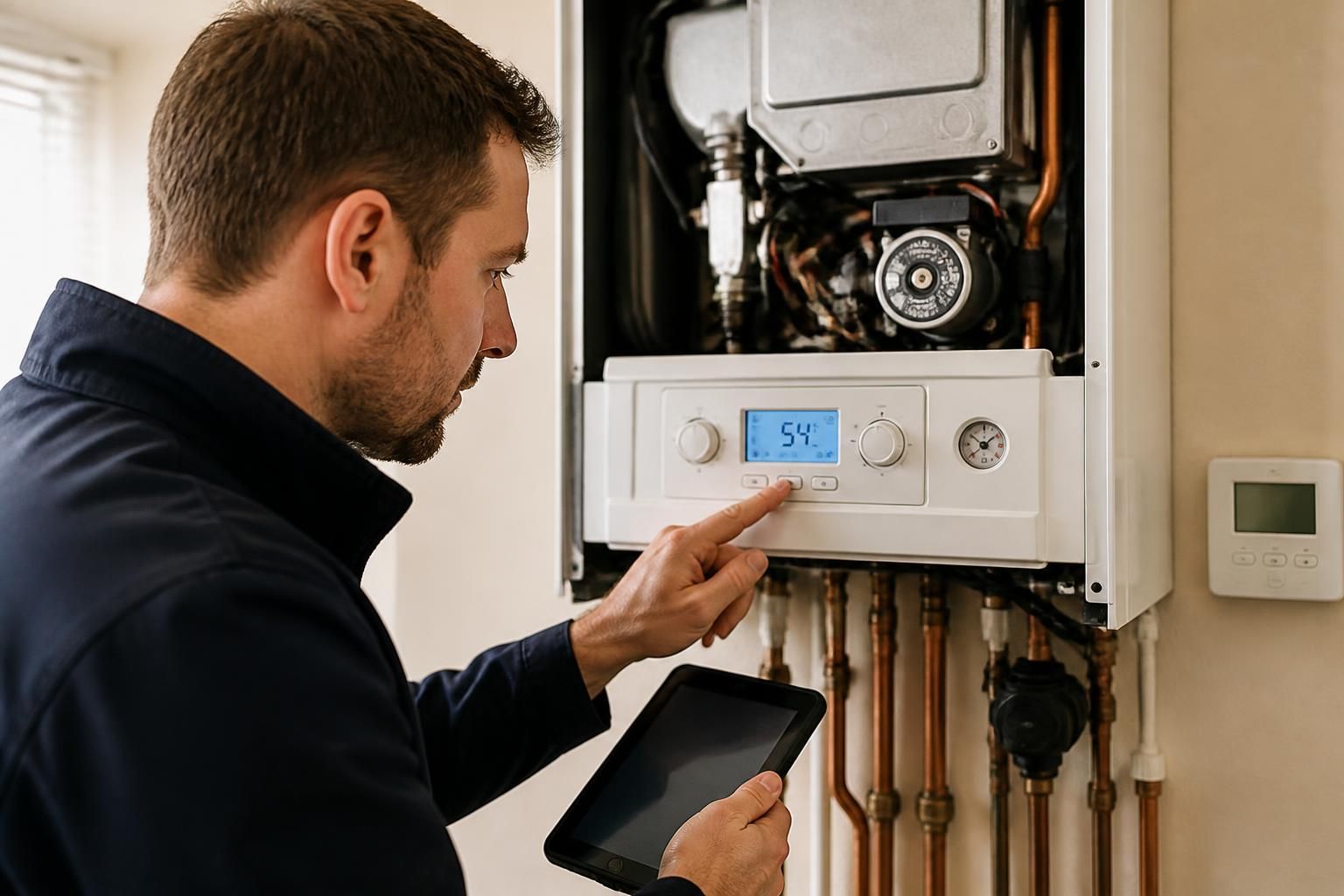
Diagnosis involves tracing the cause of a heating fault rather than replacing parts based only on a symptom. A qualified gas engineer can assess whether the problem is connected to the boiler, gas supply, heating controls, circulation, radiators or associated pipework, and can distinguish a gas-related fault from an electrical, plumbing or system-design issue.
What the engineer may investigate
- Boiler operation: The engineer may check ignition, burner operation, fault codes, pressure, temperature readings, safety controls and whether the boiler is responding correctly to demand.
- Heating controls: The programmer, room thermostat, valves and wiring can prevent the boiler from operating properly even when the boiler itself is not defective.
- System pressure: Low or repeatedly falling pressure may indicate a leak, an expansion vessel problem, a pressure-relief issue or another underlying fault. Adding pressure without identifying the cause may only provide a temporary improvement.
- Water circulation: Pumps, valves, air, sludge and blockages can affect how heated water moves through the system. This can result in some radiators remaining cold, uneven heating or unusual noises.
- Radiators and pipework: Cold areas, leaks, corrosion and restricted flow can help show where the system is failing, although the visible symptom is not always located at the source of the problem.
- Gas and combustion safety: Where relevant, the engineer can carry out appropriate checks on the gas supply, combustion and flue arrangement. These checks help determine whether the appliance is operating safely as well as whether it is producing heat.
Common symptoms and possible causes
A boiler that does not fire may have a control, ignition, sensor, gas supply or safety-lockout fault. A boiler that fires but produces little useful heat may have circulation problems, incorrect settings, a faulty diverter valve or a restricted system. Radiators that are cold at the top may contain air, while cold areas at the bottom can be associated with deposits or poor circulation. Repeated pressure loss, banging, kettling, leaks or a pilot that keeps going out should be investigated rather than treated as routine behaviour.
These symptoms are not conclusive on their own. The same sign can have several causes, so a proper diagnosis normally combines the homeowner’s description with visual inspection, system checks and relevant test results.
What information to provide
Before the appointment, note what the heating is doing and when the problem occurs. Useful details include whether hot water is also affected, whether the issue is limited to particular radiators, any displayed fault code, unusual sounds, changes in pressure, visible water and whether the problem began after controls or system components were changed. Do not remove the boiler casing or attempt to adjust gas components yourself.
When a gas engineer is appropriate
A gas engineer is the appropriate professional where the fault may involve a gas boiler, gas appliance, flue, combustion or gas pipework. Gas-related work and safety checks must be undertaken by an engineer with the required UK qualification and registration. If the investigation identifies a fault outside the engineer’s permitted scope, such as a wider electrical or structural issue, the engineer can explain what further specialist input is needed.
If there is a smell of gas, suspected combustion fumes or a carbon monoxide alarm, treat this as a safety concern rather than an ordinary heating fault. Leave the property if necessary, avoid creating flames or sparks, and follow the relevant emergency gas-safety guidance. Do not continue using an appliance that has been identified as unsafe until it has been assessed by a suitably qualified professional.
A diagnosis should explain the likely cause, the safety implications, the work required and whether repair, adjustment, cleaning, replacement or further testing is appropriate. This gives the homeowner, tenant or landlord a clearer basis for deciding how to proceed instead of relying on trial-and-error part replacement.