A gas engineer checks more than whether an appliance can be connected and switched on. During installation, they verify that the work complies with current safety requirements, the manufacturer’s instructions and relevant building regulations, then carry out detailed checks to confirm that the appliance is ready for use.
Before starting, the engineer will review the appliance specifications and installation instructions. This establishes the required gas supply, electrical arrangements, controls, clearances and discharge routes. They may also inspect the existing installation for issues that could affect the new appliance, such as unsuitable pipework, poor access, damaged components or an inadequate electrical supply.
- Location and access: The position must allow the appliance to be operated, maintained and inspected safely. The engineer checks required clearances from walls, cupboards and combustible materials, along with access to isolation points and service components.
- Pipework and isolation: The gas pipework is assessed for its condition, routing and suitability for the appliance. Isolation valves must be accessible, correctly installed and appropriate for future servicing.
- Electrical connections: Where the appliance needs electricity, the engineer checks that the supply, switch and connections are suitable. They also consider earthing, polarity and the position of electrical controls in relation to the appliance.
- Condensate and discharge arrangements: For appliances that produce condensate, the drain route must be correctly designed, securely connected and protected against problems such as freezing or blockage where relevant.
- Controls and system compatibility: The engineer checks that thermostats, programmers, timers and other controls are compatible and connected correctly. With a boiler installation, they may also assess whether the heating and hot-water system is suitable for the appliance and operating pressure.
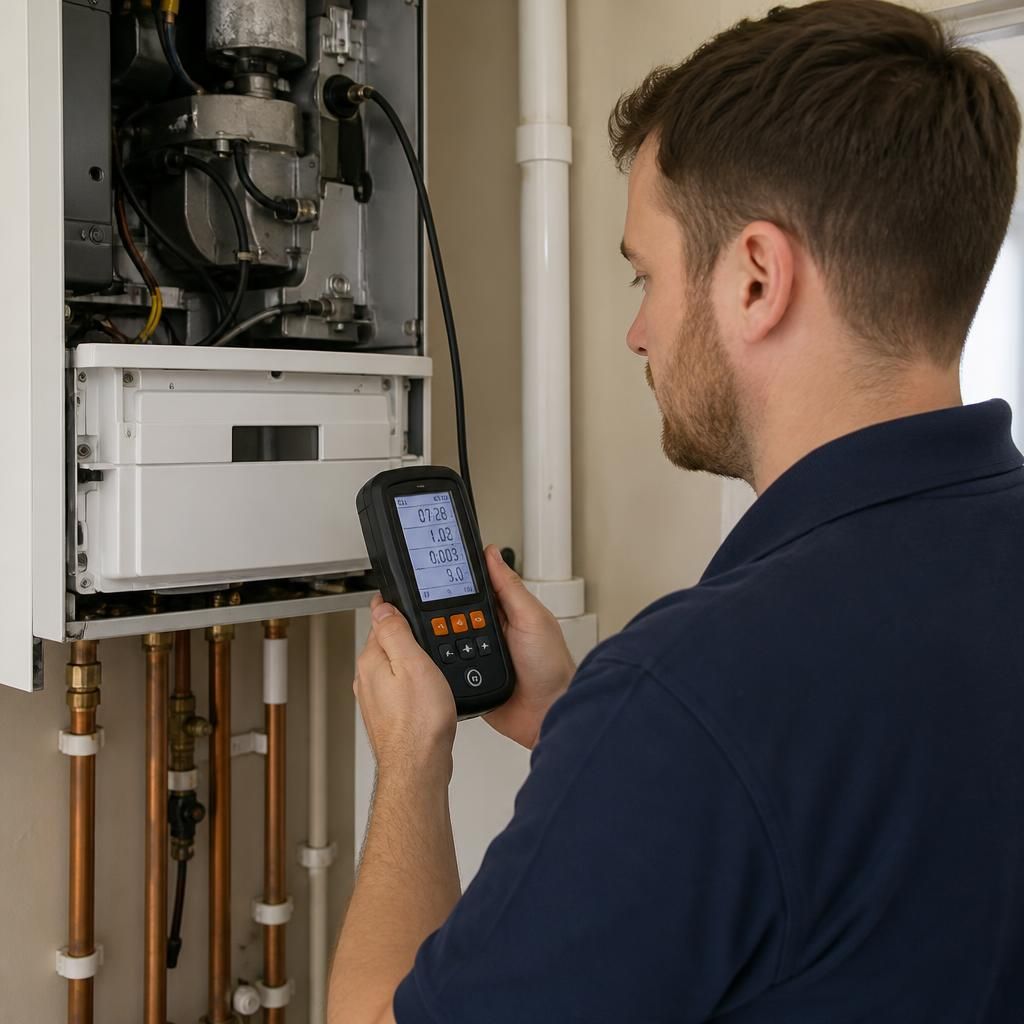
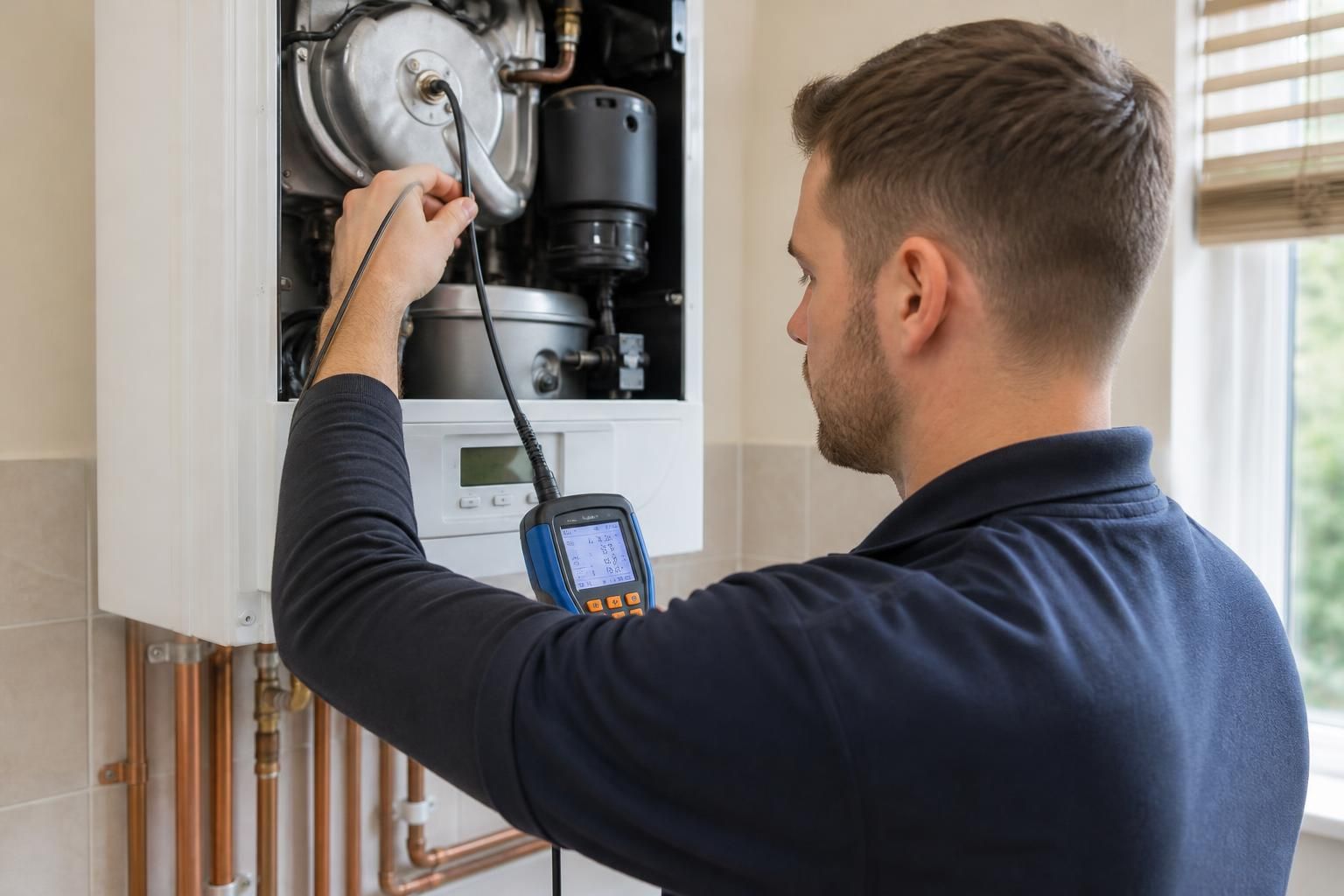
Testing continues after the physical installation is complete. The engineer checks the appliance’s gas rate and combustion performance using appropriate test equipment. This helps confirm that it is receiving the correct supply and burning fuel properly. Safety controls are also tested, including the appliance’s response if the flame fails, the supply is interrupted or another fault condition occurs.
Where a boiler or other condensing appliance is installed, the engineer may check operating temperatures, pressure and the functioning of relevant pumps, expansion components and discharge arrangements. These checks help identify installation problems that may not be obvious when the appliance first starts.
The engineer should record the installation and provide the relevant documentation. This can include commissioning details, appliance information, test results and instructions for future servicing. For some gas appliances, the installation may also need to be notified under the applicable building regulations, with the homeowner receiving the appropriate compliance record.
A competent engineer will identify and explain any defects that fall outside the installation itself. For example, they may find damaged surrounding materials, inaccessible controls, outdated components or signs that the wider system needs attention. These issues should be distinguished from work that is essential to install the appliance safely, so the customer can make an informed decision.
After the checks are complete, the appliance should start, operate and shut down in accordance with its instructions. The customer should understand the main controls, isolation points, warning indicators and basic maintenance requirements. If the engineer finds a dangerous defect or cannot verify safe operation, the appliance should not be left in use until the issue has been dealt with appropriately.
For homeowners, landlords and tenants, keeping the installation record and arranging servicing at the interval recommended for the appliance provides useful evidence of its maintenance history. Any unusual smell, repeated shutdown, visible damage or unexplained change in performance should be investigated by a suitably qualified gas engineer rather than ignored.