A central-heating leak is identified by assessing how the system behaves and then testing the heating circuit with suitable detection equipment. This can establish whether water is escaping from visible components, buried pipework, radiators, valves, the boiler connections or the heating circuit beneath a floor.
Central heating systems are usually sealed and pressurised. When water escapes, the pressure may fall as the system cools, requiring repeated topping-up. However, pressure loss does not prove that a pipe is leaking. A faulty expansion vessel, pressure relief valve, automatic air vent or boiler component can produce similar symptoms, so a proper diagnosis should distinguish between a leak and a system fault.
A domestic leak detection assessment may include:
- Visual inspection: checking radiators, radiator valves, exposed pipework, the boiler area, airing cupboards and connections for corrosion, moisture or deposits.
- Pressure testing: observing how the heating circuit responds under controlled conditions to help determine whether water is escaping.
- Isolation testing: separating parts of the system where possible, such as radiators or individual circuits, to narrow down the location.
- Acoustic detection: listening for the sound of water escaping from concealed pipework beneath floors or inside walls.
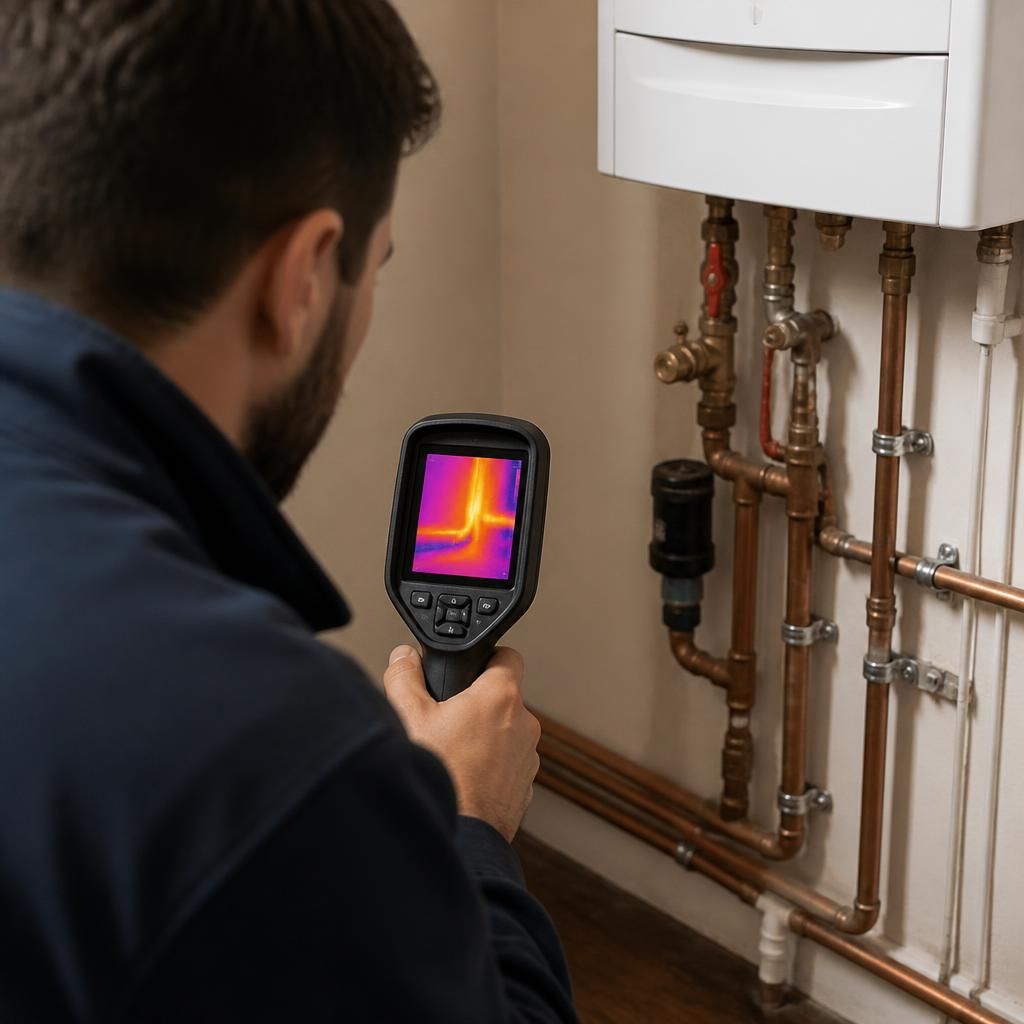
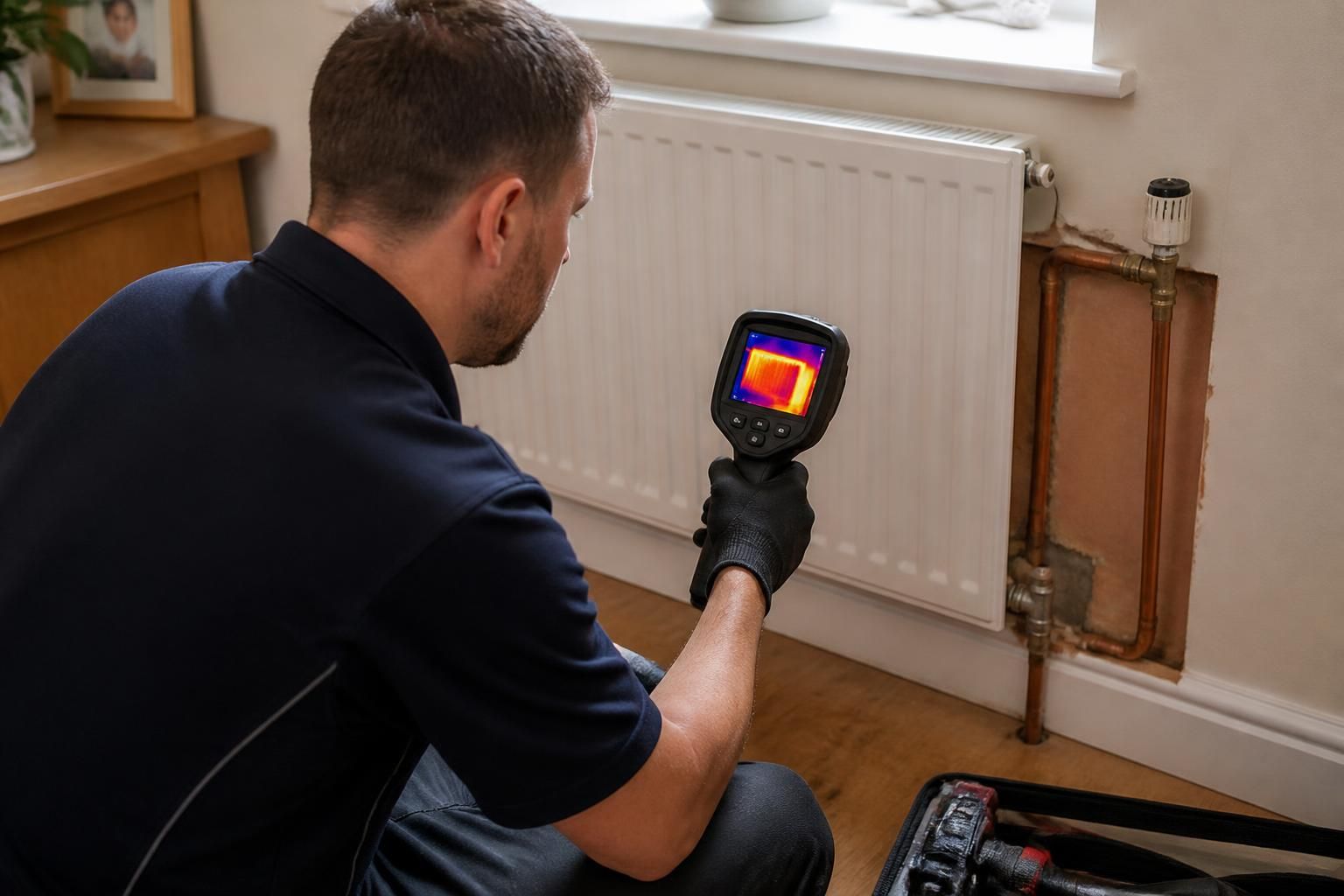
- Thermal imaging: looking for temperature patterns that may indicate warm water travelling through an unexpected area or collecting beneath a surface.
- Tracer gas or moisture testing: using specialist methods to investigate concealed leaks where ordinary inspection cannot identify the source.
The most appropriate method depends on the type of heating system, its layout, the pipe materials and whether the suspected leak is accessible. A concealed leak can be difficult to locate because the water may travel along joists, insulation or screed before becoming visible. The first damp mark is therefore not always directly above the damaged pipe.
There are also situations where apparent heating-system water loss has another explanation. Discharge from a pressure relief pipe, water released during repeated boiler filling, a leaking radiator valve or condensation around the boiler can be mistaken for a central-heating leak. A qualified engineer should examine the system before floors or walls are opened, particularly where the boiler itself may be involved.
Finding the source accurately can reduce unnecessary disruption. Once the leak location is established, the repair may involve replacing a valve or fitting, repairing accessible pipework, lifting a limited section of flooring or planning a more extensive repair to concealed pipework. Detection identifies the likely source; it does not by itself repair the failed component.
If the system is losing pressure repeatedly, avoid continually refilling it without finding the cause. Keep the boiler and surrounding area accessible, note when pressure changes occur, and check for visible water without removing boiler covers or interfering with gas components. A certified domestic gas engineer or appropriately qualified plumbing professional can then determine whether the problem is a heating leak, a boiler fault or another pressure-related issue.
Ideal Plumbing Services provides domestic leak detection and central-heating plumbing support for homeowners, landlords and tenants in Birmingham and the wider West Midlands, including investigation of concealed leaks where the source is not immediately visible.