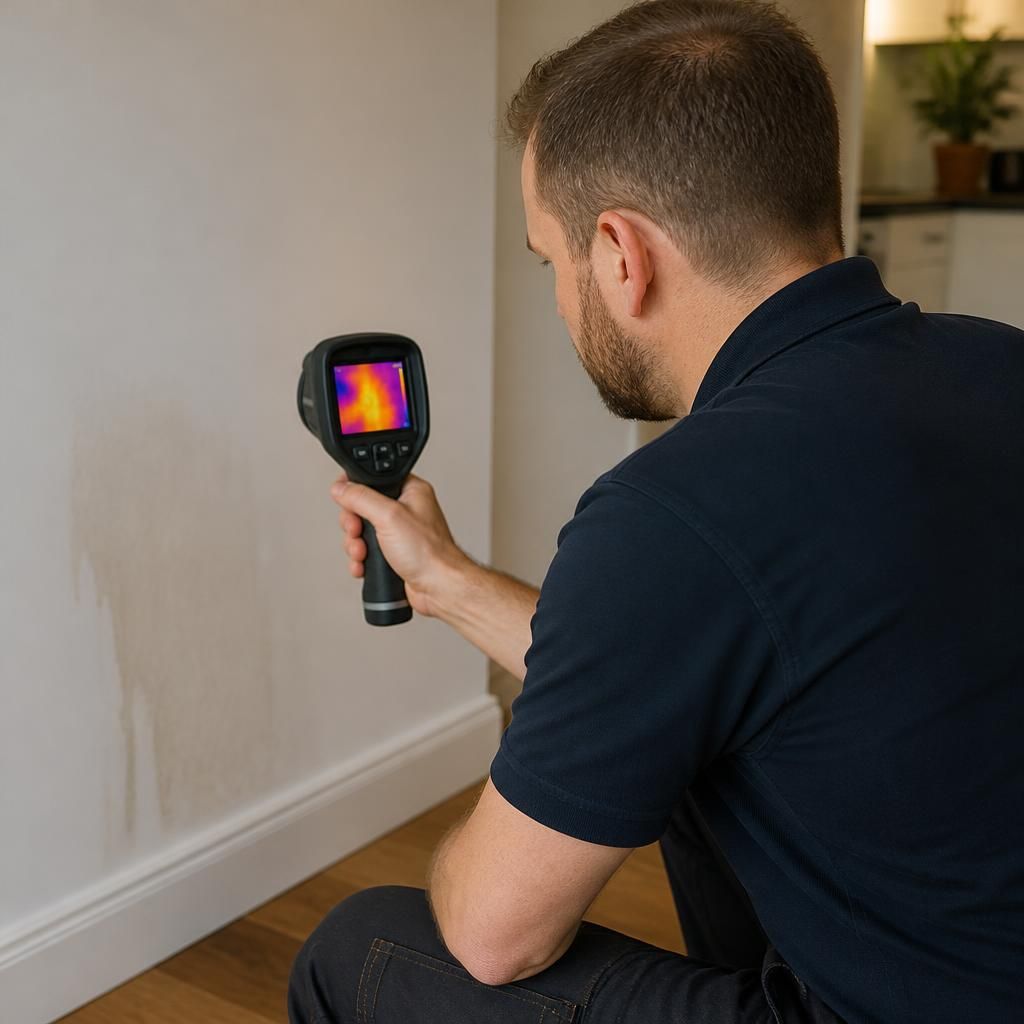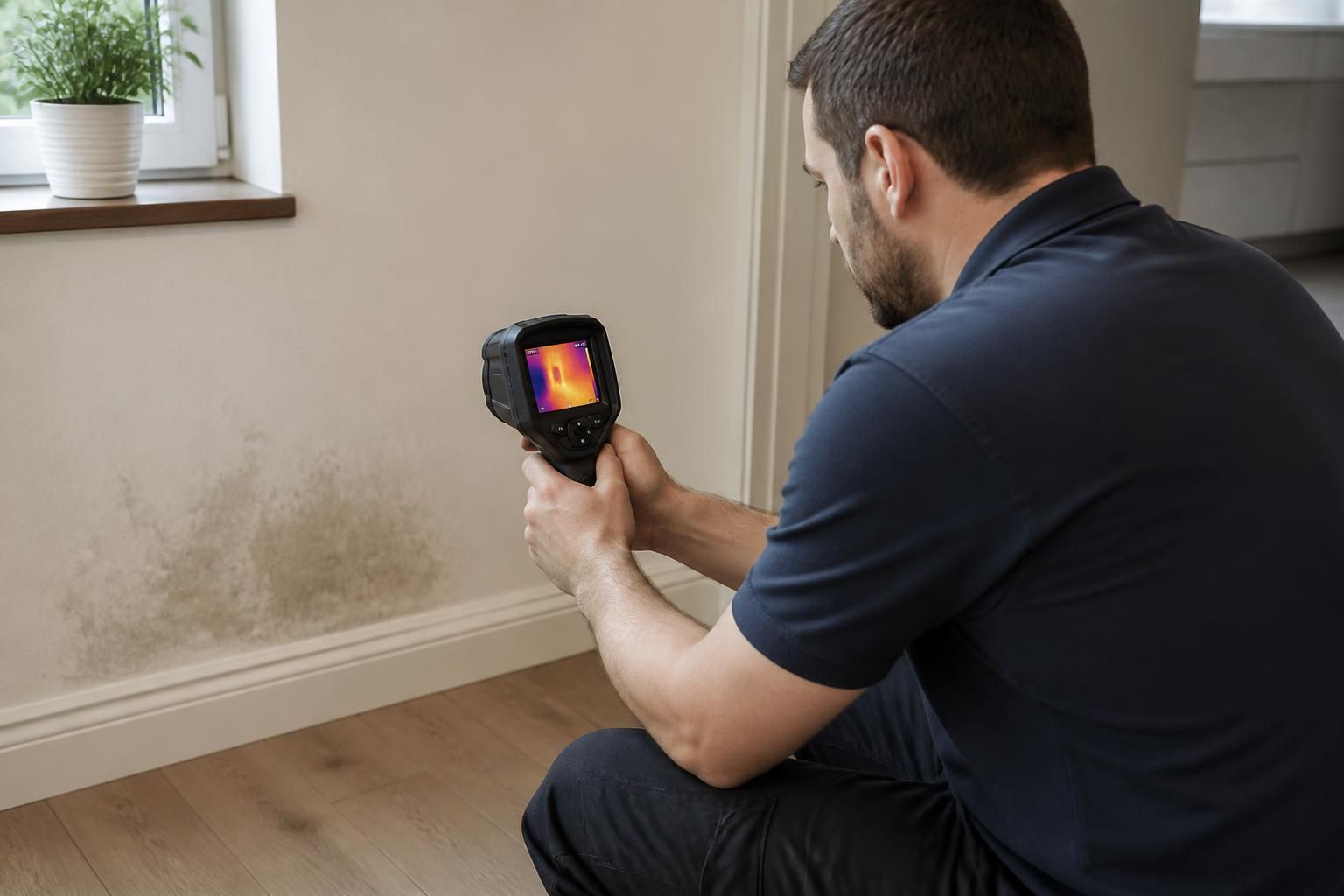
In most cases, domestic leak detection does not damage walls or floors. The purpose of the investigation is to identify the likely source while avoiding unnecessary lifting, drilling or removal of finishes. Any disturbance is generally limited to a small, carefully chosen access point where the pipe or fitting needs to be inspected or repaired.
Leak detection and leak repair are separate stages. Locating a hidden leak may leave plaster, flooring and tiling untouched, but reaching the failed section can require some opening-up. This is more likely where a pipe is enclosed beneath a solid floor, behind a tiled wall, inside a boxed-in service void or beneath fixed flooring. The amount of access required depends on the pipe layout, the construction of the property and whether the exact failure point can be confirmed.
A professional investigation normally starts with visible checks and information about the symptoms. The plumber may assess areas such as:
- staining, bubbling paint or damaged plaster;
- loose, lifting or discoloured flooring;
- unexplained dampness, mould or musty smells;
- changes in water pressure or boiler pressure;
- unusual sounds from pipework or plumbing fittings; and
- water appearing some distance from the actual leak.
Water can travel through insulation, voids, screed and timber before becoming visible, so the wettest area is not always directly above the failed pipe. A targeted investigation helps distinguish the point where water is showing from the point where it is entering the building fabric. This reduces the risk of removing sound flooring or opening the wrong section of wall.
The risk of minor surface disturbance is higher in certain situations. Older properties may have altered pipe routes, solid floors or several layers of wall and floor finishes. Leaks below tiled areas can be difficult to access without affecting grout or individual tiles, while pipework beneath laminate, carpet or engineered flooring may be partly covered by adhesive, skirting or fitted units. A concealed central-heating pipe can also require different checks from a leak on a visible supply pipe.
Before any invasive work is considered, ask the plumber to explain:
- what evidence indicates the suspected leak location;
- whether the proposed access is for investigation, repair or both;
- which finishes may need to be lifted, drilled or removed;
- whether the access point can be positioned in a less visible area; and
- what reinstatement work will be needed afterwards.
It is also sensible to move belongings away from the affected area and tell the plumber about underfloor heating, electrical cables, recent building work and any known alterations to the pipework. These details can affect how the area is examined and help avoid avoidable damage.
If water is actively spreading, delaying investigation can cause more harm than the inspection itself. Prolonged dampness may affect plaster, timber, flooring, insulation and decoration, and can encourage mould growth. Finding the source accurately allows the affected supply or heating circuit to be isolated and the repair to be planned around the actual fault rather than removing materials on suspicion.
After the leak has been repaired, wet materials may still need time to dry. A surface can look dry while moisture remains behind plaster, beneath flooring or within a cavity. Further moisture checks can help determine whether drying is progressing and whether decoration or flooring should wait. Any damaged materials that cannot be dried or safely retained may need separate repair or replacement.
Therefore, leak detection itself is designed to minimise disturbance, but it cannot guarantee that walls or floors will never need to be opened. The key consideration is whether the evidence supports a precise access point and whether the proposed work is proportionate to the suspected leak.