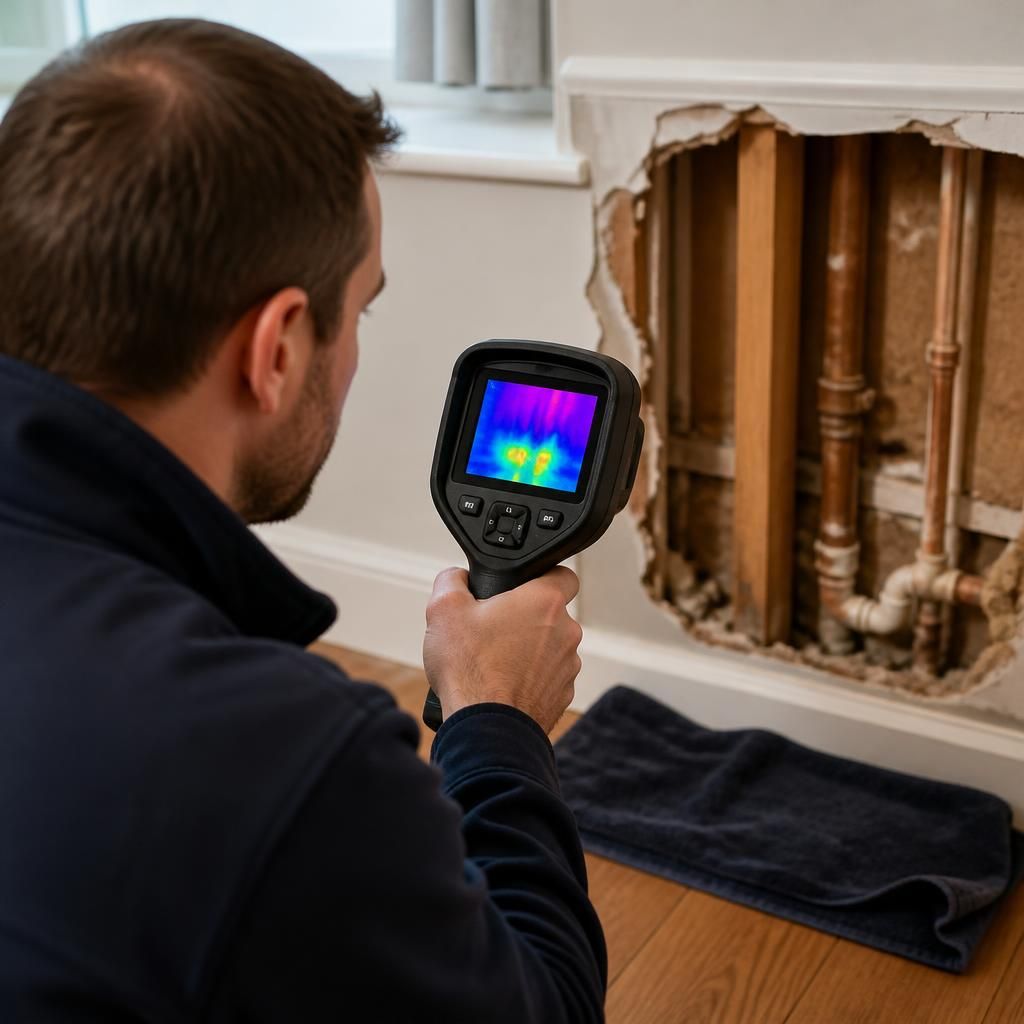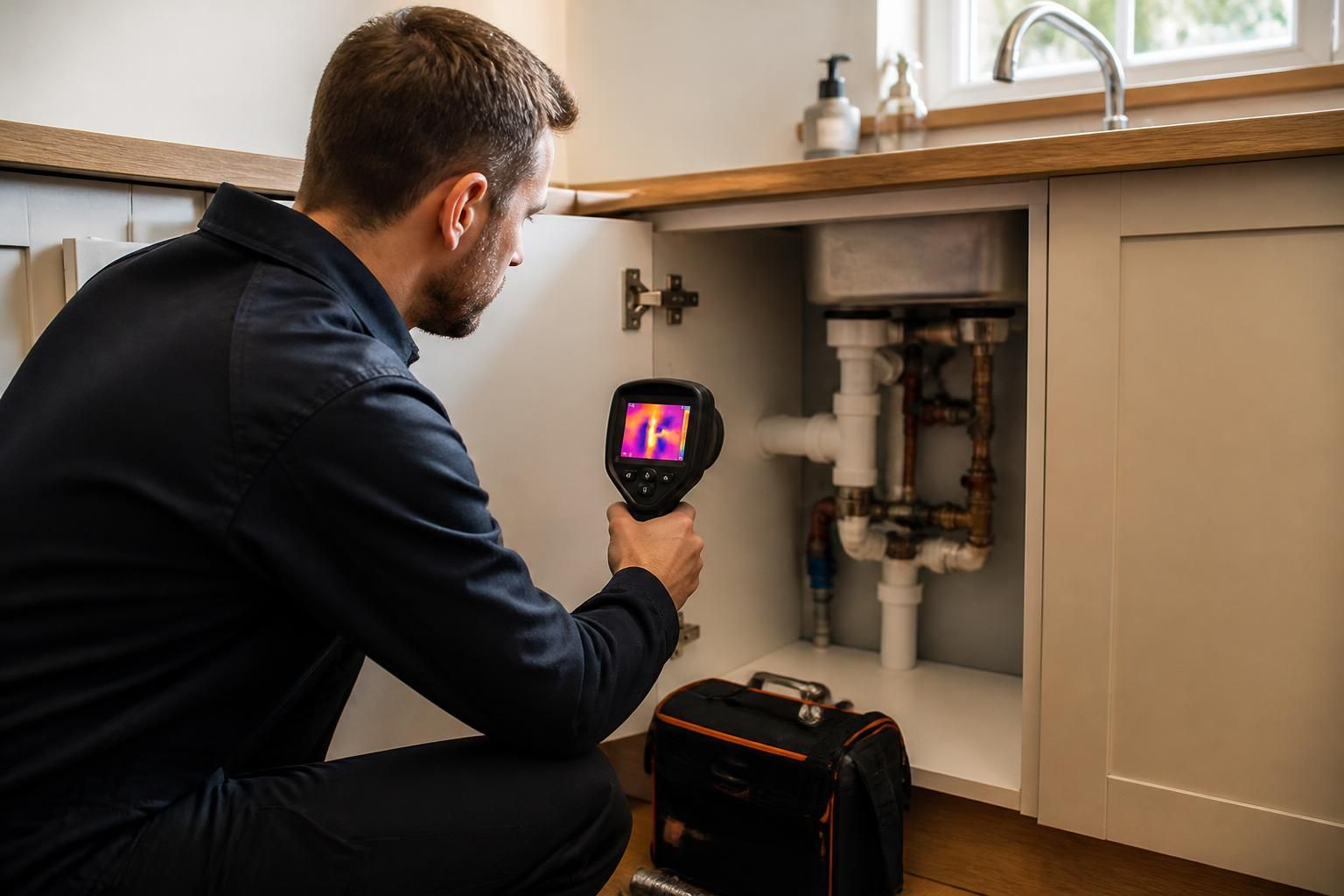
Home insurance may contribute towards the cost of investigating a domestic water leak, but the policy usually separates the cost of finding the source from the cost of repairing the resulting damage. The exact position depends on the wording, the circumstances of the leak and whether the claim is made under buildings insurance, contents insurance or another section of the policy.
What may be included
- Trace and access: Some policies cover reasonable work to locate a hidden leak and gain access to it, such as lifting flooring or opening part of a wall. This does not necessarily mean that every diagnostic inspection is insured.
- Damage caused by escaping water: The policy may cover damage to fixed parts of the property, including plaster, floors, ceilings and fitted units, where the escape is an insured event.
- Contents damage: Furniture, carpets and personal belongings may fall under contents insurance rather than buildings insurance. The relevant terms and excess can be different.
- Making good: Some policies include reinstatement after investigative access, while others limit, exclude or condition this work. Check whether decorating, tiling, flooring and cabinetry are included.
Insurance does not usually pay for every form of leak detection or every plumbing repair. A distinction is often made between a sudden escape of water and a gradual leak caused by deterioration, corrosion, defective sealant, failed grout, poor maintenance or wear and tear. The pipe or fitting that caused the problem may also be excluded even where damage to the surrounding property is covered.
Policies can also contain exclusions or special conditions relating to unoccupied homes, freezing, faulty workmanship, renovations, appliances, underground services and damage that was not reported or mitigated promptly. If a property is rented, the landlord's buildings policy and the tenant's contents policy generally deal with different types of loss. A tenant should not assume that the landlord's insurance covers personal belongings or temporary accommodation.
Before arranging investigative work, check:
- Whether the policy includes trace-and-access or an equivalent section.
- Whether the suspected cause is an insured escape of water rather than gradual deterioration.
- Whether the insurer requires prior authorisation or use of an approved contractor.
- The policy excess, sub-limits and any restriction on investigative or reinstatement costs.
- Whether the claim could affect future premiums, renewal terms or a no-claims discount.
Contact the insurer or claims administrator as soon as a significant hidden leak is suspected, following the policy's instructions. Take sensible steps to limit further damage, such as turning off the water supply where safe, protecting belongings and recording visible damage. Avoid removing finishes or commissioning extensive opening-up work before receiving guidance unless action is necessary to prevent worsening damage. Keep photographs, dated notes, invoices and reports, as these may help establish the source, extent and timing of the loss.
An insurer may ask for a leak detection report identifying the suspected source, the methods used, areas inspected and any recommended access or repairs. A non-invasive survey can sometimes narrow down the location before any opening-up is considered, but it cannot guarantee that every concealed defect will be identified without access. The report itself may be treated differently from subsequent plumbing, drying or building work, so ask how each part will be assessed.
If the insurer declines the cost, you can request the reason in writing and compare it with the relevant policy clause. Check whether the decision concerns the detection fee, the source of the leak, the resulting damage or reinstatement. Where the policy is unclear, use the insurer's complaints procedure and seek independent advice before authorising substantial work.
A specialist plumbing professional can investigate the leak and explain the likely cause and required repair, but the insurer decides whether the work is covered. Ask for a clear written breakdown distinguishing detection, access, repair and making-good costs. This makes it easier to submit the appropriate information and identify any amount that remains your responsibility.