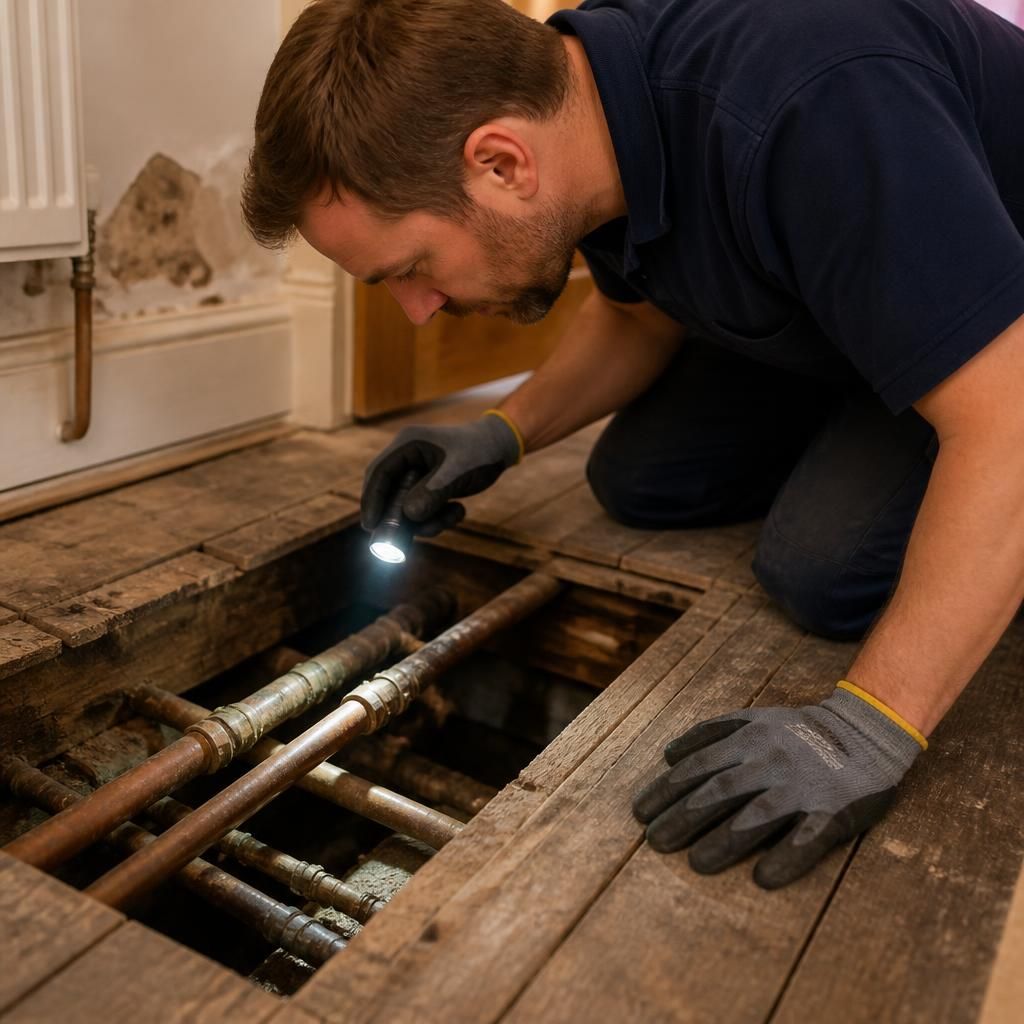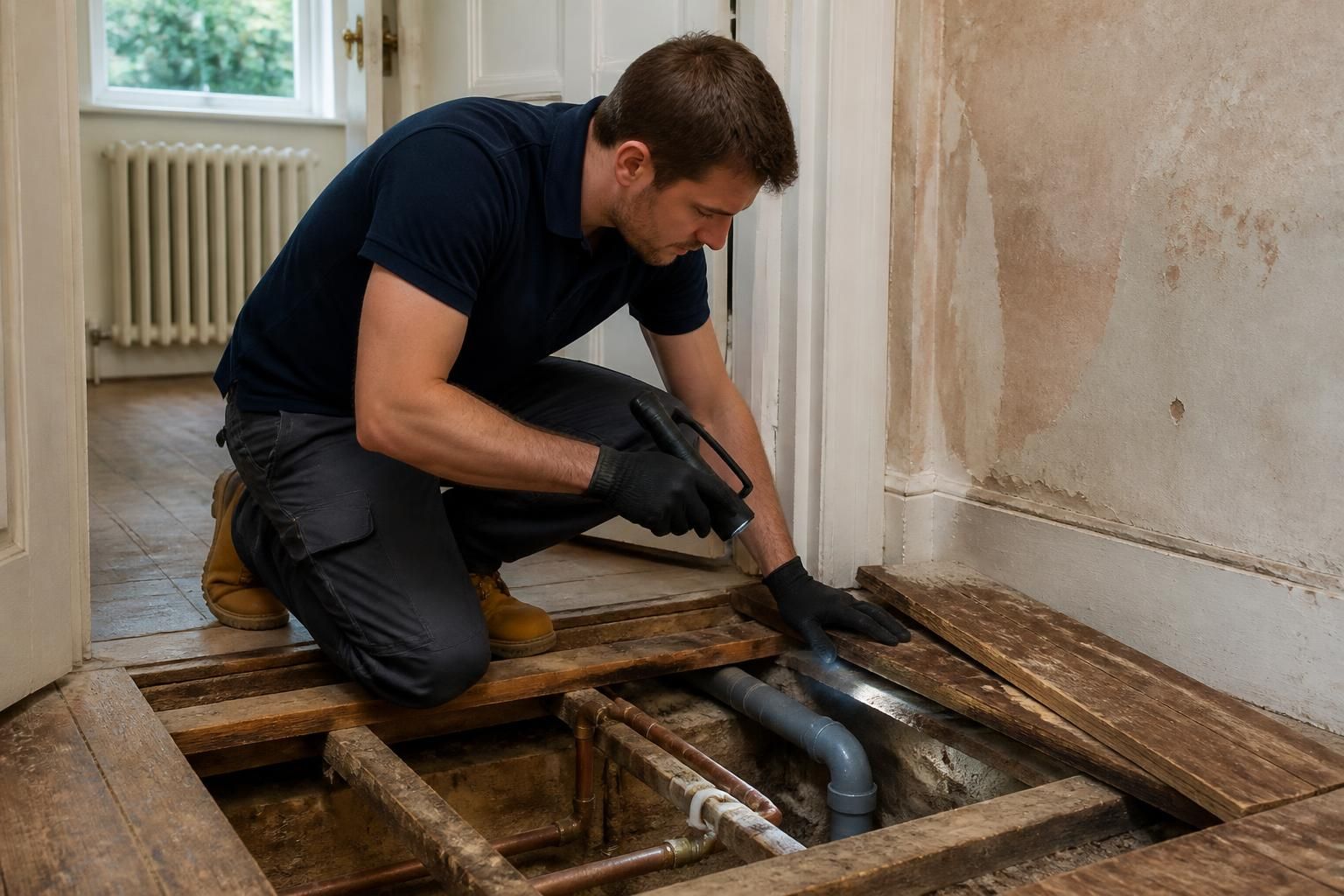
Older properties are well suited to professional domestic leak detection because their plumbing may include concealed sections, previous repairs and several generations of pipework. A specialist assessment can identify the likely source and type of leak while taking account of the building’s construction, rather than relying only on visible staining or removing large areas of finishes.
Ageing homes often present particular diagnostic challenges:
- Pipework may have been altered or extended during renovations, making the current layout different from the original plans.
- Older materials can react differently to pressure, temperature and corrosion, affecting how a leak develops.
- Solid floors, suspended timber floors, tiled surfaces and thick plaster can make water movement difficult to trace visually.
- Moisture may travel along joists, beneath screed or behind walls before appearing some distance from the failed fitting.
- Previous leaks may have left damp materials that make it harder to distinguish an active leak from historic damage.
An investigation normally begins with a review of the symptoms and the plumbing arrangement. The engineer may check visible fittings, isolation valves, water pressure, boiler and heating connections, exposed pipework and areas where moisture has been detected. This helps establish whether the problem is likely to involve the mains supply, hot or cold water system, central heating circuit, bathroom or kitchen pipework, or drainage.
Different detection techniques can then be used according to the property and suspected fault. Acoustic equipment may help identify the sound of pressurised water escaping from a pipe. Moisture meters can compare readings across walls, floors and ceilings, while thermal imaging may show temperature differences associated with hot-water or heating leaks. Tracer gas or pressure testing can be useful where the pipe route is unclear or the leak is too small to produce obvious visible evidence. No single method is suitable for every older building, so findings should be interpreted alongside the construction and plumbing layout.
Older homes may contain materials or features that require additional care. Fragile plaster, decorative flooring, original joinery and ageing pipe supports should be considered before access is created. If a section must be opened, targeted access is generally preferable to removing finishes speculatively. Detection can narrow down the likely location, but it cannot always identify the exact failure point where water has travelled through several building materials. Some opening-up may therefore still be needed to confirm the repair.
There are several signs that justify arranging an assessment rather than waiting for the problem to become obvious:
- A water meter continues to register use when all outlets are turned off.
- Water pressure changes without an obvious reason.
- Staining, bubbling paint, lifting flooring or persistent damp smells appear.
- A boiler or central heating system repeatedly loses pressure.
- Floorboards, plaster or cupboards become damp in areas close to pipe routes.
- The sound of running or hissing water is present when taps and appliances are not being used.
It is important to distinguish an active leak from condensation, penetrating damp, defective seals and drainage problems. These can produce similar marks but need different remedies. A proper assessment should therefore record moisture patterns and test relevant pipework before a repair is recommended. Simply treating the visible stain may leave the underlying source unresolved.
Domestic leak detection is also useful after a repair or alteration in an older home. Testing can help confirm whether an isolated section remains pressurised and whether moisture readings are changing as expected. Where the source cannot be confirmed with reasonable confidence, the findings should be explained clearly, including any limitations and the least disruptive options for further investigation.
In summary, the age of a property does not make leak detection unsuitable. It makes a property-specific approach more important. A combination of plumbing checks, moisture assessment and appropriate specialist equipment can help separate current water loss from historic damp, identify the most likely fault area and guide proportionate repair work without unnecessary disturbance to the building.