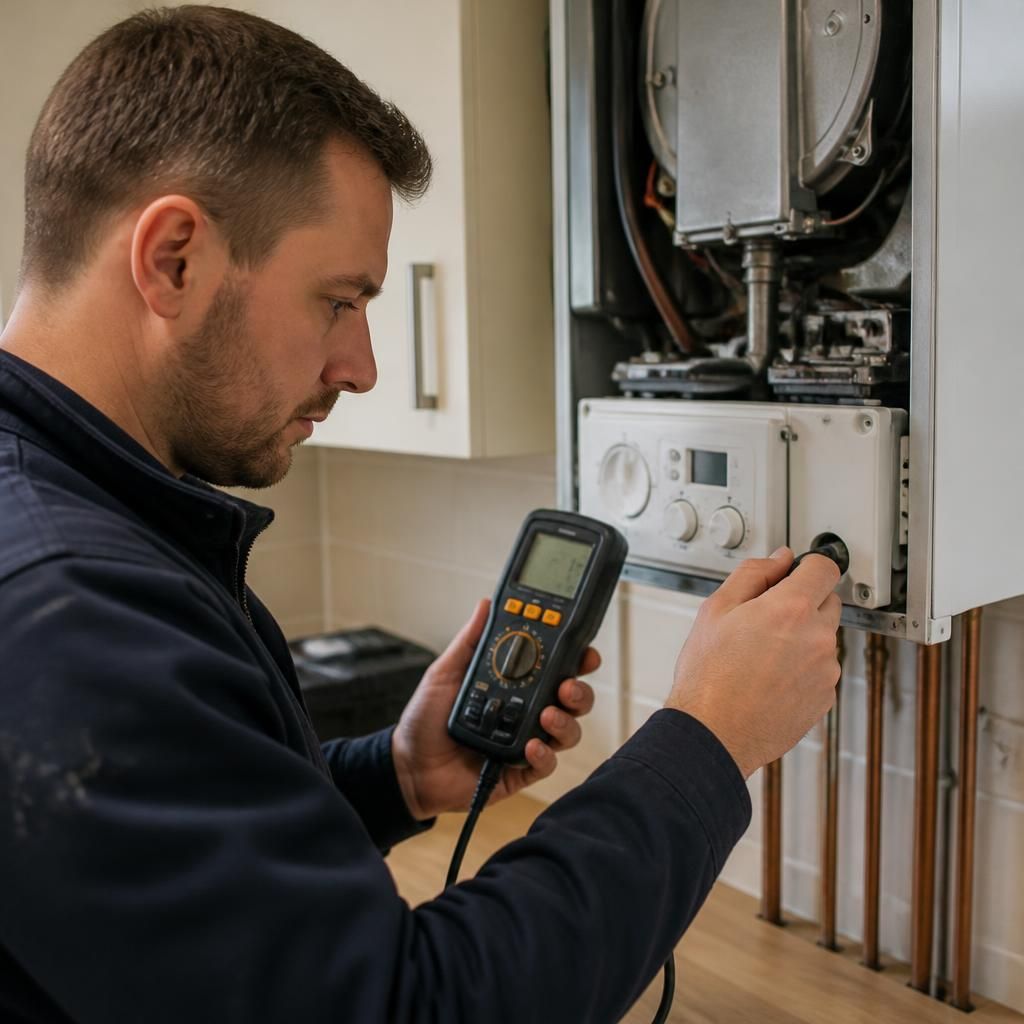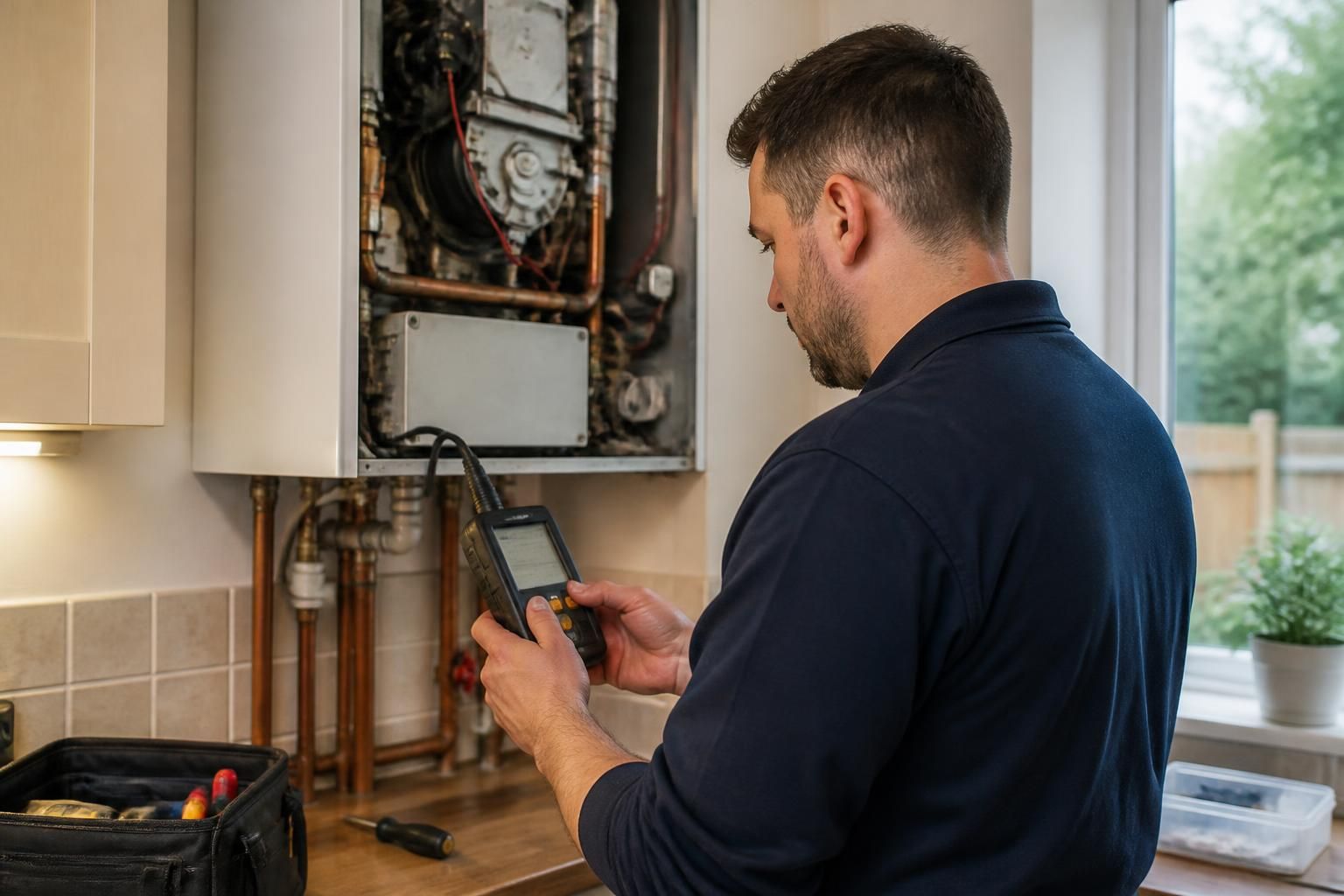
Before a domestic gas fitter arrives, prepare the relevant information, documents and household arrangements without carrying out any gas work yourself. Good preparation helps the fitter identify the fault, confirm what work is needed and complete the required safety checks properly.
Have the key details ready. Make a short note of:
- Which appliance or part of the gas installation is affected.
- When the problem began and whether it happens continuously or intermittently.
- Any recent repairs, servicing or changes to the appliance or surrounding installation.
- The appliance make, model and, where available, its serial number.
- Any previous service records, installation paperwork or safety certificates.
Photographs of a display code, control panel or visible damage can also be useful, provided you can take them without touching unsafe components or removing covers. Do not dismantle an appliance to find its model number.
Check what the appointment involves. Confirm whether the visit is for diagnosis, repair, servicing, installation or a safety inspection. If you have been given an estimate or description of the work, compare it with the symptoms you have recorded and ask which parts of the job are included. You can also ask in advance whether additional work may be recommended if the fitter identifies a separate safety issue.
Prepare information about the property. Tell the fitter about relevant access arrangements, recent building work and any restrictions affecting the installation. For example, alterations to cupboards, ventilation, flues or walls may affect how an appliance can be inspected. If the property is rented, contact the landlord or managing agent before approving work that changes the appliance, pipework or flue. The landlord may need to arrange the work or retain the resulting certificate.
Keep the household safe during the visit. Keep children and pets away from the work area, and avoid using the appliance until the fitter has assessed it. Do not relight, adjust, disconnect or attempt to repair a gas appliance, meter or pipework unless specifically instructed by a suitably qualified professional. Do not cover vents or flues, and do not move an appliance to create access if doing so could disturb a gas connection.
Organise useful paperwork. Have the appliance instructions, warranty information and previous inspection documents available. If the appliance has a fault code, retain the manual page that explains it, but treat the code as information rather than a diagnosis. The fitter will need to carry out their own checks because similar symptoms can have different causes.
Ask what will happen after the inspection. Before work starts, establish whether testing is included and how any recommended repair will be agreed. After the work, ask the fitter to explain what was found, what was repaired or replaced, and whether any operating restrictions remain. Keep invoices, service records and any safety documentation with the appliance paperwork. If the appliance is left disconnected or labelled as unsafe, do not use it until the stated remedial work has been completed.
These steps provide the fitter with accurate background information while avoiding actions that could create an additional gas or carbon monoxide risk. A qualified professional should make the technical assessment, carry out the work and confirm when the appliance is safe to operate.