Water leak detection can usually be carried out with limited disruption because the investigation is focused on locating the source before opening up walls, floors or ceilings. The extent of access required depends on the leak’s symptoms, the construction of the property and whether the pipework is visible or concealed.
The inspection normally begins with the available evidence. A plumber may assess damp patches, staining, mould, musty smells, changes in water pressure, unusual meter readings and areas where flooring, plaster or paint has deteriorated. These signs help establish whether the water is likely to be coming from a supply pipe, heating system, bathroom fitting, appliance connection, roof penetration or drainage pipe.
Where the pipework is concealed, specialist equipment can help narrow down the source. Depending on the circumstances, this may include:
- Acoustic listening equipment: escaping water can create sound or vibration within pipes, which may help identify the affected section.
- Thermal imaging: temperature differences can indicate hidden water around hot-water or heating pipework, although thermal images need to be interpreted alongside other evidence.
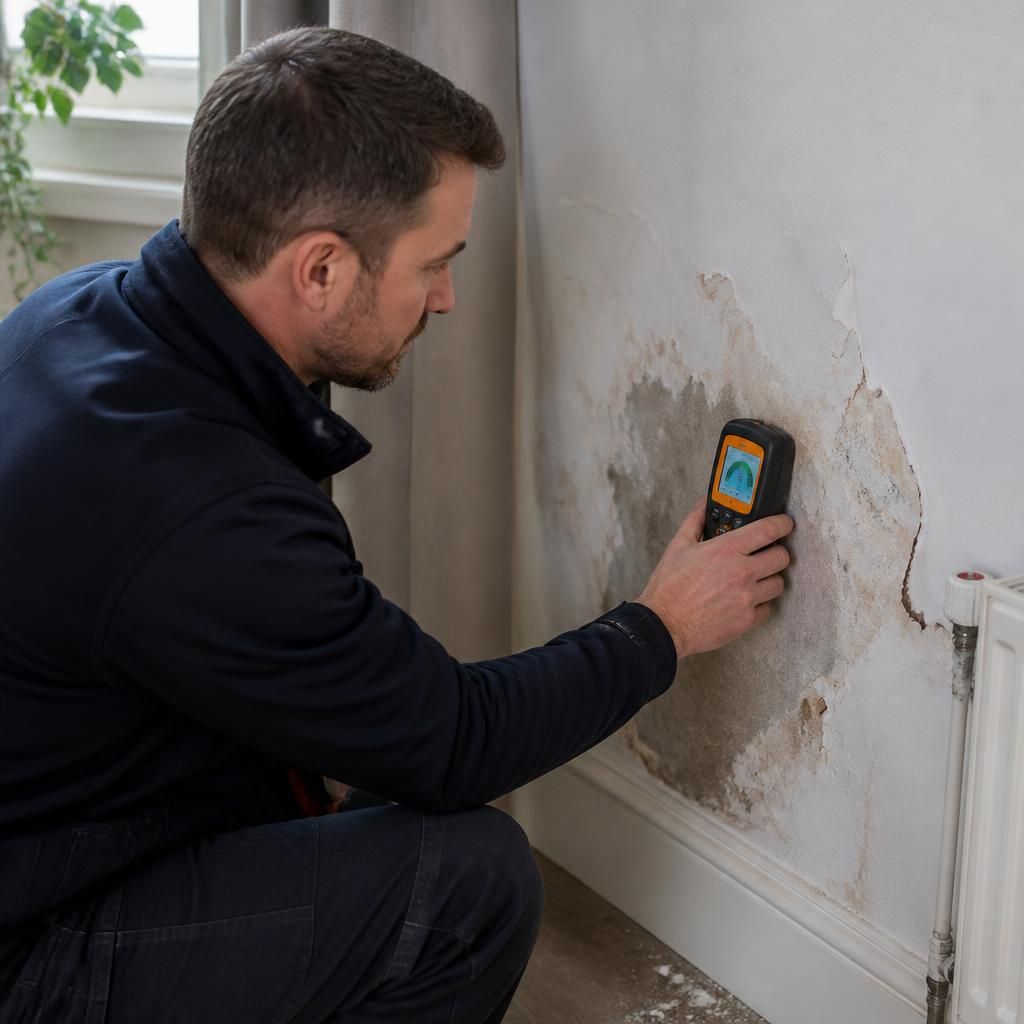
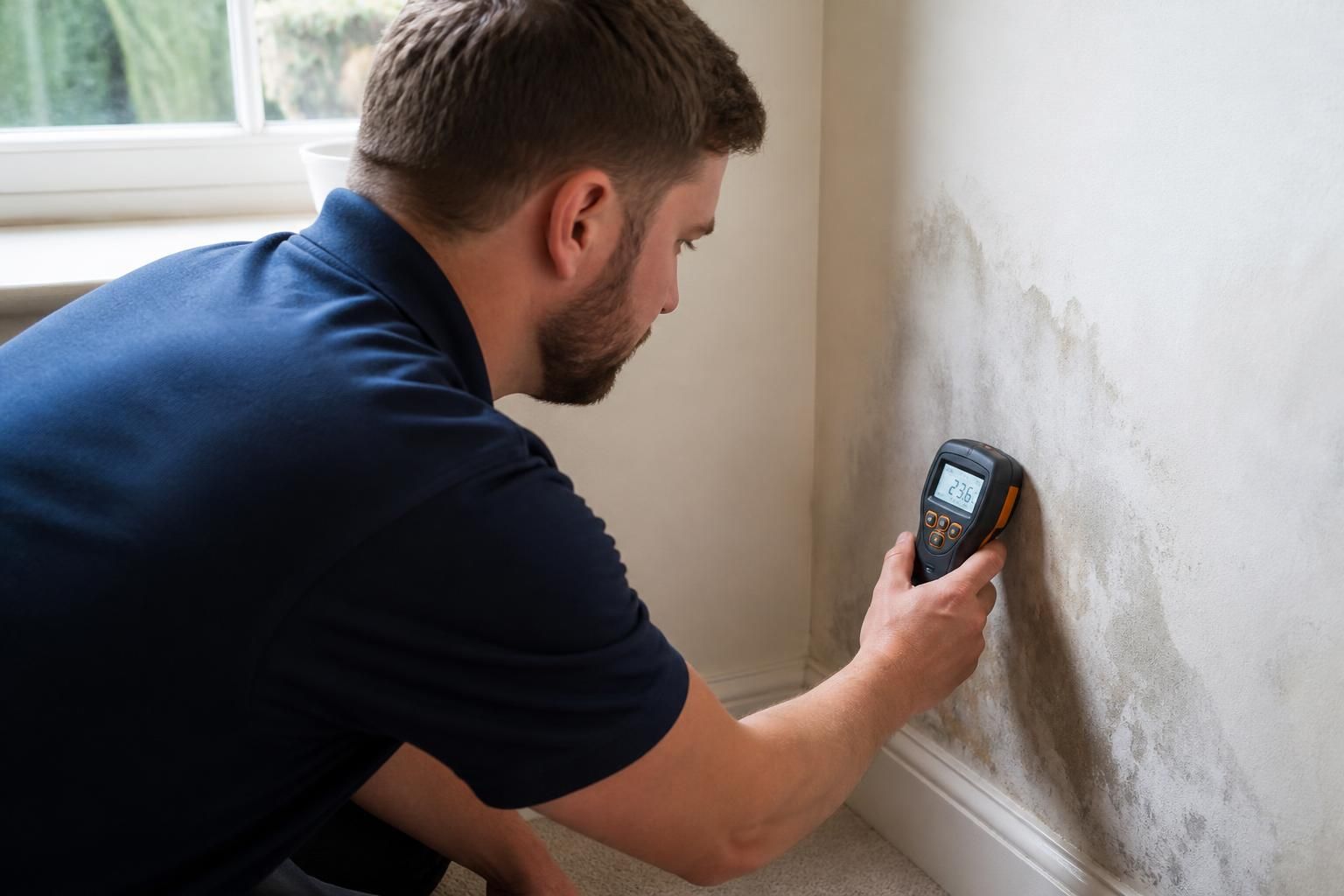
- Moisture meters: readings can help trace the spread of damp through plaster, flooring and other materials.
- Tracer gas or dye testing: in suitable situations, a controlled testing method can help distinguish between possible leak routes.
- Pressure testing: changes in pressure may help establish whether a supply or heating circuit is losing water.
These methods are intended to reduce unnecessary exploratory work. Rather than removing a large section of a wall or floor immediately, the plumber can use the findings to identify a more precise access point. In some cases, the source can be confirmed through existing access panels, service cupboards, floorboards, boxing or removable fixtures.
Detection and repair are separate stages. Finding a leak may involve little more than inspection and testing, but repairing it can require limited removal of plasterboard, flooring, boxing or other finishes if the damaged pipe or fitting is enclosed. A responsible assessment should make clear whether opening up is likely to be necessary, what area may need to be accessed and whether another trade could be required to reinstate decorative finishes.
Disruption is more likely when the leak is below a solid floor, inside a concrete slab, behind tiled surfaces or within a tightly enclosed service void. Access may also be more involved when water has travelled away from the original fault. The wettest or most visibly damaged area is not always directly above the leak, so removing the nearest surface without further investigation can create avoidable damage.
Property owners and occupants can help keep the inspection focused by providing useful information before the visit. Note when the dampness was first noticed, whether it changes when taps or appliances are used, whether a boiler or heating system loses pressure, and whether the problem affects one room or several. Clear access to stop taps, boilers, radiators, bathroom units, appliances and visible pipework can also reduce the need to move belongings during the assessment.
There are limits to non-invasive detection. Equipment may indicate the affected area without identifying the exact failed joint, crack or fitting, particularly where several pipes run close together or where building materials have absorbed water. If readings are inconclusive, a small, carefully chosen opening may be the most reliable way to confirm the fault. This is different from undertaking broad, unplanned removal of surfaces.
After the source has been located, the next decision is whether the repair can be completed through an existing access point or whether a section of the surrounding material must be opened. Ideal Plumbing Services provides leak detection and plumbing repairs for residential properties in Birmingham and the wider West Midlands, with the investigation tailored to the building and the suspected leak route. Ask for the proposed access and repair method to be explained before work begins, particularly if the leak is hidden behind finished surfaces.