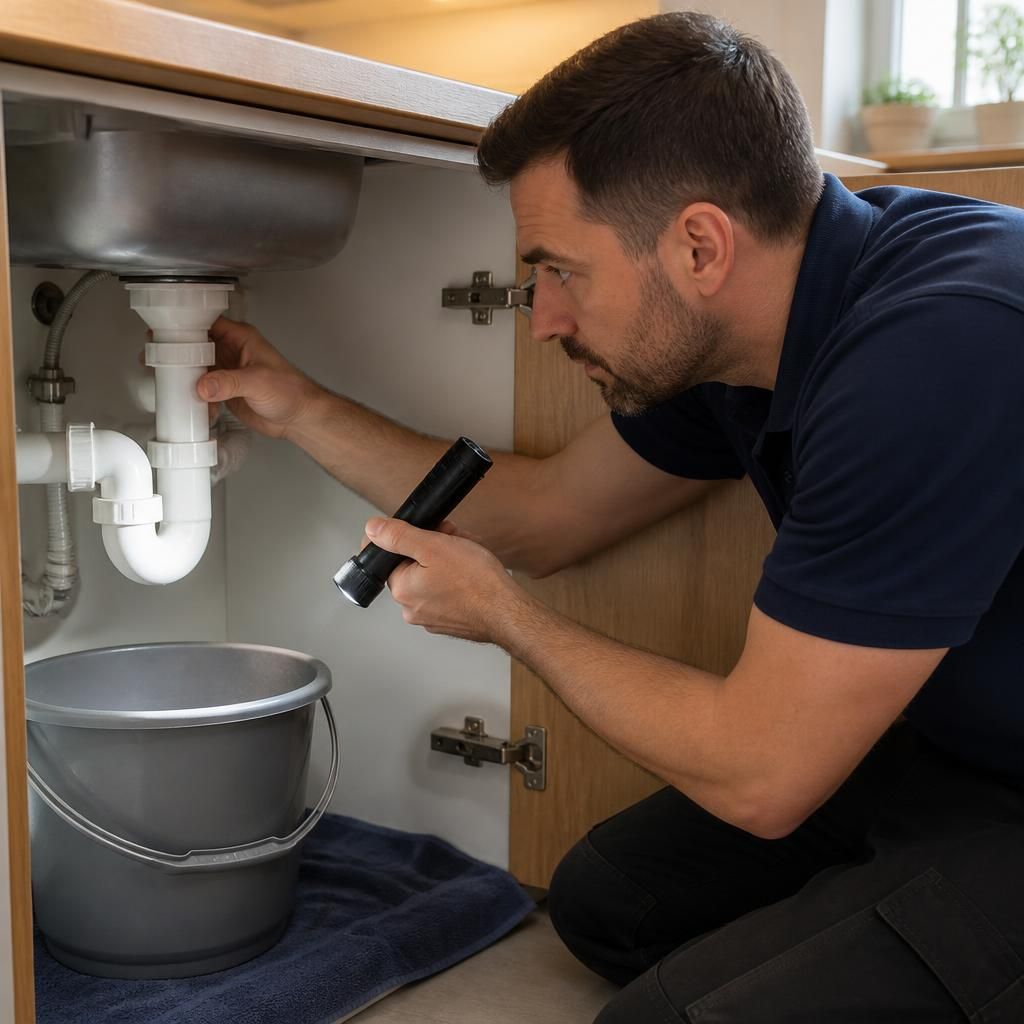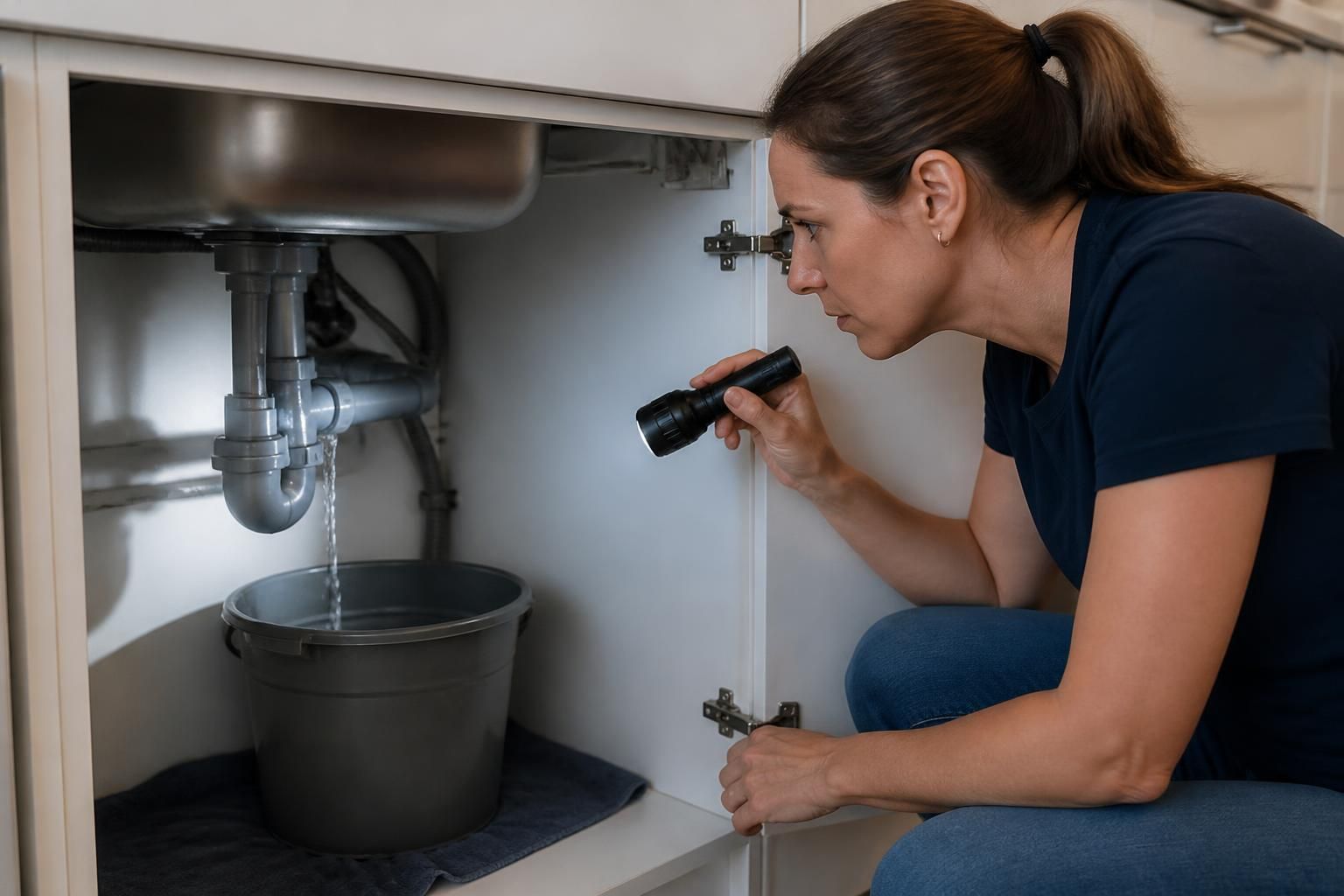
Before contacting an out-of-hours plumber, prepare clear information about the fault, the property and any risks involved. This helps the plumber assess the situation accurately, bring suitable equipment and understand what access may be needed.
Gather the following details before making the call:
- Describe the symptom precisely: explain whether you have a visible leak, loss of water pressure, a blocked drain, an overflowing toilet, a burst pipe, a boiler-related plumbing issue or unusual noises. State which fittings are affected and whether the problem is constant or intermittent.
- Record when it started: note when you first noticed the fault and whether it followed a particular event, such as using a tap, flushing a toilet, running a washing machine or carrying out building work.
- Identify the location: provide the room, floor and approximate position of the problem. For a hidden leak, mention staining, damp patches, peeling paint, mould or sounds of running water, even if no pipe is visible.
- Take photographs where practical: images of the affected fitting, visible water, staining or damaged materials can help explain the issue. Do not put yourself at risk to obtain a photograph.
- List what has already been tried: tell the plumber whether a fitting has been turned off, a drain cover has been removed or a reset has been attempted. This avoids repeating an unsuitable step and gives a clearer picture of the fault.
Stop using the affected fixture or appliance until it has been assessed. Do not flush a toilet that is already overflowing, run water into a blocked sink or shower, or operate an appliance suspected of leaking. Avoid chemical drain cleaners where possible, as they can remain in pipework and create a hazard during inspection or repair. Do not dismantle pipework, remove flooring or open walls simply to find the source.
Prepare the property for access without entering a hazardous area. Clear items from around the affected fixture, unlock relevant rooms and ensure that pets and children are kept away from the work area. If the plumber may need to inspect a ceiling, loft, cupboard or external drain, mention any access restrictions in advance. Tell them about fragile surfaces, recent building work or concealed services that could affect an inspection.
If you rent the property, inform the landlord or managing agent in line with your tenancy arrangements and keep a record of the notification. A tenant should not authorise extensive work without the appropriate approval unless immediate action is needed to prevent further damage or protect people. Homeowners should check whether their home insurance or home-emergency policy requires a particular reporting process, while remembering that policy terms differ.
Have useful information available, including the property address, a contact number, your preferred access arrangements and details of anyone who needs to remain in the property. Explain whether the issue affects one fitting or several parts of the plumbing system. If water is affecting another home, a communal area or a neighbouring property, say so clearly.
Some situations require a different response from a plumbing call-out. If there is a smell of gas, leave the property and contact the appropriate gas emergency service; do not treat it as an ordinary water leak. If there is fire, exposed electrical equipment, structural damage or an immediate risk to life, contact the relevant emergency service first and do not enter the affected area.
Keep notes of the report, any advice given and the condition of the property before work begins. Ask what the initial assessment covers, whether further investigation may be needed and how any proposed repair will be explained before it is undertaken. A clear description and good preparation do not replace professional diagnosis, but they help the plumber start with the most relevant information and reduce avoidable disruption.