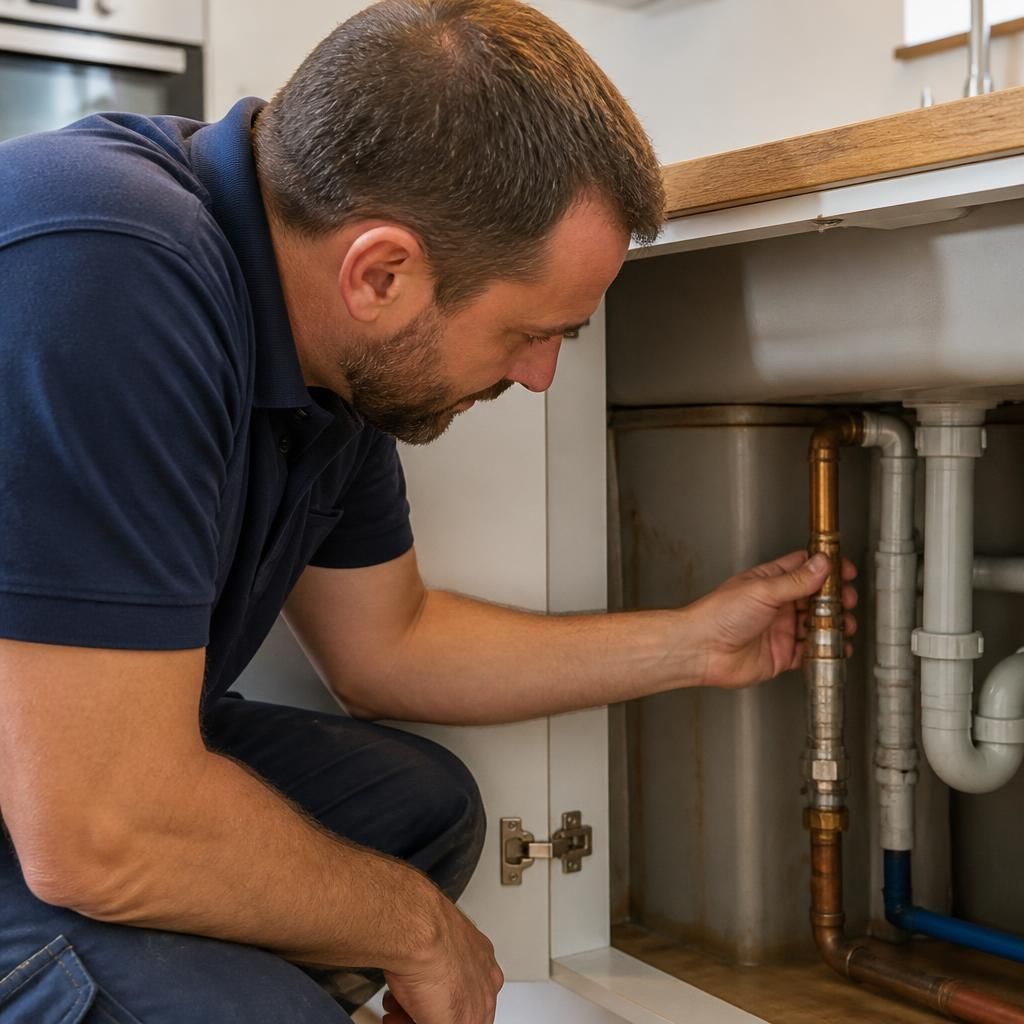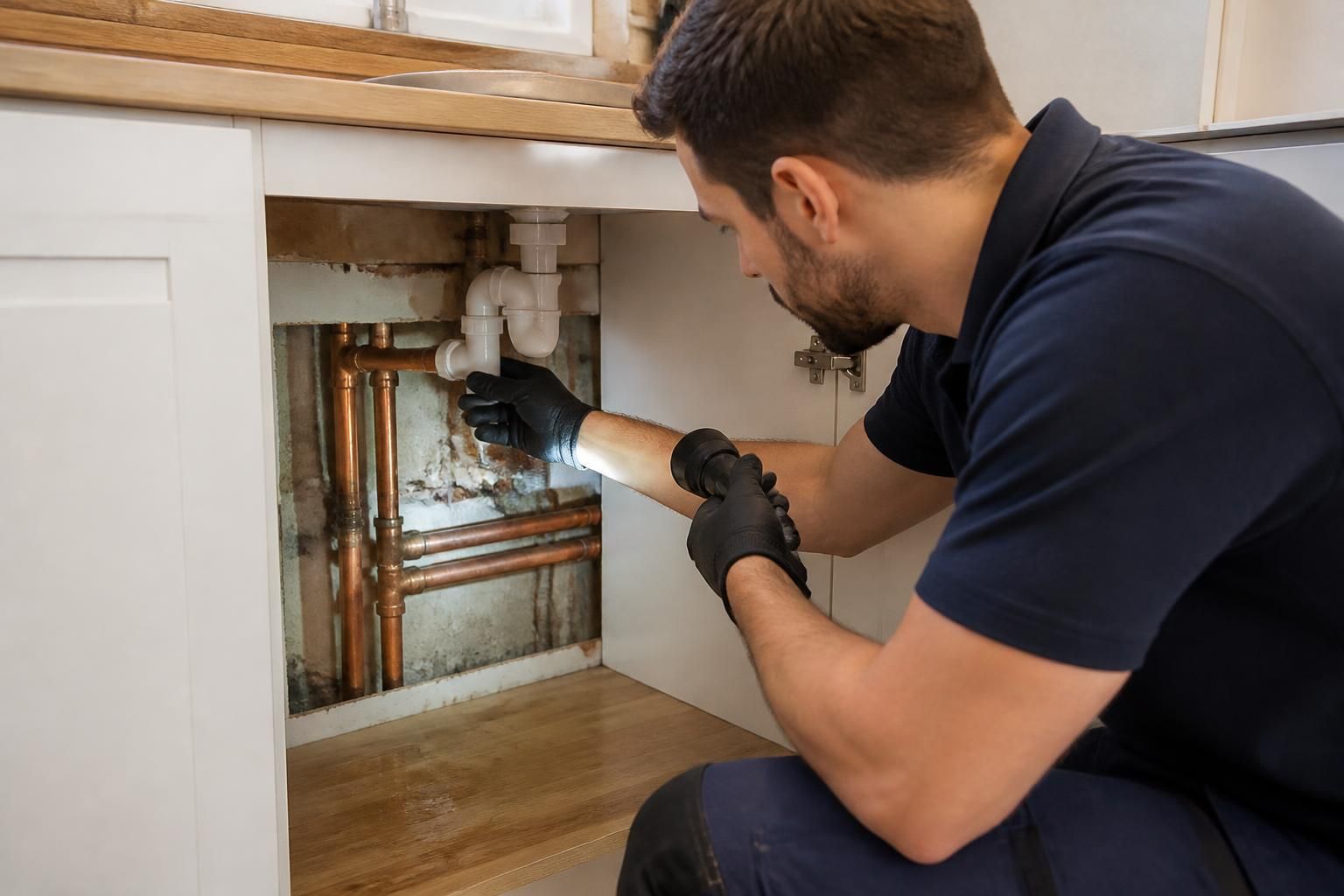
Identifying the leak source is the point at which investigation gives way to a planned response. The next stage is to assess the surrounding damage, determine which materials and fittings are affected, and organise the work needed to return the area to a safe, usable condition.
The visible leak may not show the full extent of the problem. Water can travel along pipework, behind units, beneath flooring or through wall cavities before appearing at a different location. A proper post-detection assessment therefore considers:
- Whether moisture has affected plasterboard, flooring, insulation, cabinetry or other finishes
- Whether the leak has reached electrical fittings or appliances
- Whether the pipe, joint, valve or connected fitting can be accessed without unnecessary removal of surrounding materials
- Whether the affected component has deteriorated sufficiently to require replacement rather than a minor repair
The repair is then scoped around the actual cause. This may involve replacing a failed joint, valve or section of pipe, renewing a connection, or dealing with a faulty appliance supply. The appropriate approach depends on the fitting involved, its condition, accessibility and the risk of disturbing adjacent pipework. A targeted repair should address the defective part rather than relying on sealants or temporary measures that do not resolve the underlying fault.
Any affected building materials need separate attention. Plumbing work stops the source, but it does not instantly restore flooring, plaster, cupboards or decorations that have absorbed water. Materials may need to be removed, opened up, treated or replaced where they are warped, weakened or unable to dry properly. Reinstatement is usually considered once the area is suitably dry and there is no indication that moisture is continuing to spread.
Where the property is rented, the tenant should keep the landlord or managing agent informed and retain details of the inspection and work carried out. Homeowners may also need photographs, invoices and written findings for their own records or for an insurance enquiry. These records can help distinguish the original plumbing fault from subsequent damage to the property.
Safety remains important while the area is being dealt with. Avoid using wet electrical equipment or switches near the affected area, and do not disturb damaged flooring, ceilings or wall coverings if they appear unstable. A ceiling that is bulging, staining that is spreading, or water close to electrics may require additional professional assessment before access or reinstatement work begins.
After the work, the property owner or occupier should understand what was found, which components were worked on, whether any materials were removed, and whether further observation is advisable. Useful records include the location of the fault, the parts used, photographs before and after the work, and any recommendations for follow-up maintenance. This creates a clear history of the incident and makes future plumbing issues easier to diagnose.
Professional water leak detection is therefore only one part of the process. The outcome also depends on accurate assessment, an appropriate repair, careful treatment of affected materials and clear documentation of the work.