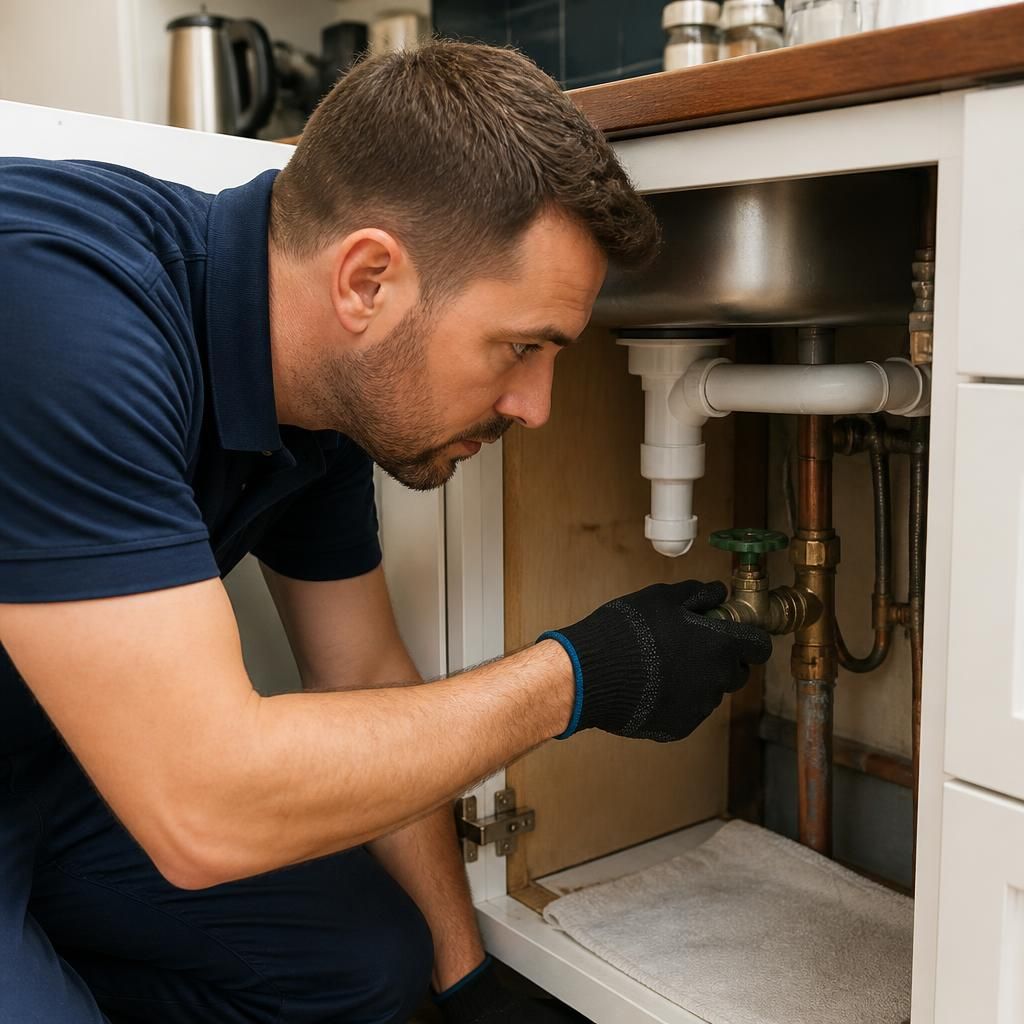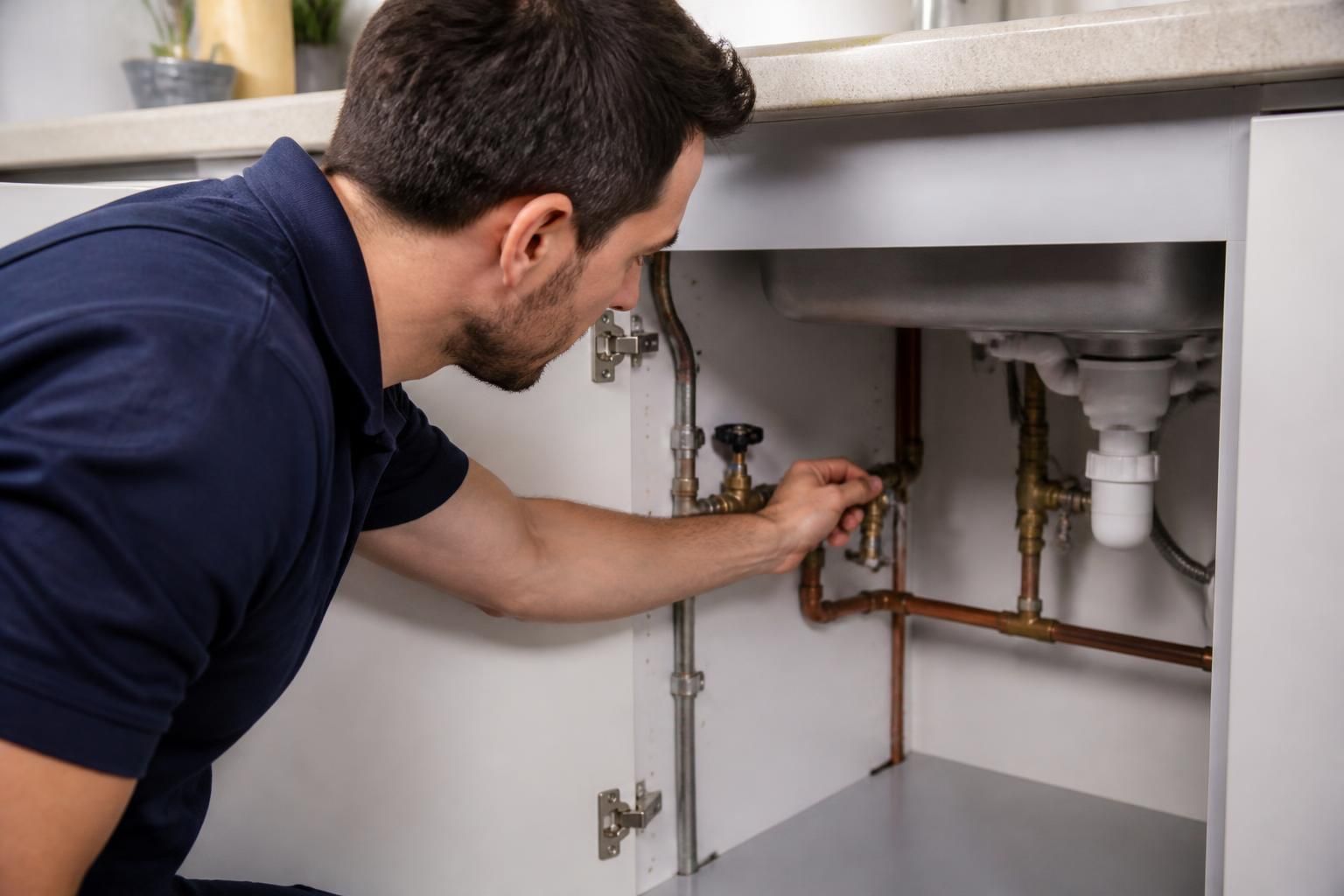
Access to the main stopcock is not always essential, but it is highly important when a leak involves the incoming mains supply. The stopcock controls the water entering the property, so a plumber may need to operate it before carrying out further checks or repairs. If it cannot be reached, the work may be limited until another suitable isolation point is identified.
The stopcock is commonly found beneath the kitchen sink, near the point where the water service pipe enters the property, or in a utility room, cupboard or garage. In some homes, it is located outside in a boundary box, pavement box or shared service area. Older properties may have a stiff, damaged or partially seized valve, while newer installations may have a quarter-turn lever rather than a traditional screw-down fitting.
Before a plumber arrives, check whether the valve can be reached without moving heavy appliances, removing fixed panels or entering a locked area. Keep the route clear and, where appropriate, make sure keys or access arrangements are available. Do not force a valve that will not turn, as excessive pressure can damage the fitting or the connected pipework.
A property may also have separate isolation valves for individual fixtures. These are often fitted to toilets, taps, washing machines, boilers and other appliances. Closing one of these valves can stop water to that fitting without affecting the whole property, which may be useful when the problem is localised. It does not replace access to the main stopcock when water is escaping from a supply pipe, multiple outlets or an unidentified location.
Some homes have more than one stopcock, particularly where the internal valve and the external boundary valve are maintained by different parties. A shared supply in a converted house or block of flats can create additional complications because one valve may affect more than one dwelling. A plumber will need to establish which valve serves the affected property and whether operating it requires access to a communal or external area.
If the stopcock is inaccessible, provide as much information as possible before the visit. Useful details include:
- where you believe the stopcock is located;
- whether it is inside the property, outside or in a shared area;
- whether the valve has been difficult to turn in the past;
- whether any separate appliance isolation valves are available; and
- whether the leak is continuous, worsening or affected by turning on a tap or appliance.
For a rented property, the tenant should not remove panels, alter pipework or attempt to repair a faulty stopcock without the appropriate permission. The landlord or managing agent may also hold information about external valves, communal cupboards and access responsibilities. This information can help the plumber plan the inspection without creating avoidable damage or delays.
If water is near electrical equipment, isolate the electricity only if it is safe to do so, and avoid touching electrical switches while standing in water. Move belongings away from the affected area where possible, but do not take risks to reach a valve or enter a flooded space. A plumber can then assess the supply arrangement, use an alternative isolation point where suitable and explain whether the main stopcock needs repair or replacement.
Ideal Plumbing Services can investigate stopcock access problems as part of emergency plumbing and leak repairs for homes in Birmingham and the wider West Midlands. The plumber can identify the relevant isolation valve, advise on safe access and determine what needs to be repaired if the stopcock is seized, leaking or no longer controlling the supply properly.