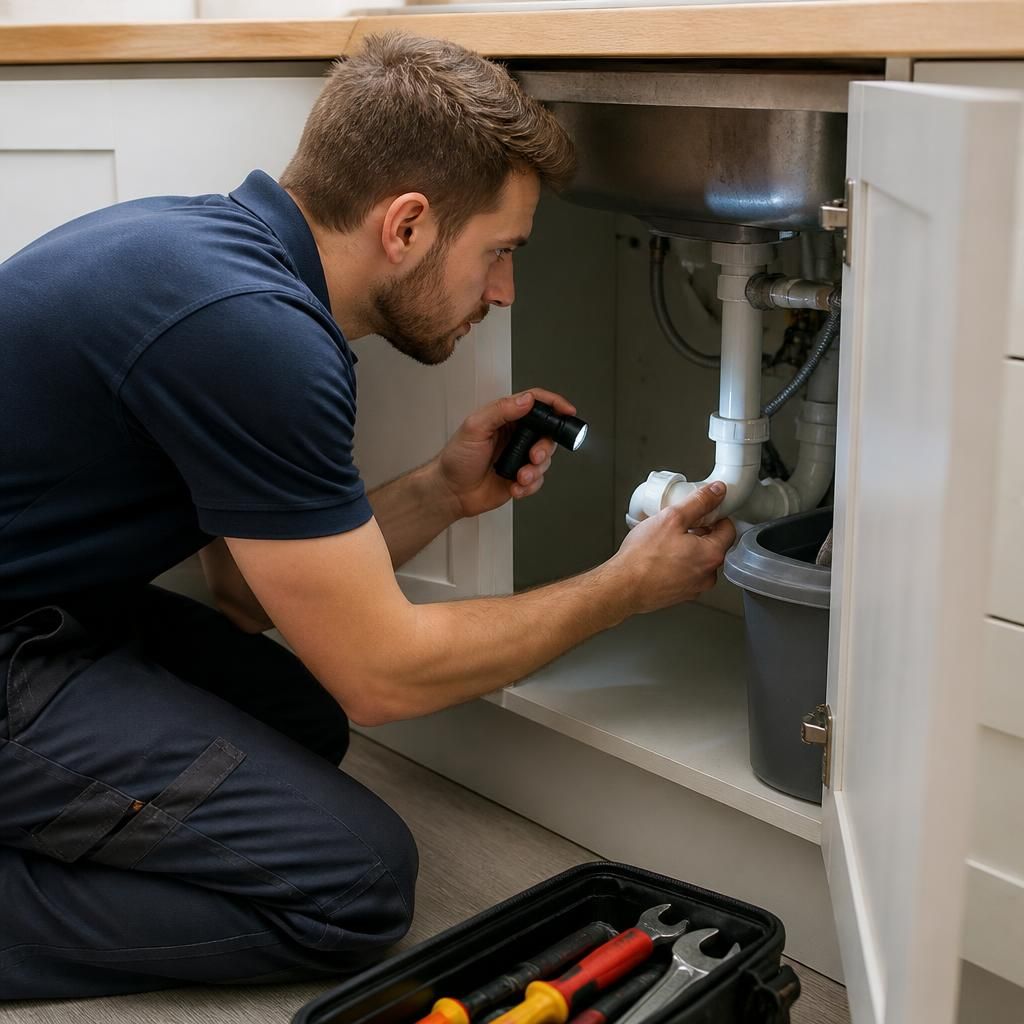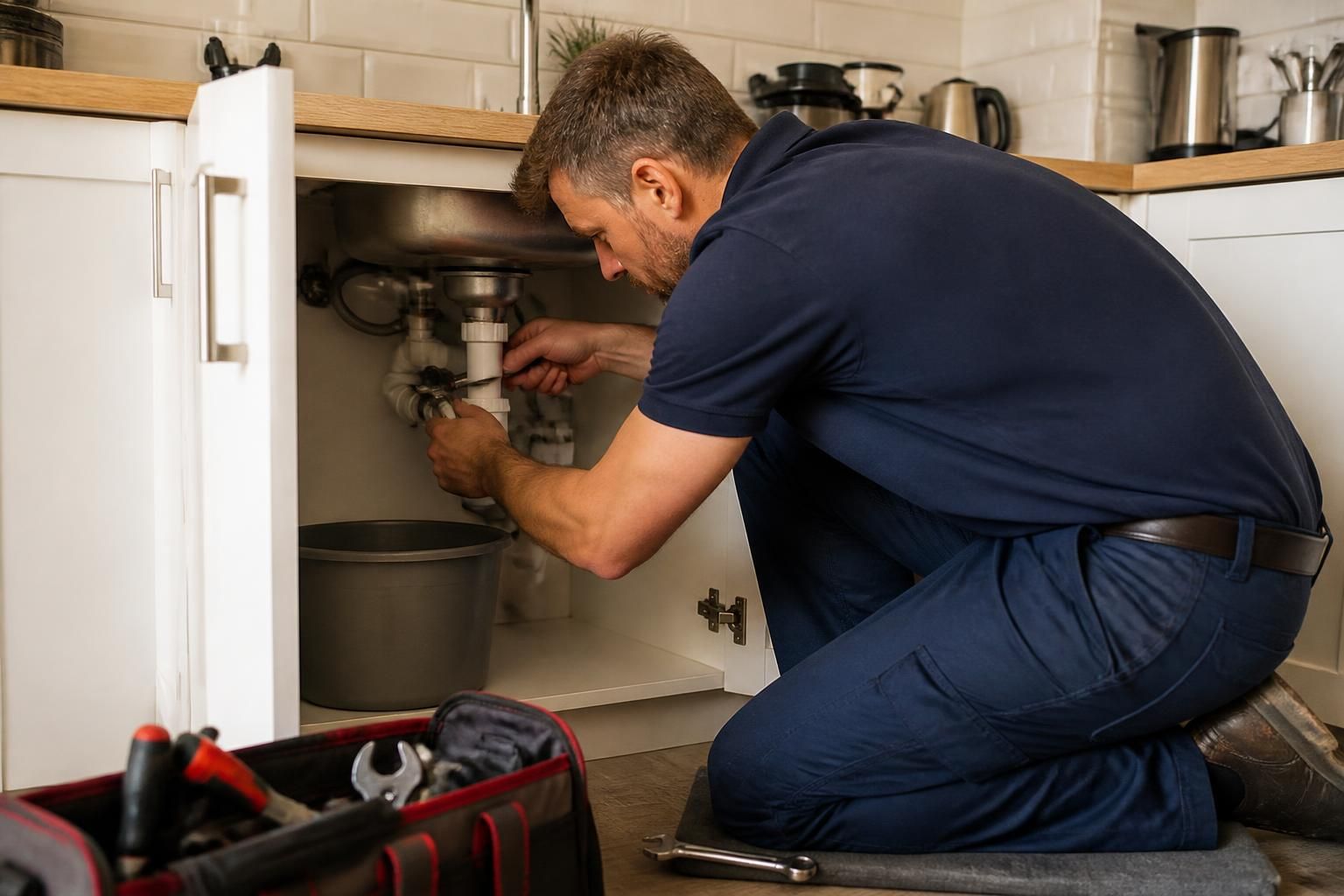
Preparing for a same-day emergency plumber’s visit means providing accurate information, arranging safe access and preserving useful evidence about the fault. Good preparation helps the plumber understand the situation before inspecting the pipework, appliance or drainage system, while reducing avoidable delays and protecting people and property.
Provide clear information when booking or confirming the visit
- Give the full property address, including any flat, maisonette or building access details.
- Describe the affected area as precisely as possible, such as beneath a kitchen sink, beside a boiler, behind a toilet or near an external wall.
- Explain whether the issue involves a visible leak, loss of water pressure, a blocked drain, a failed toilet, a heating problem or another fault.
- Tell the plumber whether the problem is continuous or intermittent and whether it changes when a tap, toilet, washing machine or heating appliance is used.
- Pass on relevant information about previous repairs, recent installations or any unusual noises, smells or changes in temperature.
If you have taken photographs or short videos, keep them available to show the plumber. Images can be useful when water has stopped flowing temporarily, when the original position of a leak is difficult to see or when access has had to be changed before the visit.
Prepare the property and access route
Make sure the plumber can reach the entrance, the affected room and any relevant cupboards, loft spaces, utility areas or external inspection points. Remove fragile items from the route and, where practical, clear space around the suspected fault without dismantling panels, fittings or appliances. If access requires a key, entry code or permission from another person, arrange this in advance and explain any restrictions at the property.
Protective floor coverings can be placed along the route if the area is wet, but do not create a trip hazard or cover equipment that needs to be inspected. Keep children and pets away from the affected area, particularly where floors are slippery, ceilings are damp or tools and cleaning products may be used.
Gather useful property information
- Keep details of the boiler, hot-water cylinder, water heater, pump or other relevant equipment available if the fault involves an appliance.
- Locate any manuals, installation records or previous repair invoices that relate to the problem.
- Note which rooms, fixtures or appliances are affected and whether neighbouring properties have reported a similar issue.
- For drainage problems, record which outlets are slow, overflowing or making unusual sounds, and whether the problem affects more than one fixture.
Do not attempt to remove a boiler cover, cut into a wall, disconnect gas equipment or dismantle plumbing fittings before the inspection. These actions can increase the damage, make the fault harder to diagnose or create additional safety risks.
Take extra care around electrical equipment
Water near sockets, switches, consumer units, electrical appliances or light fittings presents a potential electrical hazard. Do not touch wet electrical equipment or enter an area where the floor is unsafe. If the electricity supply can be isolated without approaching water or exposed equipment, follow the property’s normal safety procedure; otherwise keep away and seek appropriate qualified assistance. Tell the plumber about any area where water may have reached electrical services.
Tenants and landlords should confirm responsibility
Tenants should inform the landlord, letting agent or managing agent as soon as the emergency is identified, particularly where approval is required for repairs. Provide the plumber with the correct contact details and any instructions about access. Landlords and agents should make relevant keys, property information and details of previous contractors available where possible. This helps separate urgent making-safe work from repairs or reinstatement that may need further authorisation.
Finally, remain available to answer questions about the fault and point out concealed pipe routes, stop valves, inspection covers or areas where water has travelled. A concise account of what happened, supported by photographs and property records, gives the plumber a stronger starting point for diagnosis and repair.