Burst water main repair is usually disruptive because the repair may affect water supply, access routes and parts of the property above or around the pipe. The actual impact depends on whether the fault is beneath an internal floor, driveway, garden, path or external service area, and whether the pipe can be repaired without removing surrounding materials.
The first stage is locating and assessing the leak. A plumber will usually inspect visible damage, check the incoming supply and identify where water is escaping. This helps distinguish a damaged private supply pipe from a fault that may fall under the responsibility of the water company. Accurate leak detection can reduce unnecessary opening-up, particularly where the pipe route is unclear or the symptoms are appearing some distance from the break.
Water supply interruption is often the most immediate inconvenience. The supply may need to be isolated while the damaged section is exposed and repaired. This can affect toilets, taps, showers, washing machines and heating systems that rely on mains pressure. The plumber should explain which fixtures will be unavailable and whether any part of the system can remain in use while work is carried out. Avoid using appliances or running taps in an affected area unless this has been confirmed as safe.
Access requirements vary considerably. A straightforward repair may only require access to an internal stop tap, an exposed pipe or a small section of paving. More involved work may require furniture, stored items, flooring or garden materials to be moved before the pipe can be reached. Where the leak is under a solid surface, sections of laminate, tiles, concrete, tarmac or paving may need to be lifted. Keeping the route to the stop tap and suspected leak area clear can help limit avoidable disruption.
Water damage can extend beyond the pipe itself. Escaping water may soak flooring, skirting boards, plaster, cupboards, insulation or belongings. Even after the pipe has been repaired, affected materials may need to dry before they can be assessed properly. Ventilation and careful removal of standing water can help protect the property, but electrical equipment, sockets and wiring exposed to water should not be handled until they have been checked by a suitably qualified professional.
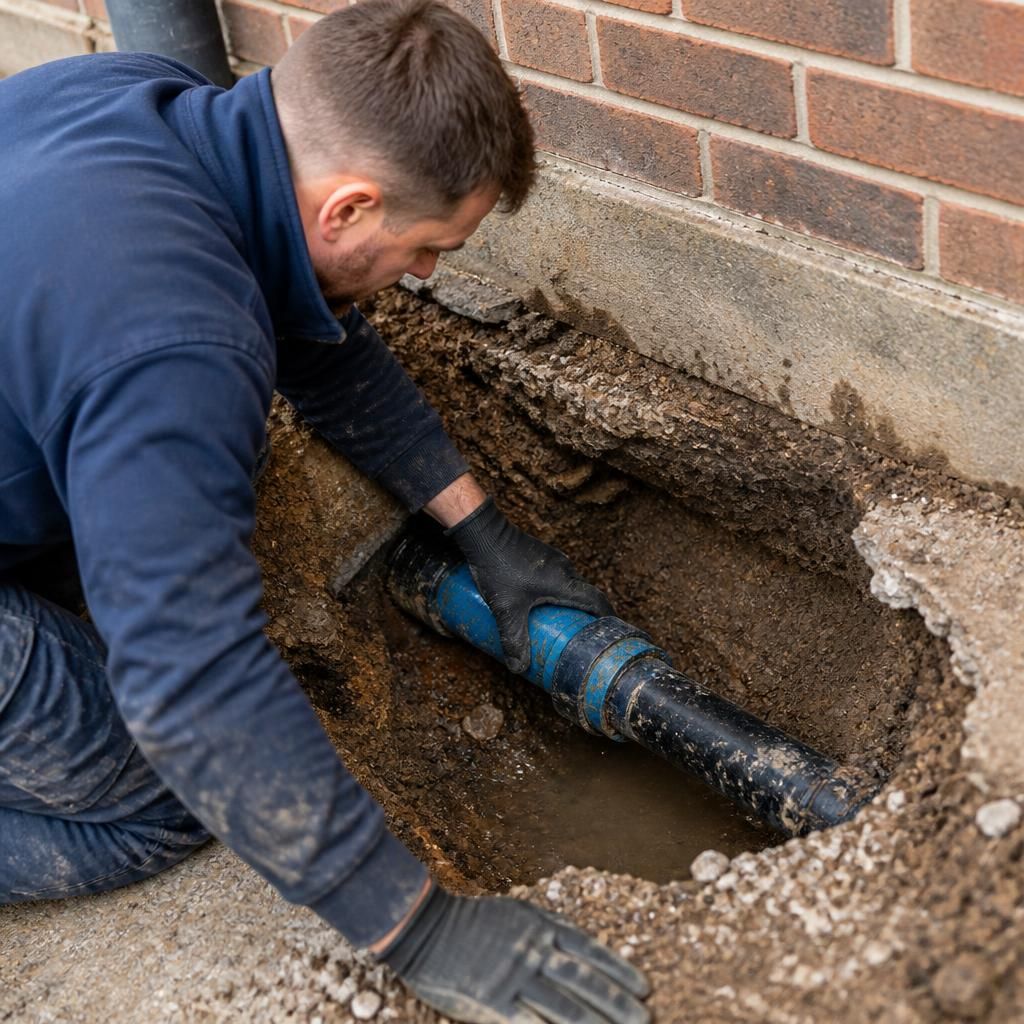
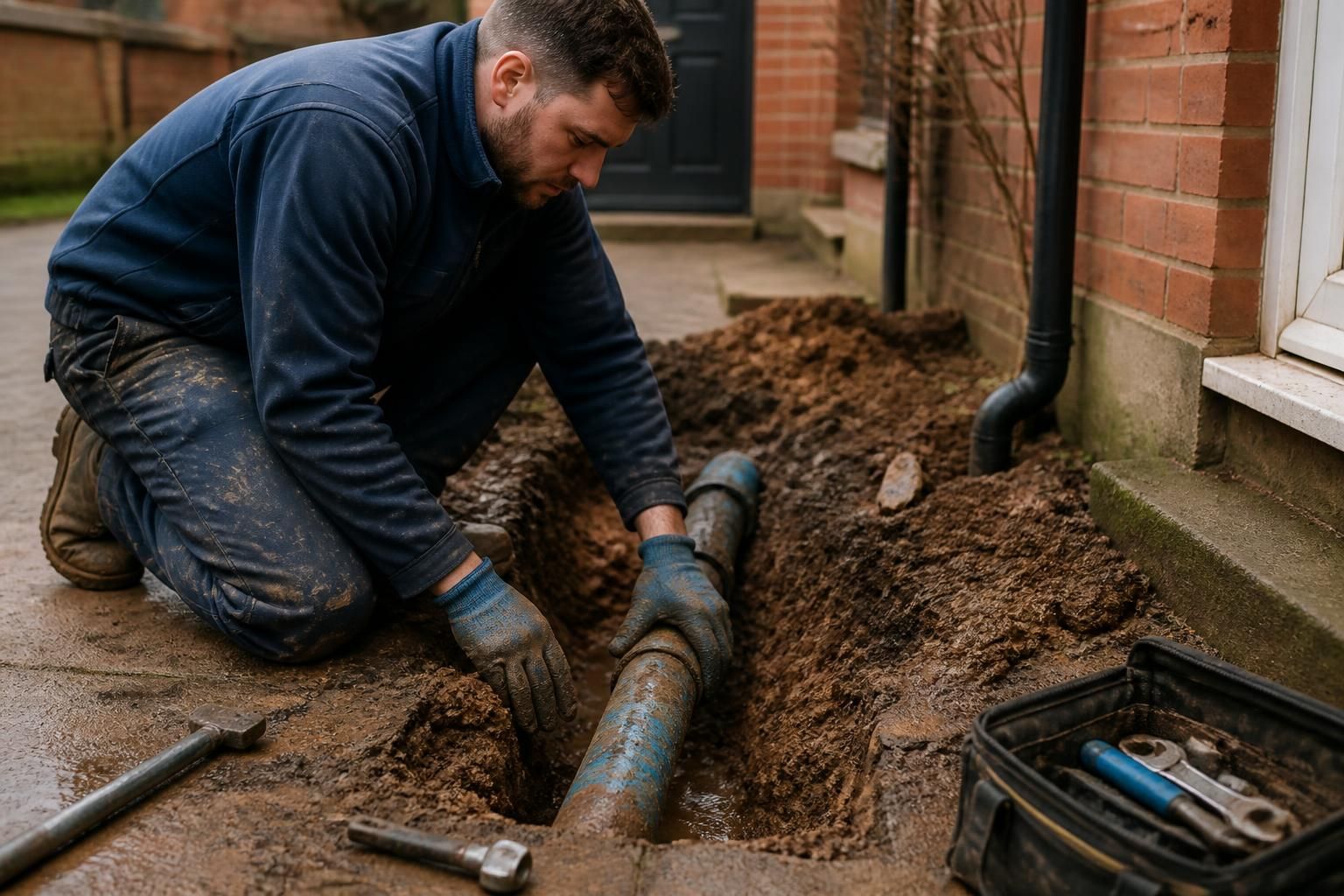
Excavation is not always necessary, but it can be required. If the damaged pipe is buried and cannot be accessed through an existing inspection point, a section of ground or hard surface may have to be opened. The amount of digging depends on the pipe depth, its position and the extent of the damaged section. Reinstatement is a separate consideration: replacing the pipe may be completed before paving, flooring, decorative finishes or landscaping are fully restored.
The repair method also affects the level of disruption. A small exposed section may be replaced without disturbing a wider area. If the pipe has multiple damaged points, has shifted, or has deteriorated along its length, replacing a longer section may be more appropriate than making a local repair. In some cases, rerouting the pipe can avoid a particularly difficult section of flooring or structure, although this depends on the layout and condition of the existing installation.
Landlords and tenants should document the condition of the property. Photographs of wet areas, damaged finishes and moved belongings can help when reporting the incident to a landlord or insurer. The property owner or managing agent should be informed before non-essential reinstatement work is authorised. In a rented home, the tenant should avoid arranging structural opening-up or permanent alterations without the appropriate permission, unless immediate action is needed to prevent further damage.
A clear repair plan should cover more than the replacement pipe. Before work begins, ask which areas need to be accessed, whether water must be isolated, what materials may need to be removed and how exposed sections will be protected. It is also sensible to clarify whether making good, drying, cleaning or replacing damaged finishes is included, as plumbing repair and building reinstatement may be separate stages.
Ideal Plumbing Services assesses the source of the leak and the practical access required before recommending a repair. With more than 20 years’ experience in plumbing work, the team can explain the likely disruption, identify the work that is essential and carry out repairs with attention to protecting the surrounding property. The final impact cannot be confirmed until the pipe and nearby damage have been inspected, but early isolation and accurate diagnosis generally help keep the repair focused.