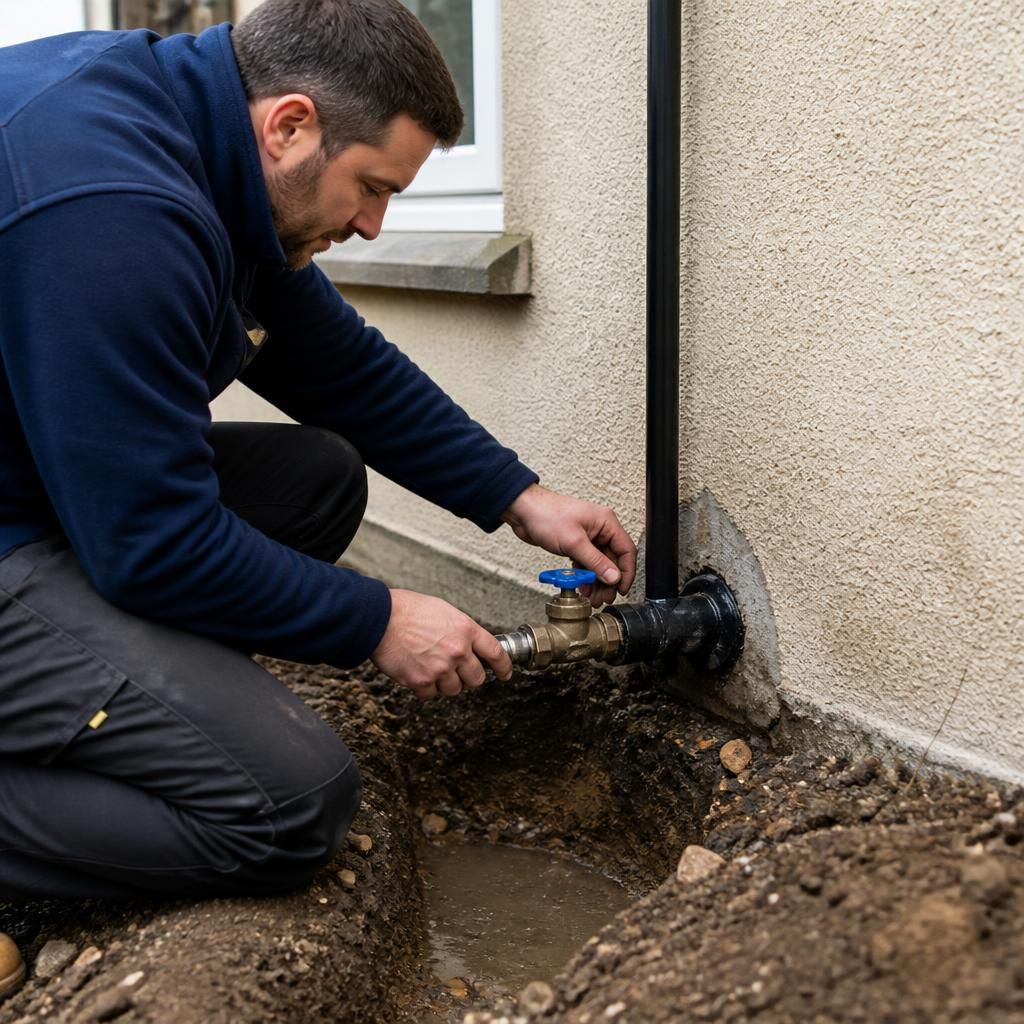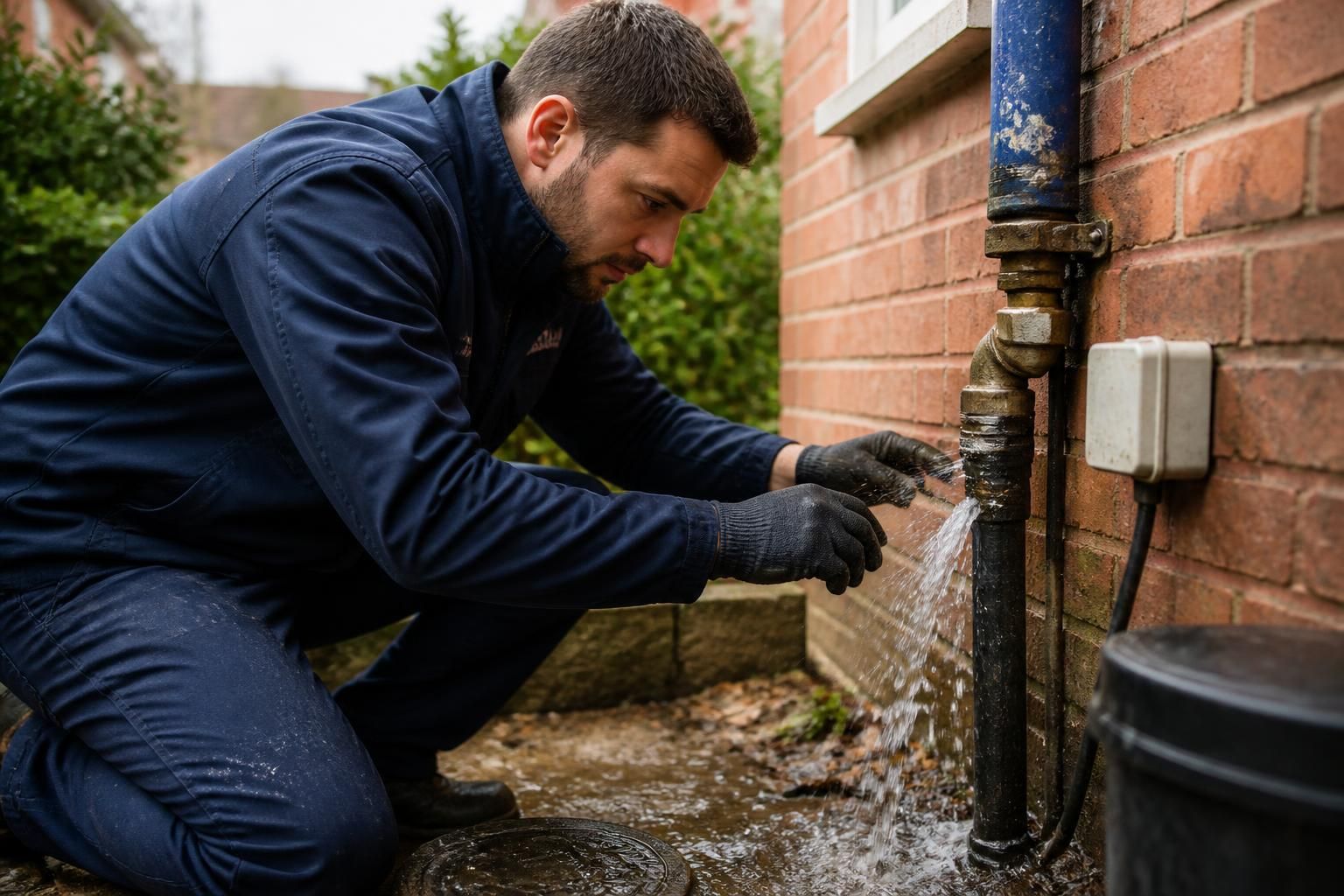
A burst water main should be treated as an active water escape until a plumber has identified and isolated the failed section. Before they arrive, prioritise personal safety, prevent additional water use, preserve useful information and make the property accessible for inspection.
Keep people and animals away from the affected area. Wet floors can be slippery, and hidden voids, damaged flooring or contaminated floodwater may create additional hazards. Do not enter deep or fast-moving water, and keep children and pets away from flooded rooms, gardens, driveways and access covers.
Do not use plumbing fixtures unnecessarily. Avoid running taps, flushing toilets, using washing machines or operating other water-fed appliances until the source has been assessed. If the water appears dirty, has an unusual smell or may have entered from outside drainage, do not drink it or use it for food preparation.
Check for related risks from a safe position. Look for signs such as bulging plasterboard, lifting flooring, water beneath cabinets or water tracking towards sockets. Do not remove flooring, lift inspection covers or enter a crawl space to investigate. If there is an immediate risk of electric shock, structural collapse, fire or serious flooding, leave the area and contact the appropriate emergency service rather than waiting beside the leak.
Establish whether the problem may be on public or private pipework. Water escaping in the street, pavement or outside boundary may involve the local water supplier, whereas a failure between the property boundary and the building may be the owner’s responsibility. Do not operate street valves or interfere with utility equipment. Tell the plumber exactly where the water first appeared and whether the flow changes when water is used elsewhere.
Record the condition without putting yourself at risk. Photographs or short videos taken from a dry, safe location can help show the position and extent of the escape. Note when you first noticed it, whether the flow is continuous, which rooms or outdoor areas are affected and whether nearby properties appear to have the same issue. This information can help distinguish a private supply failure from a wider mains problem.
Prepare useful property information. Have details of any previous repair, recent building work, known pipe routes, underground services, water meter and access points available. Tell the plumber about the pipe material if known, the age of the property and any restrictions on access. Do not guess at buried pipe locations; identify them only from reliable plans or records.
Arrange safe access. Unlock gates where this can be done safely, secure pets in a separate dry area and keep a clear route to the relevant rooms or external pipework. If access requires entering a loft, cellar, plant room or confined space, explain this in advance rather than attempting to prepare it yourself. Move people and valuable items away from the route without entering unsafe water; the affected area itself should be left for professional assessment.
Notify the appropriate people. Homeowners may need to inform their insurer, particularly where flooring, plaster, fitted units or personal belongings have been damaged. Tenants should contact their landlord or managing agent and follow any emergency repair procedure in the tenancy agreement. If water is affecting a neighbouring property or shared building, notify the relevant occupier, building manager or freeholder.
Keep records of photographs, notifications and reasonable immediate expenses. When the plumber arrives, explain what actions have already been taken and point out any areas that may conceal damage. The plumber can then establish the source, determine whether excavation or access through flooring is necessary and advise on the appropriate burst water main repair.