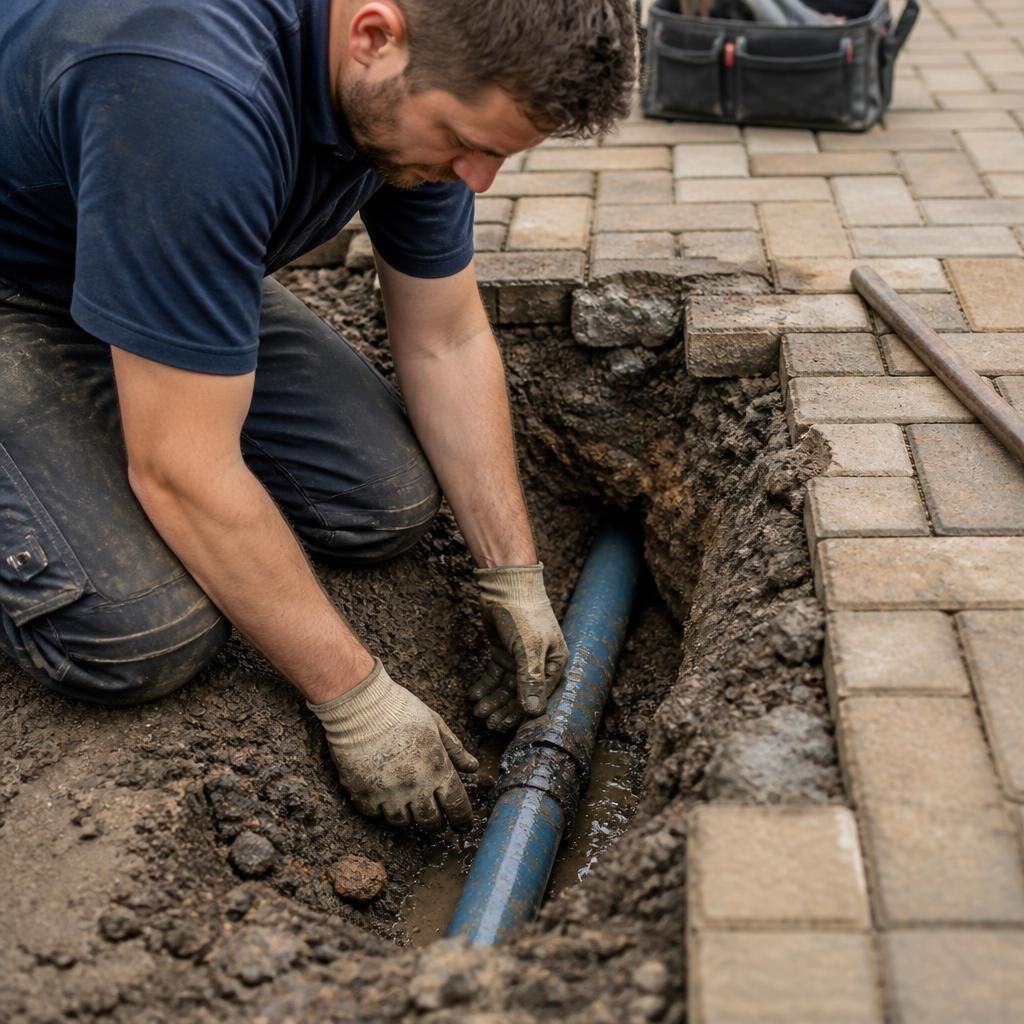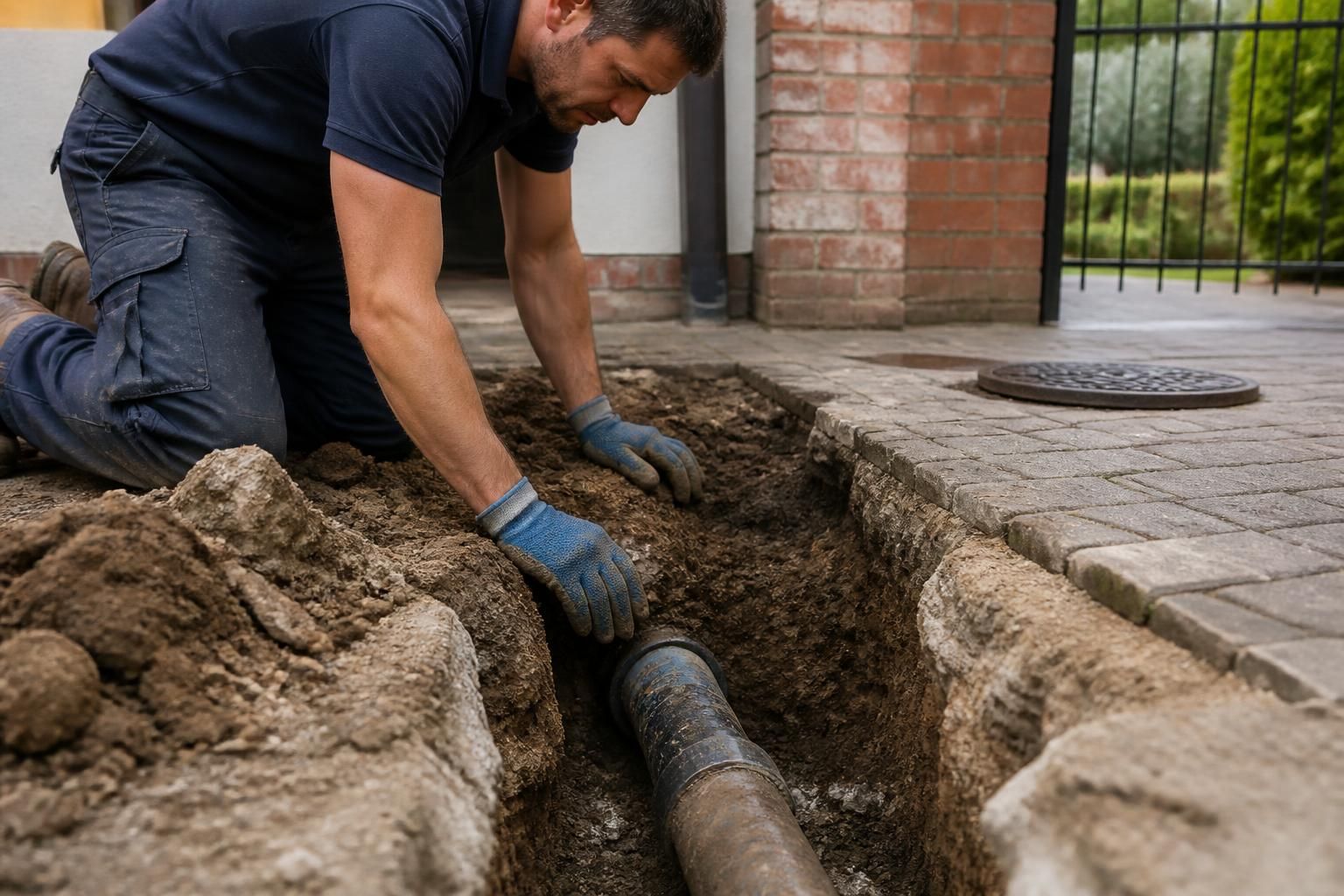
Whether ground has to be opened depends on how the damaged pipe can be reached and what type of repair is appropriate. A burst water main beneath a lawn may need only a small access trench, while a pipe beneath a driveway, extension or solid floor may be better suited to a carefully planned alternative if the layout and condition allow it.
When excavation is more likely
- The damaged section is buried deeply or cannot be accurately accessed from an existing chamber.
- The pipe has collapsed, split along its length or deteriorated beyond the point where a local repair is dependable.
- The pipe runs beneath concrete, paving, a driveway, flooring or a structural feature that prevents access from above.
- There is insufficient room to use a repair fitting or another method without exposing the pipe.
- The leak is affecting the ground around the pipe, making it necessary to inspect the bedding and surrounding area for movement or washout.
In these situations, excavation does not necessarily mean removing the entire run. A plumber will normally aim to expose the smallest practical section, cut out the failed part and install a suitable replacement or joint. The size and position of the opening depend on the pipe material, its depth, the nature of the damage and the space required to work safely.
When digging may be reduced or avoided
Some leaks can be dealt with through an accessible stop tap, inspection chamber or exposed section of pipe. A compatible repair clamp or replacement fitting may resolve a localised split where the surrounding pipe remains sound. These fittings are not suitable for every failure, particularly where the pipe is badly corroded, distorted or under continuing movement.
Trenchless techniques can sometimes reduce surface disruption when a longer section needs replacing. These methods may involve pulling or installing a new pipe through the existing route, usually from small access points rather than a continuous open trench. They require a suitable route, adequate access and a pipe that can be isolated and cleared. They are not automatically appropriate for pipes with collapsed sections, severe obstructions or complicated changes in direction.
Accurate leak detection is important before choosing between these options. A professional assessment may involve tracing the pipe route, checking pressure and isolating sections of the supply. This helps identify whether the leak is beneath a particular area or whether water is travelling through surrounding soil and appearing some distance from the actual break. Repairing the visible damp patch without locating the source can leave the underlying failure unresolved.
What happens during an excavation-based repair
- The water supply is isolated and the affected pipework is assessed.
- The route and likely break point are marked out to limit unnecessary disturbance.
- Existing paving, soil, concrete or other surface materials are removed as carefully as practical.
- The pipe is exposed sufficiently to confirm the failure and inspect nearby joints.
- The damaged section is repaired or replaced using suitable components for the pipe type and water supply.
- The supply is restored, the repair is checked for leaks and the excavation is backfilled.
Surface reinstatement can vary. Soil and turf may be relatively straightforward to replace, whereas matching block paving, slabs, tarmac or flooring may require additional materials or a separate finishing service. Before work starts, it is sensible to confirm which parts of the opening and reinstatement are included in the quotation. A clear written scope should also identify any access restrictions, foreseeable additional work and applicable charges.
Private pipe or utility-owned main?
Responsibility can depend on where the burst is located. A private supply pipe serving the property will generally be considered separately from a water company’s distribution main. The boundary, stop tap arrangement and ownership records can help establish which section is involved. If the suspected failure is on the public side of the boundary, the relevant water supplier may need to be contacted rather than arranging private excavation immediately.
For Birmingham properties, the most suitable repair is therefore determined by the pipe route, access, surface above it and condition of the surrounding pipework—not simply by the presence of a burst. Ideal Plumbing Services can assess the leak, explain whether a localised opening or a less disruptive approach is realistic, and set out the repair requirements before work proceeds. Its experience includes leak detection and water main repairs for homeowners, landlords and tenants across Birmingham and the wider West Midlands.