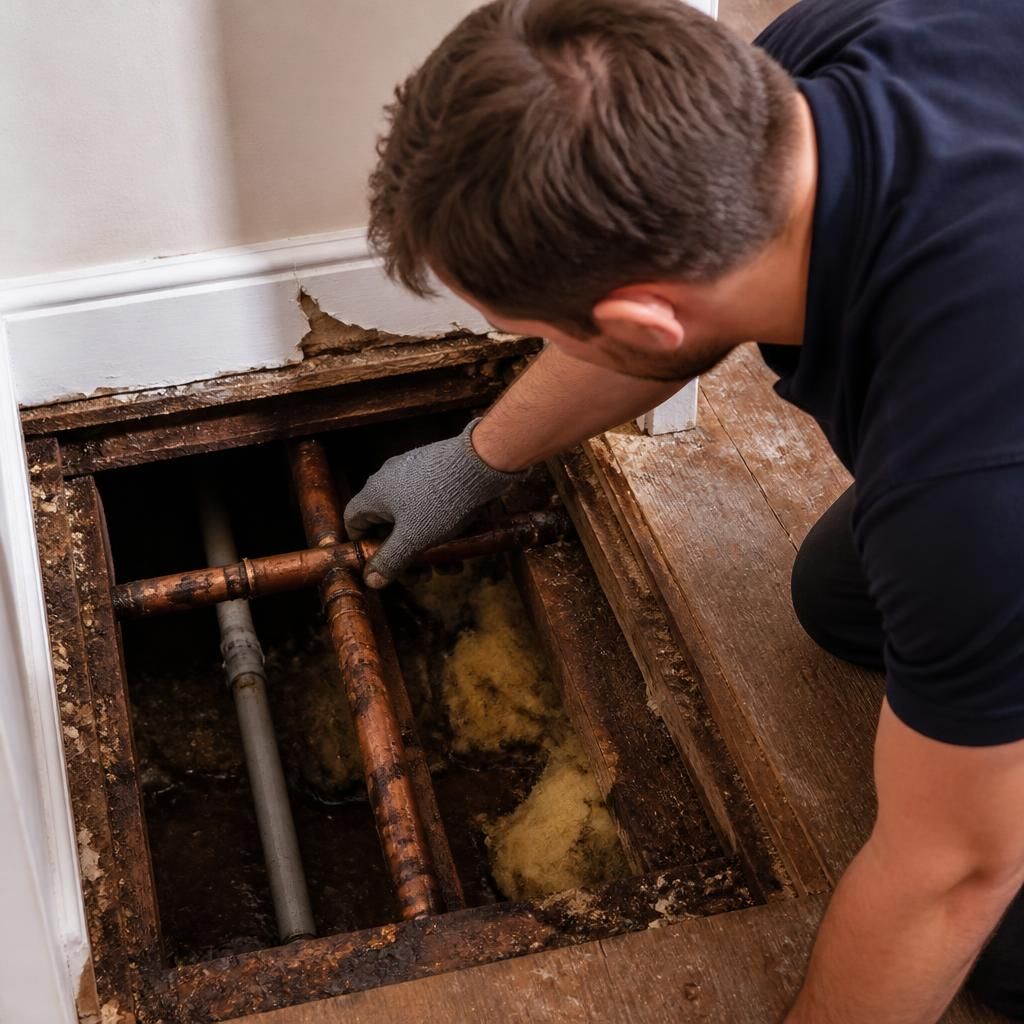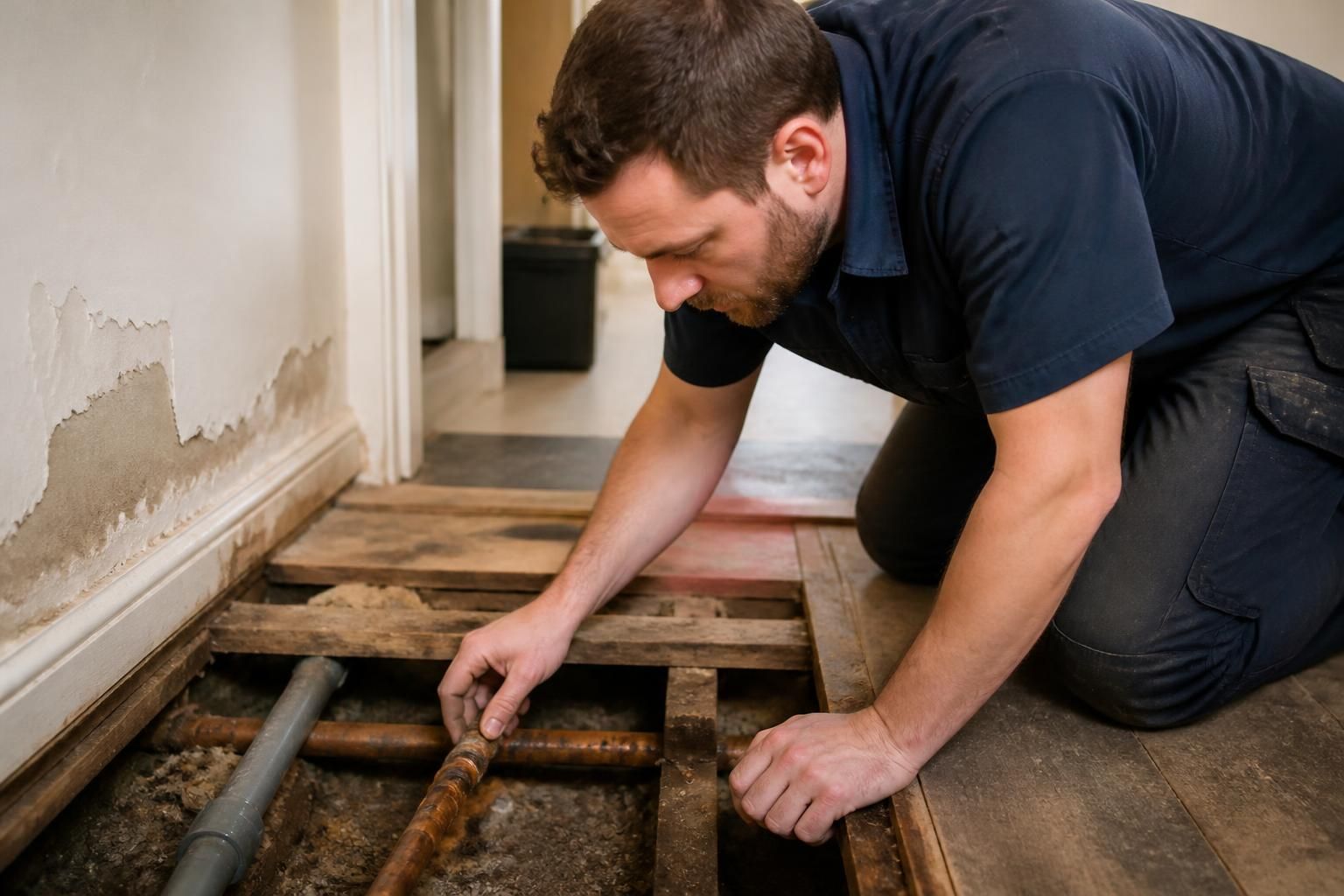
Emergency burst pipe repair can prevent further water damage, but it cannot reverse damage that has already occurred. Its main purpose is to stop the source of the escape, reduce the amount of water entering the property and make the plumbing system safe to use again.
The outcome depends on several factors, including:
- how quickly the leak is identified and dealt with;
- the size and location of the damaged pipe;
- whether the pipe is carrying mains water, heating water or waste water;
- how much water has entered adjoining materials; and
- whether the leak has affected electrical installations, insulation or structural elements.
A repair normally begins with an assessment of the affected plumbing and the surrounding area. The damaged section may then be sealed, reconnected or replaced, depending on the condition of the pipe and the type of failure. A temporary measure may help contain the escape in some situations, but a permanent repair is generally needed before the plumbing can be considered dependable.
Stopping the leak is only one part of preventing secondary damage. Water can travel behind plasterboard, beneath flooring and through cupboards before the visible signs become obvious. Damp materials may swell, stain, delaminate or develop mould if they are not allowed to dry properly. For that reason, the affected area should be inspected after the plumbing work, even when the surface appears dry.
There may also be a difference between repairing the pipe and restoring the property. A plumber can address the plumbing fault, but drying, decorating, replacing damaged flooring and dealing with mould may require separate work. If water has reached sockets, appliances or other electrical equipment, do not use them until they have been assessed by a qualified professional.
Before help arrives, turn off the stopcock if it is safe to do so, move items away from the affected area and use containers or towels to limit the spread of water. Do not remove fixed panels or flooring unnecessarily, as this can increase damage and may make it harder to identify the original source. Take photographs for your records, particularly if an insurance claim may be involved.
A proper post-repair check should confirm that the replacement or repaired section is secure, connections are not weeping and the system operates at the expected pressure. If damp patches continue to grow, a musty smell develops or staining appears away from the original leak, further investigation may be needed. Ideal Plumbing Services provides emergency burst pipe repair for homeowners, landlords and tenants, with a focus on identifying the fault accurately and carrying out reliable plumbing repairs across Birmingham and the West Midlands.