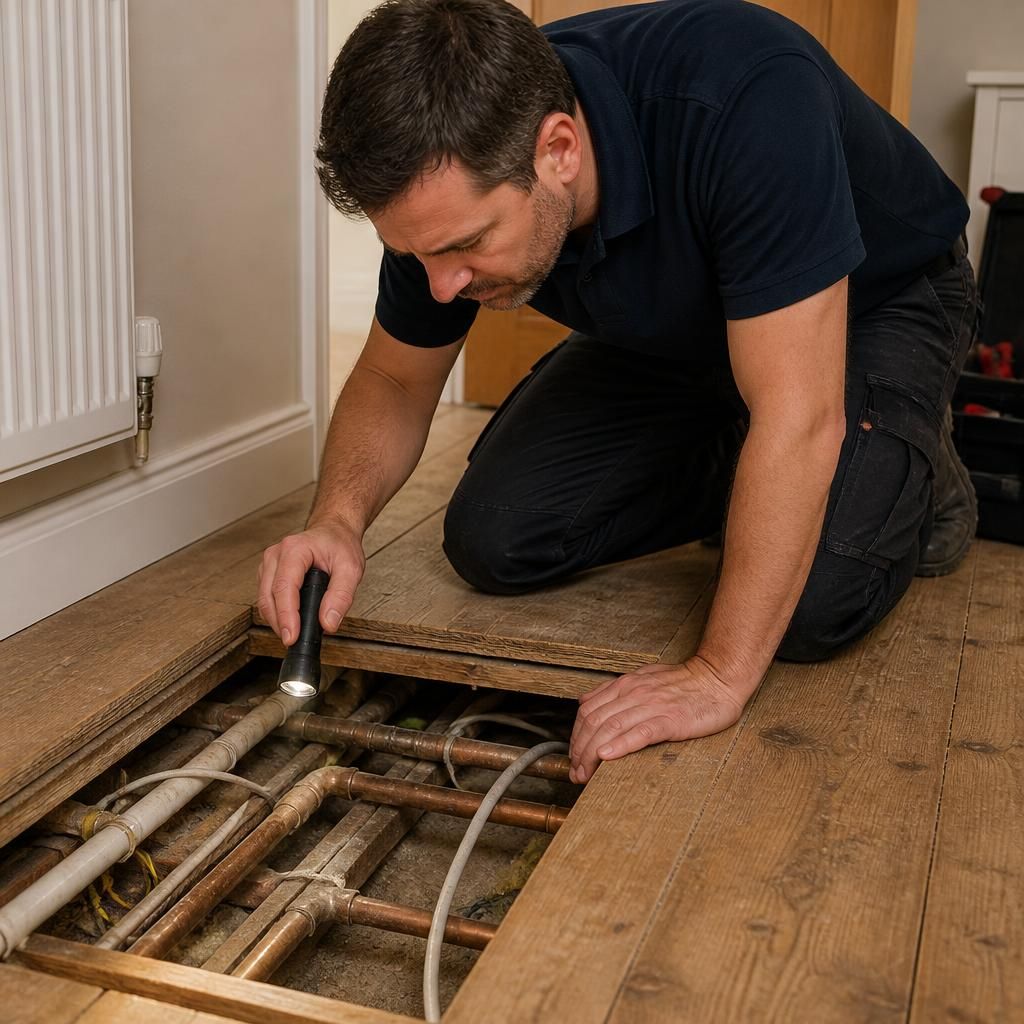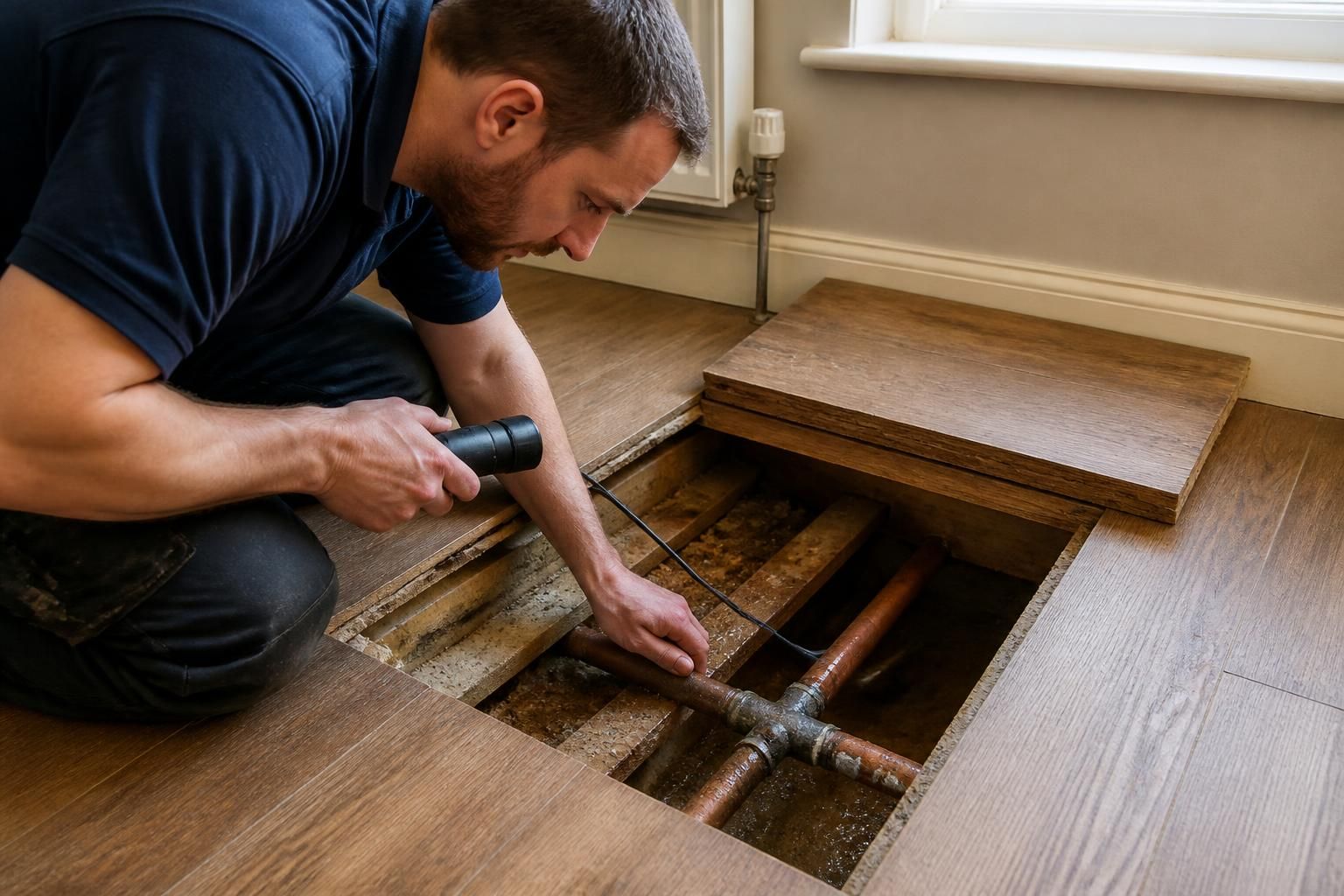
Emergency burst pipe repair may require opening a wall, ceiling or floor, but only where the damaged section cannot be reached safely by less disruptive means. The usual approach is to identify the leak, isolate the water supply, assess the pipe and create the smallest practical access point for the repair.
The amount of access needed depends mainly on the pipe’s location, the extent of the damage and the materials surrounding it. A visible split beneath a sink, behind an appliance or in an accessible service area may be repaired without disturbing the building fabric. By contrast, a pipe concealed behind plasterboard, beneath a solid floor or within a ceiling void may require a section to be removed.
Before cutting into a surface, a plumber can assess signs such as damp patches, staining, dripping sounds, reduced water pressure and moisture around fixtures. Depending on the circumstances, leak detection may involve visual checks, pressure testing, acoustic equipment or moisture readings. These methods help narrow down the affected area, although they cannot always identify the exact failed joint or length of pipe without some physical access.
Where the pipe is behind a plasterboard wall or suspended ceiling, the repair may involve removing a small, controlled section of the board. Floorboards can sometimes be lifted and replaced more easily than solid flooring. With tiled, concrete or finished floors, access may be more involved because the covering may need to be carefully removed before the pipe can be reached.
Opening up the area can be necessary for several reasons:
- To expose enough of the pipe to identify the split, crack or failed joint.
- To remove damaged pipework and fit a sound replacement or suitable repair section.
- To check whether water has affected nearby joints, insulation or supporting materials.
- To confirm that the repaired section is not still leaking before the surface is closed.
In some cases, an access panel or a neatly positioned opening is more appropriate than removing a large area. The plumber should consider the location of pipe joints, the direction of the pipe and the need to reach the repair tools. Cutting too little access can make the repair difficult, while unnecessary removal creates extra work and may damage surrounding finishes.
A burst pipe does not automatically mean the whole pipe must be replaced. If the damage is localised and the remaining pipe is in suitable condition, a repair section or replacement fitting may be sufficient. If the pipe has several weak points, shows corrosion or has been damaged over a longer length, replacing more of it may provide a more dependable repair. The condition of the surrounding pipework should be assessed rather than deciding solely from the visible water damage.
Water should be isolated before work begins where possible, and electrical risks must be considered if water has reached sockets, wiring, appliances or lighting. Do not touch electrical equipment in a wet area. Moving valuables away from the leak and placing a container beneath accessible dripping water can limit secondary damage, but do not remove wall or floor coverings yourself unless there is a clear safety reason and you know where services are located.
After the repair, the pipe should be tested before the opening is sealed. Drying and reinstating plaster, flooring, paint or decorative finishes may be separate from the plumbing work, so it is sensible to ask what access work and making good are included before the repair starts. In Birmingham and across the West Midlands, a professional assessment can establish whether the burst pipe is accessible without opening the structure or whether carefully controlled access is required.