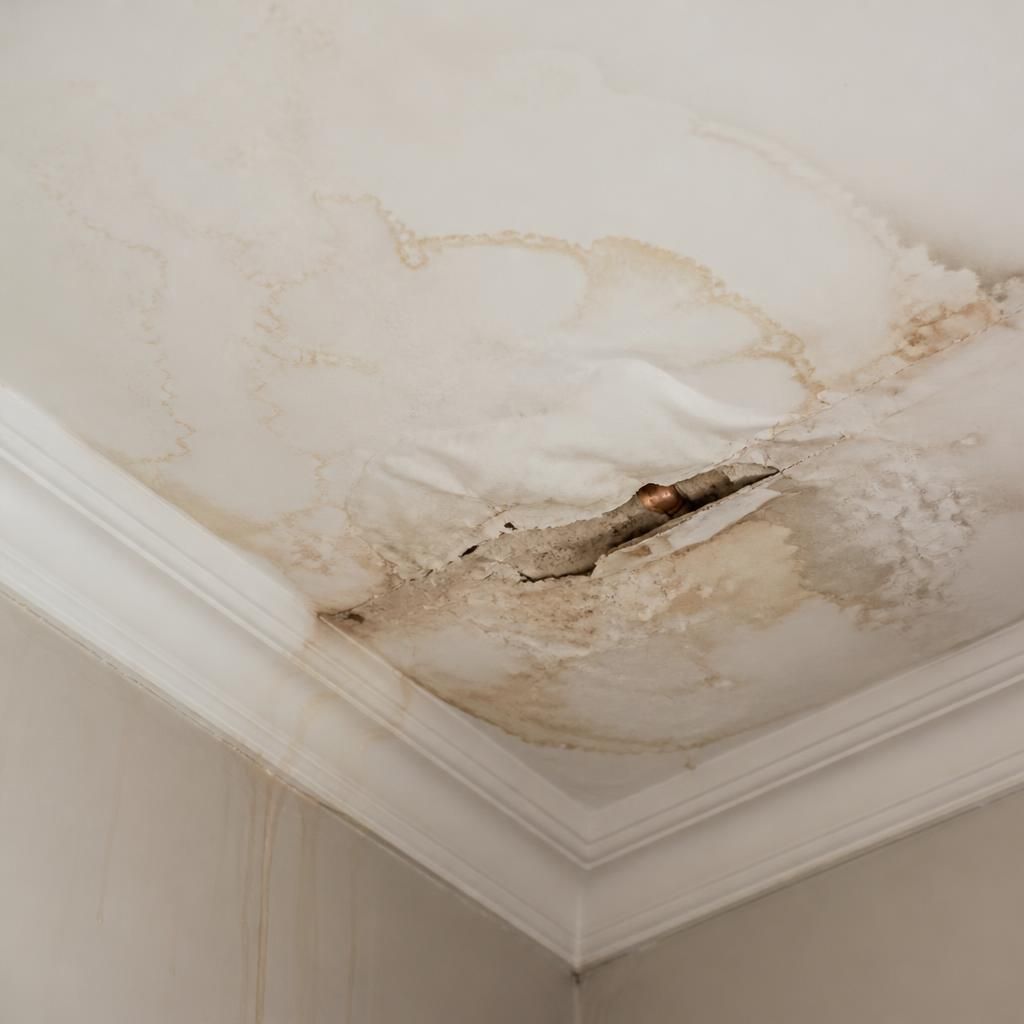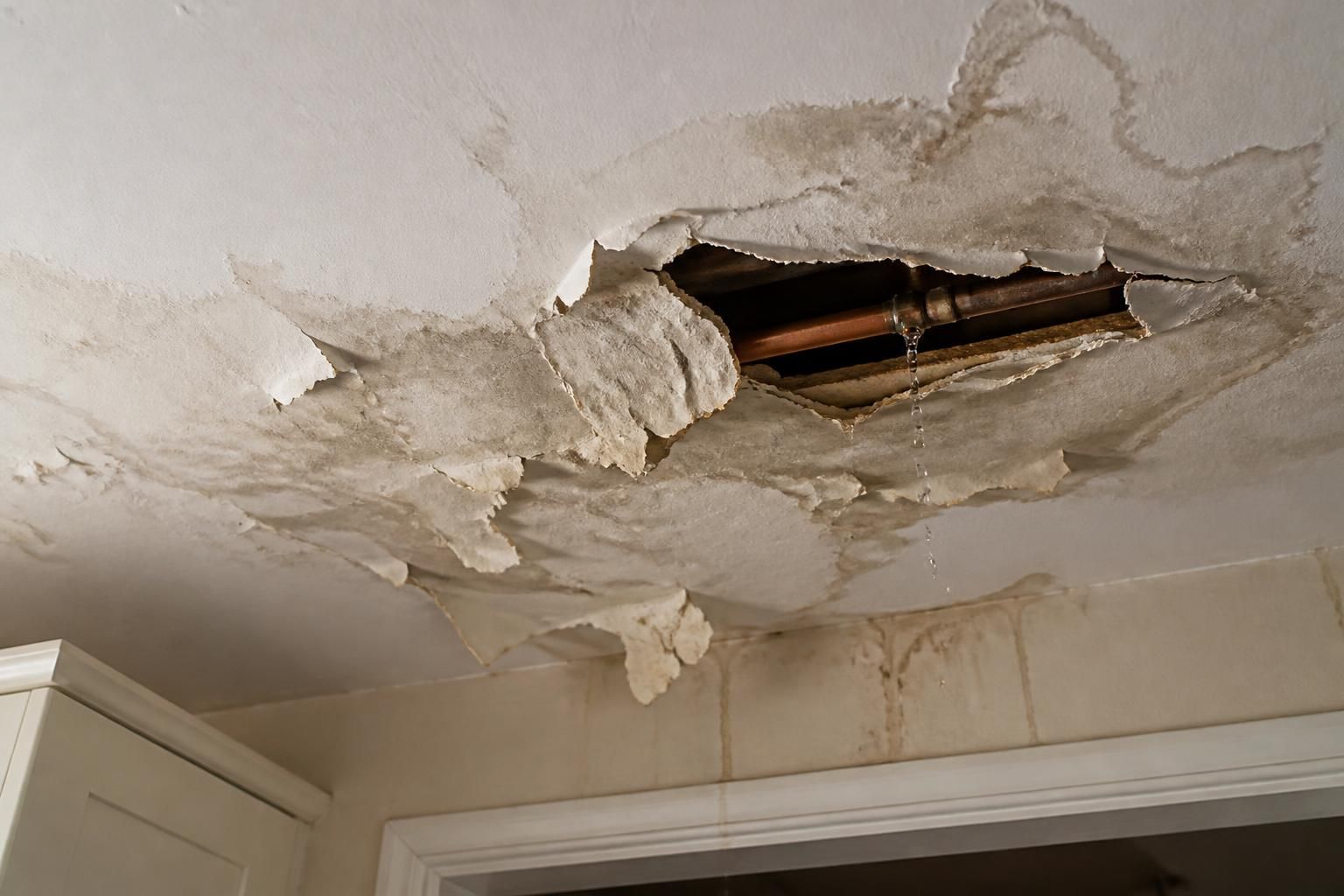
A burst water pipe is a pressurised supply pipe that has split, cracked or come apart, allowing water to escape faster than the surrounding materials can absorb it. The signs are not always dramatic: a concealed rupture may first appear as repeated moisture, an unexplained change in how a room or fitting behaves, or damage that returns after the area has been dried.
Look for changes that cannot be explained by normal household use. Check cupboards beneath sinks, areas around washing machines and dishwashers, behind toilets, near radiators and around the hot-water cylinder. Look at pipe joints, isolation valves and flexible appliance hoses for beads of water, corrosion, mineral deposits or a joint that has moved. A pipe can fail at a connection rather than split along its length.
Pay attention to flooring and joinery. Floorboards, laminate, skirting boards and cabinet bases may swell, lift, soften or separate after absorbing water. Doors can begin sticking where moisture has affected the frame, while paint or wallpaper may blister or peel. These signs can also result from a smaller leak, condensation or a plumbing fitting, so they do not prove that a pipe has burst; they indicate that the source needs to be identified.
Check whether the problem is linked to a particular fitting or appliance. Water appearing only when a toilet is flushed, a washing machine fills, or a tap is used may point towards that fitting, its waste pipe or its supply hose. Water that continues to appear when all fittings are unused is more consistent with a concealed supply-side leak. If the water is warm, the hot-water system may be involved; cold water is more commonly associated with the mains supply, although temperature alone is not a reliable diagnosis.
Consider the location and pattern of the moisture. Water can travel along joists, pipework, insulation and the back of a wall before becoming visible some distance from the actual failure. For that reason, the wettest-looking area is not necessarily where the pipe has split. Moisture that appears below an upstairs bathroom, beside a service duct or near a boiler or cylinder should be investigated along the likely pipe route rather than by assuming the nearest fitting is responsible.
Rule out other common causes before concluding that a pipe has burst. Condensation usually affects cold surfaces and may be widespread rather than concentrated around one route. A roof defect tends to worsen during or after rain, while a waste-pipe problem is generally associated with the use of a sink, bath or toilet. A leaking radiator valve, failed seal or appliance hose can produce similar local damage but requires a different repair. Comparing when the moisture appears with the use of particular fixtures can help a plumber narrow down the source.
Take sensible precautions once a burst is suspected. Keep people away from slippery areas, move furniture and belongings clear if it is safe to do so, and avoid using taps, toilets or water-fed appliances until the source is understood. If water is near sockets, switches, appliances or wiring, do not touch electrical equipment while standing in water. Isolate the affected electrical circuit only if it can be done without entering a wet or dangerous area, and contact a qualified electrician where necessary. Do not cut into a ceiling or wall simply to search for the pipe, as this can cause additional damage and may expose electrical services.
A professional inspection is needed when the source is hidden or the signs conflict. A plumber can isolate sections of the system, carry out a pressure test and trace the route of the supply pipe. Moisture detection equipment, acoustic listening and thermal imaging may help locate water behind finishes without relying solely on visible damage. The findings can distinguish a burst supply pipe from a fitting failure, waste leak or unrelated damp problem and guide the repair location.
Record the affected areas with photographs and note when the moisture was first noticed, which fittings had been used and whether the problem changes after the water supply is isolated. This information can support the diagnosis and help a landlord, insurer or plumbing professional understand the sequence of events. Ideal Plumbing Services provides water leak detection and plumbing repairs for residential properties, including homes occupied by homeowners, landlords and tenants in Birmingham and the West Midlands.