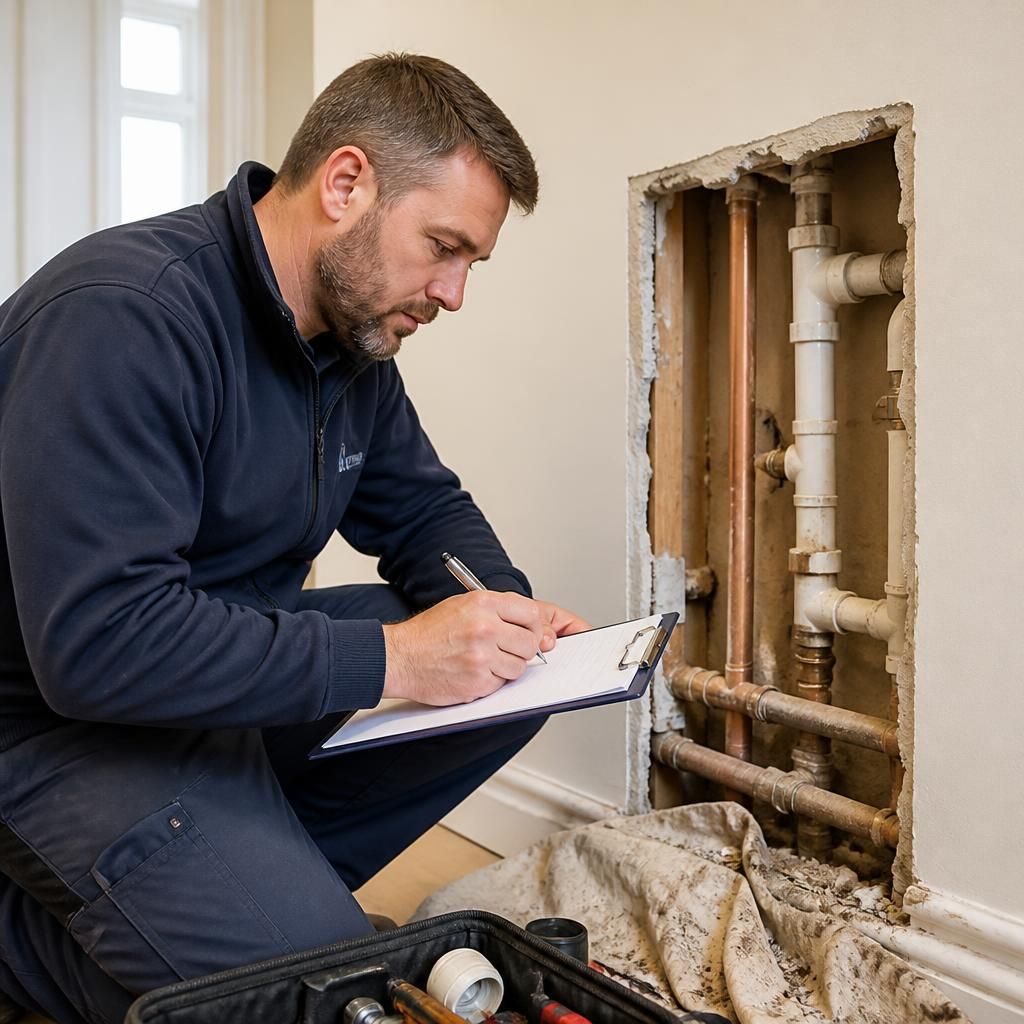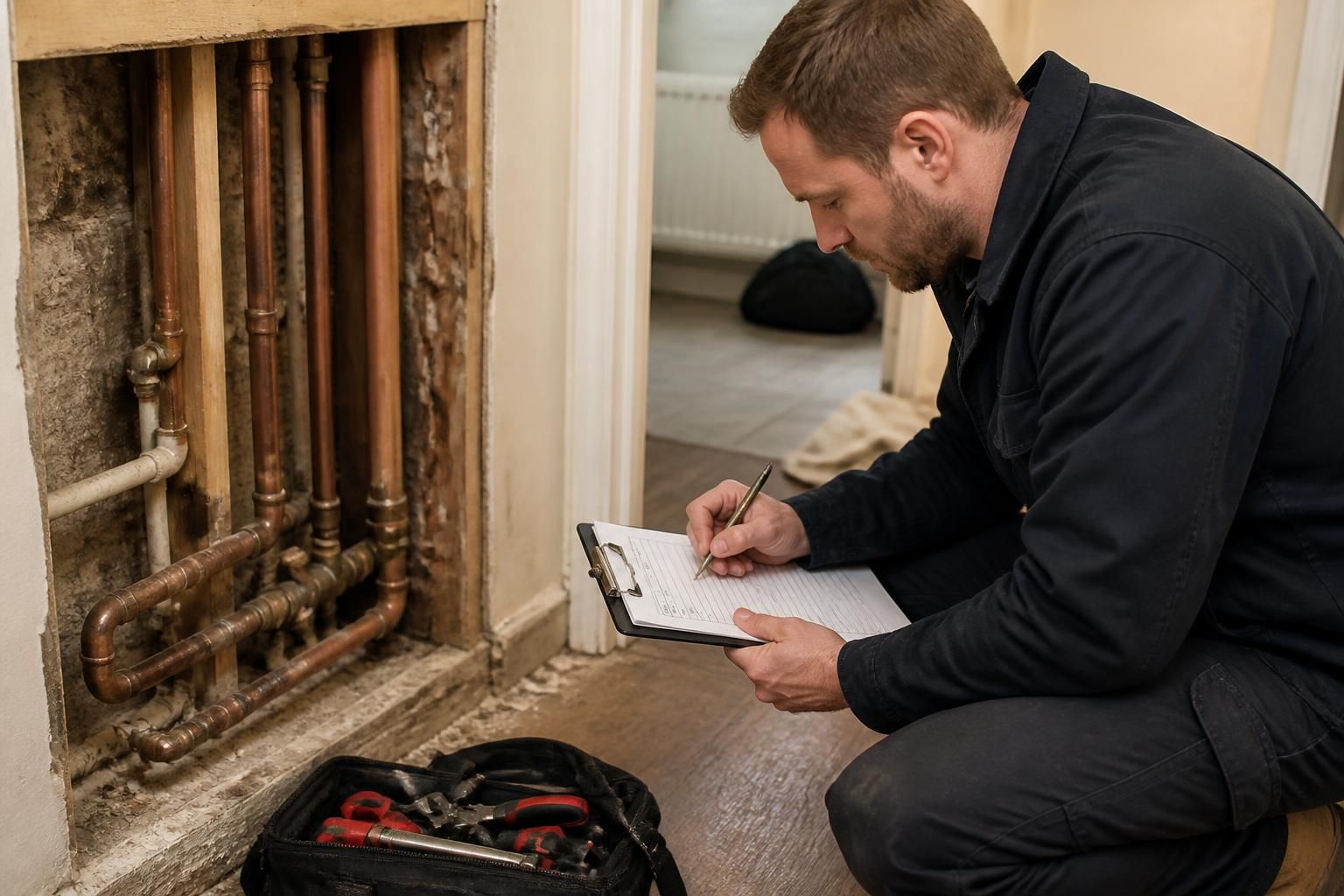
Once a burst pipe has been located, the next stage is to confirm the source, understand the extent of the failure and carry out a controlled repair. The plumber will then check for concealed moisture, verify that the plumbing system is operating safely and explain any further work needed before the affected area is put back into use.
- The leak point and pipe condition are confirmed. Finding visible water is not always the same as identifying the failed section. The surrounding pipework, joints, valves and connected fittings may be examined to establish whether the cause is a split, failed connection, corrosion, freezing or excessive pressure. This helps prevent a partial repair from leaving another weak point in service.
- The repair method is selected. The decision depends on the pipe material, its position, the size of the failure and the condition of nearby sections. A sound, accessible section may be repaired locally, while pipework that is brittle, corroded or difficult to isolate may require a wider renewal. If the pipe is behind a wall, beneath flooring or inside a cupboard, the plumber should explain the access required before opening the surrounding surface.
- The area is checked for hidden water. Water can travel along joists, behind plasterboard, beneath flooring and into insulation before it becomes visible. Damp materials, staining, swelling, odours and changes to nearby finishes can indicate that the damage extends beyond the original leak point. Electrical fittings near the affected area also need caution; they should not be used if they may have become wet, and a qualified electrician may be needed where electrical safety is uncertain.
- The plumbing system is brought back into service in a controlled way. After the work, water is reintroduced gradually while joints, fittings and accessible pipework are observed. Taps and appliances connected to the system may be checked for normal operation, and unusual noise, vibration or discoloured water should be reported rather than ignored. These checks help identify problems that only appear when the system is under normal use.
- Damage to the property is documented. Photographs, descriptions of affected materials and details of the work can be useful for landlords, tenants and household insurance records. Documentation should distinguish the plumbing repair from separate drying, decorating, flooring or building work, as different contractors or insurers may deal with those parts.
- Drying and reinstatement are considered separately. A repaired pipe does not immediately make wet materials dry or restore damaged finishes. Flooring, plaster, skirting boards, cabinets and insulation may need to be dried, cleaned or replaced according to their condition. Porous materials that remain damp can develop mould or odours, so the affected area should be monitored rather than covered up too soon.
Before the visit is complete, ask what has been repaired and what remains outstanding. Useful information includes the location and cause of the failure, whether any vulnerable pipework was found, which surfaces were opened, and whether follow-up drying or building work is recommended. Keep the repair details and photographs with any insurance or property maintenance records.
If a burst pipe has affected a neighbouring property, a communal area or a rented home, inform the relevant landlord, managing agent or building manager. In a rented property, avoid arranging permanent alterations without the owner’s agreement unless immediate action is needed to prevent further damage. A written record of the affected rooms and completed work can help all parties understand what still needs attention.
Once the immediate work is finished, prevention may involve protecting exposed pipework from freezing conditions, checking accessible isolation valves, securing loose pipes and investigating recurring pressure or temperature problems. These measures do not replace the repair, but they can reduce the risk of a similar failure affecting the property again.