A burst pipe inspection is a structured diagnostic visit used to establish which water or heating system is affected, how the failure is influencing the property, and what work is appropriate. The plumber begins by gathering information, carrying out controlled checks and using suitable leak-detection methods before recommending repair or replacement.
The inspection normally starts with a brief assessment of the circumstances. The plumber may ask when the problem was first noticed, whether the water flow changes when taps or appliances are used, which rooms are affected and whether the property has recently had plumbing, heating or building work. These details help distinguish a pressurised supply pipe from a heating circuit, appliance connection or another source of water.
Where necessary, the relevant water supply or heating circuit is made safe before diagnostic work begins. This can involve checking shut-off points, observing the water meter or boiler pressure and confirming whether water continues to move when outlets are closed. These checks help identify whether the leak is ongoing, intermittent or linked to a particular part of the system. If water has reached electrical fittings, the plumber can advise that the affected electrical circuit is isolated by a qualified electrician.
The plumber then examines accessible pipework, valves, joints, appliances and connection points. Particular attention is given to areas where movement, corrosion, freezing, poor installation or failed seals may have weakened the system. Pipe materials and fittings are also considered because the appropriate repair depends on the type of pipe, its position and whether the surrounding section is likely to remain serviceable.
For concealed leaks, the inspection method depends on the building and the pipe layout. A plumber may use:
- pressure testing to determine whether a sealed system is losing pressure;
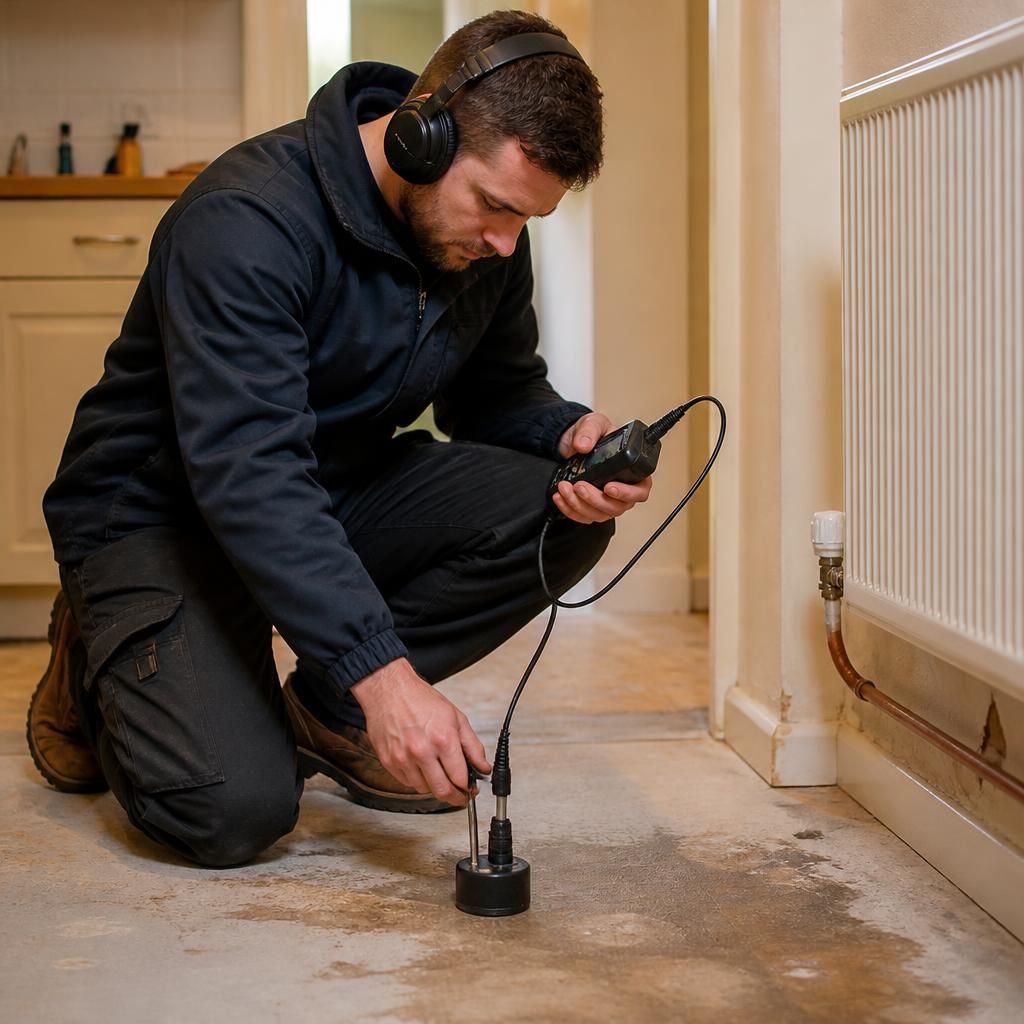
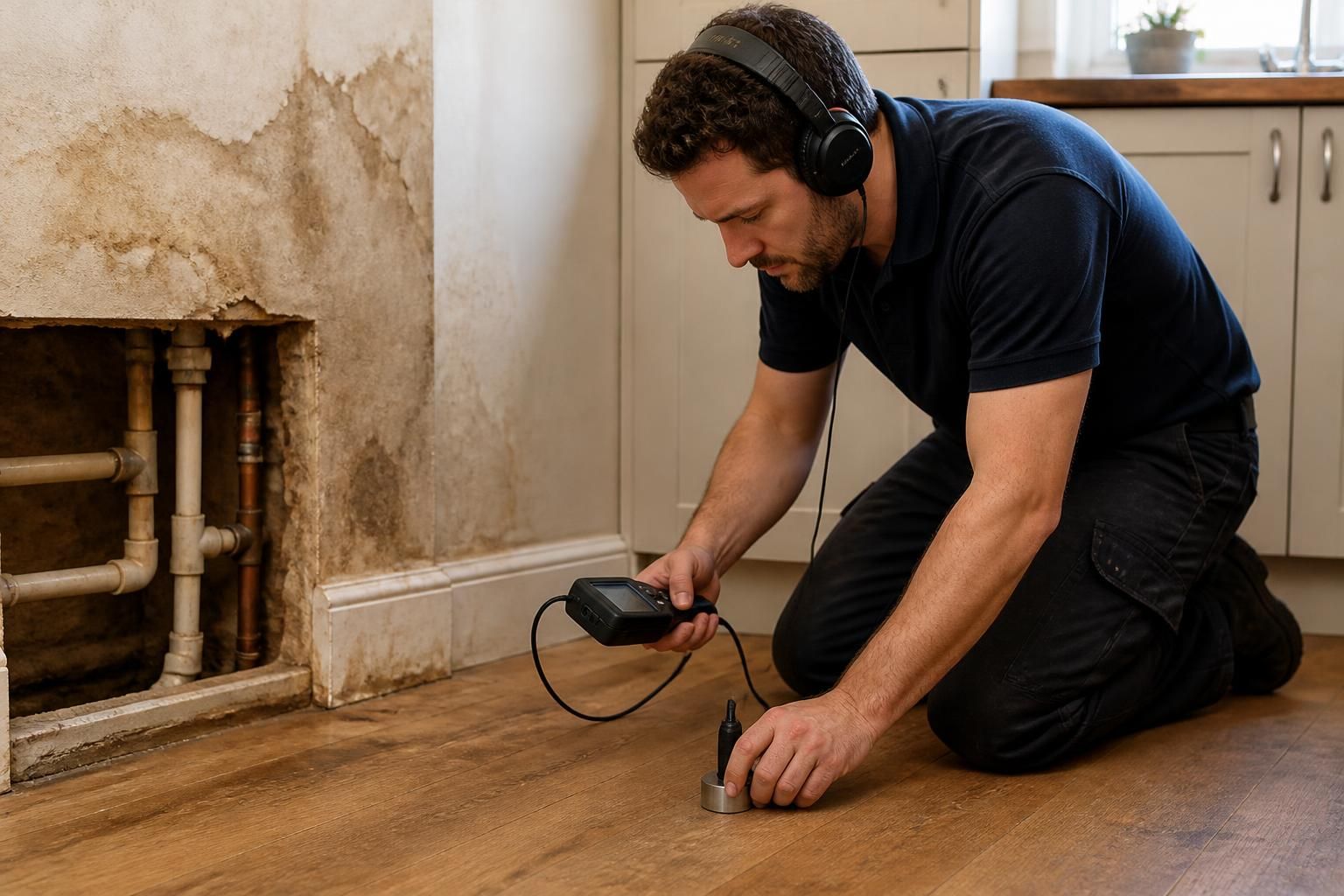
- acoustic equipment to listen for escaping water within floors, walls or other enclosed areas;
- thermal imaging to identify temperature differences associated with hot water or heating pipework;
- moisture measurements to compare affected areas and help assess how far water has travelled; and
- careful tracing from accessible pipe routes, fittings and service voids to narrow down the likely failure point.
These methods are used selectively rather than automatically. For example, thermal imaging is more useful where the leaking pipe carries heated water, while acoustic testing can be affected by background noise, insulation and the construction of the building. A reliable inspection compares test results with the plumbing layout and visible evidence instead of treating one reading as conclusive.
The plumber will also consider the condition of nearby materials. Saturated plasterboard, flooring, insulation, timber and cabinets can affect how the repair is approached, even when the pipe itself is accessible. This does not replace a specialist structural or electrical assessment, but it helps identify issues that should be addressed alongside the plumbing work. The inspection may also establish whether water has entered a neighbouring flat, shared area or another part of the property.
Access requirements should be discussed before any intrusive work is carried out. A diagnostic inspection can often begin through existing access points, removable panels, cupboards or exposed pipe routes. If the likely leak is enclosed, the plumber should explain what limited opening may be needed and why. Removing a small section of covering may be preferable to opening a larger area without evidence, although the exact approach depends on the pipe position and the construction.
At the end of the inspection, the findings should be explained in practical terms. This usually includes the suspected failure, the evidence supporting that conclusion, whether the affected section can be repaired, and whether a wider replacement would be more suitable. The plumber should also identify any immediate precautions, describe the proposed work and make clear whether further investigation by another specialist is needed.
For homeowners, landlords and tenants, it is useful to keep photographs of visible water damage and note any changes in pressure or heating performance before the visit. Do not cover, clean away or redecorate affected areas before they have been assessed, as this can remove useful evidence. Where the property is rented, the inspection findings can help the tenant and landlord agree the next step and retain a clear record of the condition reported.
An inspection is separate from the repair itself. Its purpose is to reduce guesswork, limit unnecessary disturbance and provide a sound basis for deciding how the burst pipe should be dealt with. Ideal Plumbing Services provides residential plumbing inspections and repairs across Birmingham and the wider West Midlands, with a focus on clear explanations and charges agreed before work proceeds.