Commercial leak detection generally causes limited, controlled disruption because the investigation is focused on identifying the source rather than opening up large areas immediately. The main effects are usually restricted access, temporary changes to water use and coordination with the people responsible for the premises. More intrusive work is considered only when the leak cannot be accurately located through investigation alone or when safety requires the system to be isolated.
The level of disruption depends on several factors:
- Where the leak is suspected: A visible leak in a plant room, toilet area or service cupboard is easier to inspect than moisture appearing several metres away from concealed pipework.
- Which system is affected: A cold-water supply, heating circuit, boosted system, drainage pipe or underground service may require a different testing approach and different access arrangements.
- How the property is used: Offices, shops, restaurants, warehouses, healthcare premises and multi-occupancy buildings have different restrictions around noise, access, hygiene and interruption to services.
- Whether the pipework is accessible: Ceilings, flooring, wall finishes, fixed furniture and stored goods can all affect how easily an engineer can inspect the suspected area.
- Whether the leak is active: A continuing leak may require temporary isolation to prevent further damage, while an intermittent leak can require more detailed testing to reproduce the conditions under which it occurs.
A typical investigation begins with a review of the reported symptoms, the building layout and any available plumbing information. The engineer may check water meters, pressure behaviour, isolation valves, visible fittings, plant and nearby surfaces before carrying out more specific tests. This preliminary work helps narrow the investigation and avoids disturbing areas that are not connected to the fault.
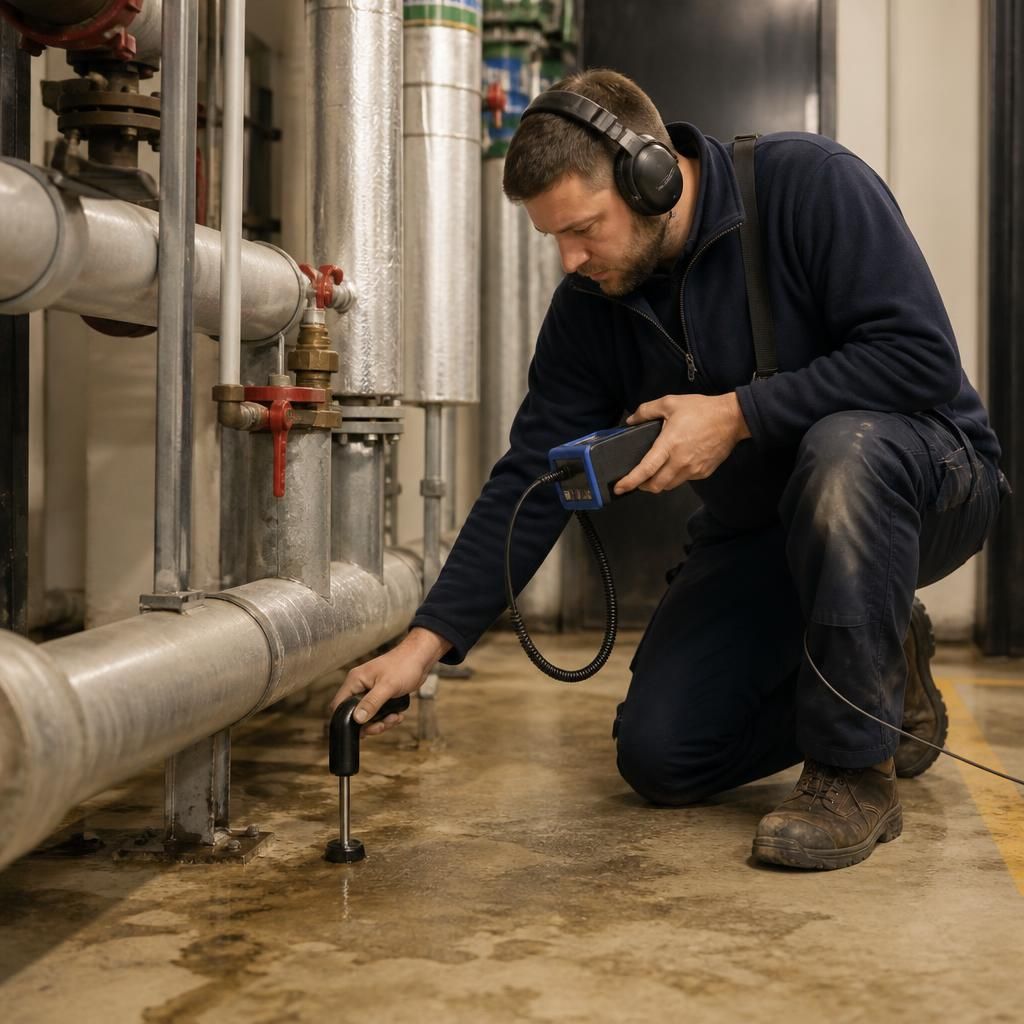
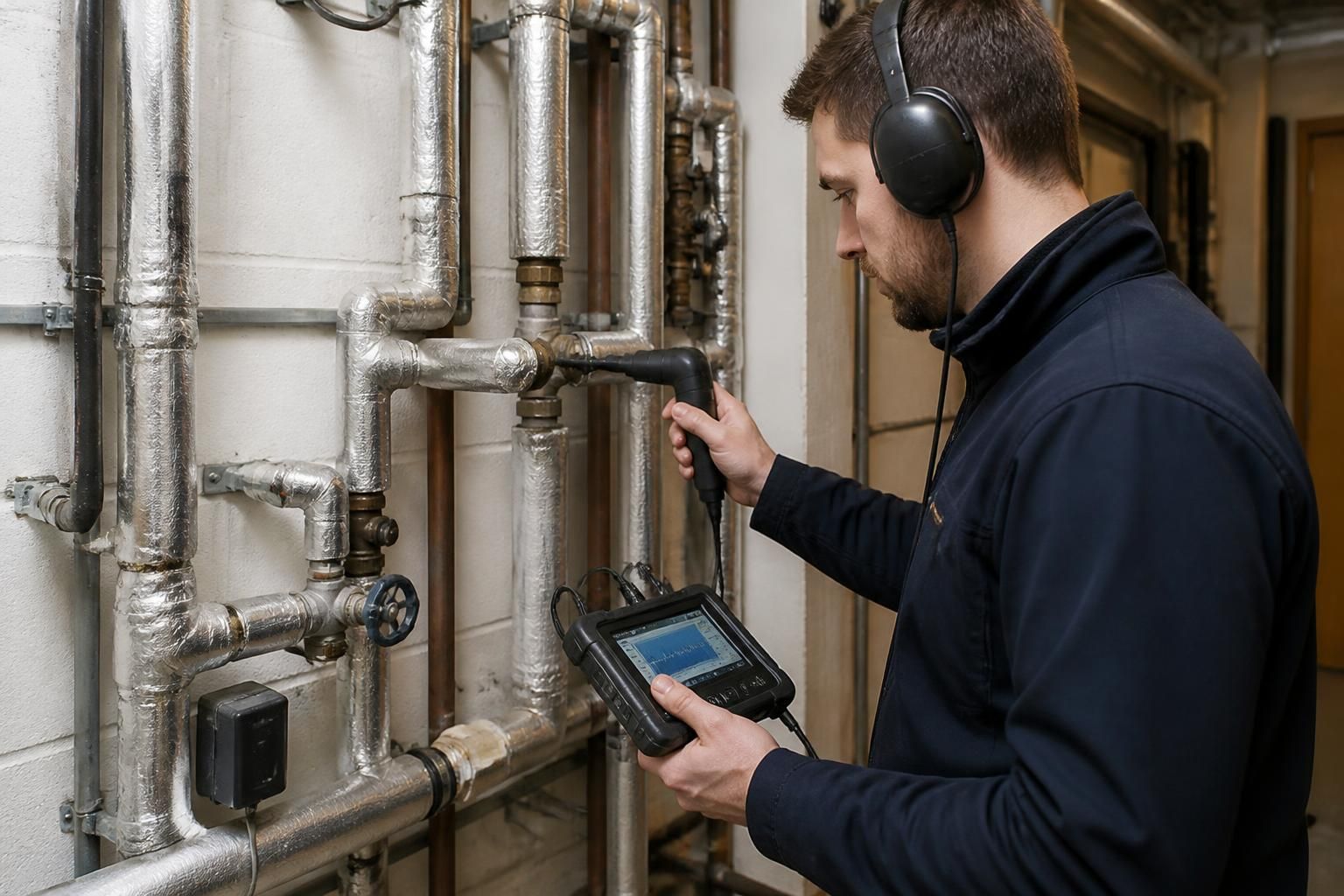
Depending on the system and construction, suitable techniques may include acoustic listening, thermal imaging, moisture measurement, pressure testing or tracer gas. These methods can help distinguish between a supply leak, a heating fault, a drainage problem and moisture that has migrated from another location. The purpose is to build enough evidence to identify the likely source and define the repair area, rather than rely on the position of the damp patch alone.
Some temporary disruption may still be necessary while testing takes place. Affected taps, toilets, appliances, heating circuits or other outlets may need to remain unused for part of the investigation. Engineers may also need access to risers, ceiling voids, plant rooms, service ducts, inspection chambers or neighbouring areas. In a tenanted or multi-unit building, access may need to be arranged with occupants, facilities staff or a managing agent.
Where water must be isolated, the impact should be considered across the building rather than only in the room where the leak is visible. A local valve may affect one fitting or zone, whereas a poorly labelled or shared system may require a wider isolation. Identifying valves in advance, confirming which areas depend on the supply and notifying relevant users can help prevent avoidable interruption.
Noise is normally associated with investigation equipment, access to enclosed spaces or any limited opening needed to inspect pipework. The impact can be reduced by agreeing suitable working areas, protecting stock and furnishings, keeping walkways clear and scheduling intrusive tasks around the property's operational requirements. Sensitive areas may also require additional controls for cleanliness, security or customer safety.
If testing identifies a concealed leak, the next step is not automatically extensive removal of floors or walls. The findings should indicate the most appropriate access point and whether a fitting, section of pipe, valve, joint or drainage component needs attention. A small inspection opening may be required to confirm the condition of the pipework or complete the repair, but unnecessary disturbance should be avoided where the evidence does not support it.
In some cases, the investigation itself can be completed with little visible change to the premises, while the subsequent repair causes the greater disruption. This is particularly relevant where pipework is beneath finished floors, behind fixed walls, above suspended ceilings or within areas that cannot remain in use during the work. Leak detection therefore helps manage disruption by establishing the repair location before decisions are made about access and reinstatement.
Commercial operators can make the process more efficient by providing:
- Details of when the problem was first noticed and whether it changes with occupancy, weather or equipment use.
- Access to plant rooms, service cupboards, roof spaces, risers, external chambers and affected rooms.
- Available drawings, pipework records, previous repair information and locations of isolation valves.
- Information about areas with restricted access, hygiene requirements, security controls or vulnerable occupants.
- A responsible contact who can authorise isolation, access and any necessary opening-up work.
After the investigation, the findings should be explained clearly, including the suspected source, the evidence supporting it, any limitations and the likely effect of remedial work. If the source cannot be confirmed without opening a surface, that should be identified before intrusive work begins. This allows the business or property manager to make an informed decision about access, isolation and reinstatement.
In practical terms, commercial leak detection is usually less disruptive than allowing an unidentified leak to continue or carrying out exploratory demolition without a clear diagnosis. Its value is in narrowing the affected area, separating the leak source from the visible symptoms and providing a more controlled basis for repair planning.