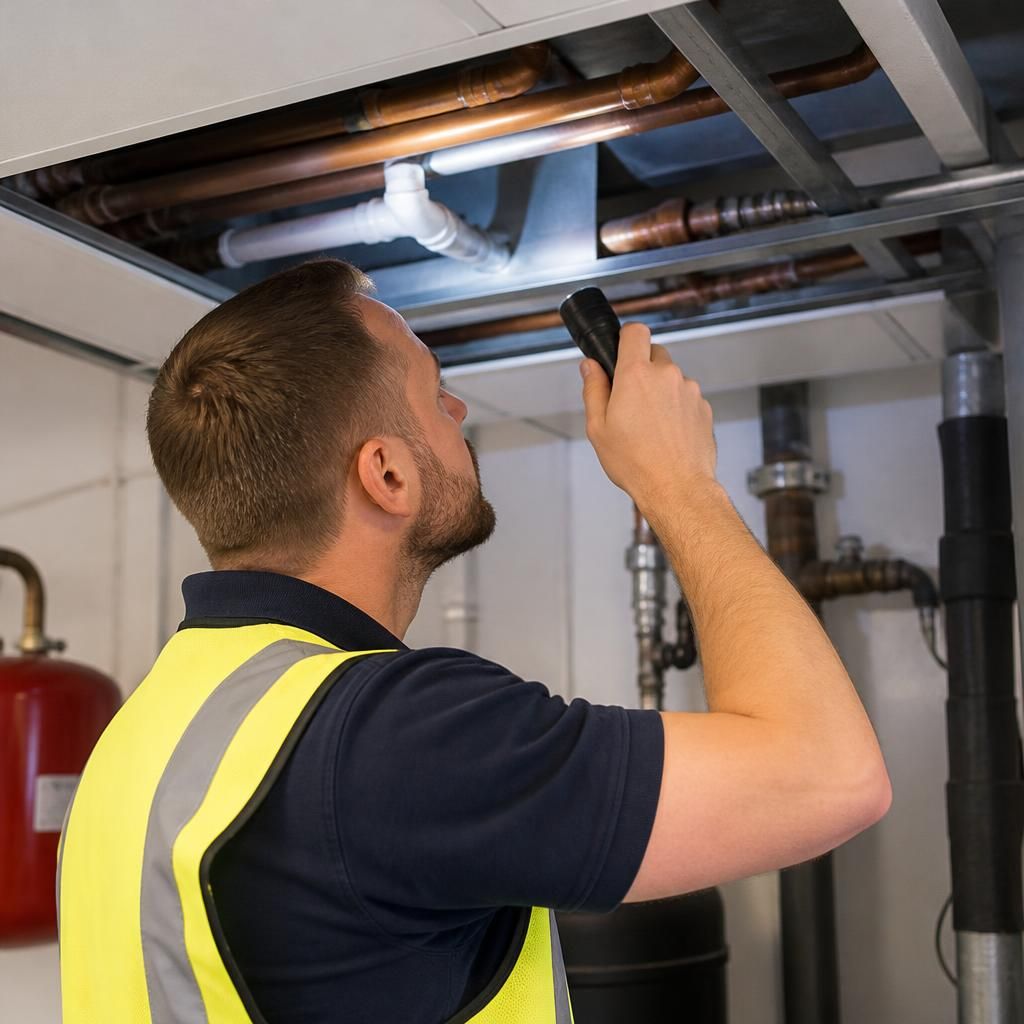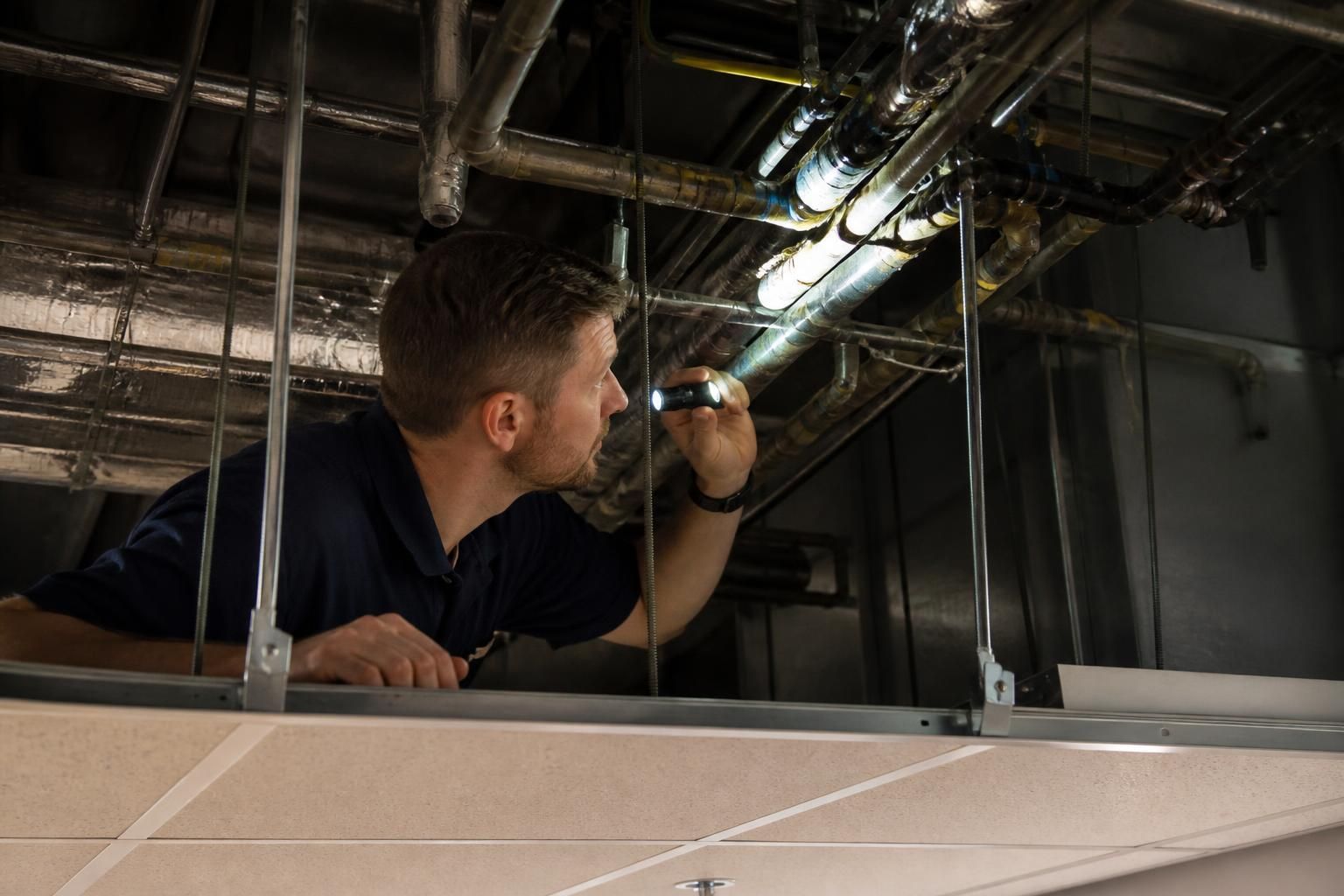
Businesses should prepare a commercial leak detection visit by coordinating the right people, preserving useful evidence, and ensuring the technician can investigate safely without interrupting essential operations unnecessarily. Good preparation helps distinguish an active leak from secondary damage and gives the surveyor the information needed to select suitable detection methods.
Nominate a responsible contact. Choose someone who knows the building, can provide access to relevant areas and has authority to discuss next steps. For rented premises, involve the landlord, managing agent or facilities manager as appropriate. Make sure reception, security and site staff know that a plumbing inspection is expected, particularly where access is controlled.
Coordinate with occupants and departments. Tell affected staff, tenants or contractors what the inspection involves and identify any areas that cannot be entered without prior consent. In a multi-occupancy building, establish which rooms, units or shared services may be connected to the suspected pipework. This can prevent important parts of the system being overlooked while maintaining privacy and normal workplace procedures.
Protect stock, equipment and documents. Move vulnerable items away from damp areas where this can be done safely, and use suitable protection beneath a visible drip. Do not cover up staining, remove fixed panels or dismantle equipment simply to make the area look tidy. Keep electrical equipment away from water and follow the site's electrical safety procedures if moisture is near power supplies.
Control the water supply only where appropriate. If the leak is causing immediate damage, a responsible person may need to use an identified internal stop valve or isolation valve, provided they are authorised and can do so safely. Record which section has been isolated and note any operational consequences. Do not operate unfamiliar valves, enter hazardous areas or interfere with fire protection, heating or process systems without the necessary approval.
Prepare building and system information. In addition to plumbing drawings and maintenance history, identify the locations of stop valves, water meters, storage tanks, pumps, boilers and plant serving the affected area. Note whether the premises has mixed-use pipework, concealed services, underfloor systems or recently altered facilities. Even incomplete information can help the technician plan the inspection and interpret readings.
Keep relevant records available. Useful material may include facilities-management reports, contractor invoices, insurance correspondence, water-consumption information and records of reported damp or mould. Where several parties have noticed the issue, consolidate their observations rather than relying on separate verbal accounts. This creates a clearer sequence of events without altering the physical evidence.
Check site conditions before the appointment. Identify restricted areas, low ceilings, roof access requirements, confined spaces, asbestos-related controls, hygiene rules and any personal protective equipment required by the premises. Tell the technician about these arrangements in advance. A leak investigation should not begin in an area where access would breach the building's risk controls.
Confirm what the inspection can involve. Leak detection may use non-invasive techniques, but the appropriate method depends on the pipe material, its location and the surrounding construction. Ask whether the assessment may require temporary isolation, acoustic checks, thermal imaging, tracer methods or limited access to finishes. Agree how any opening-up work, reinstatement or additional repairs will be authorised before it is undertaken.
Keep operations running safely. Consider whether water isolation, noise or access restrictions could affect toilets, kitchens, heating, production areas or customer facilities. Arrange a suitable time within the site's operational requirements and identify essential services that must remain active. If a system cannot be interrupted, tell the technician so the investigation can be planned around that constraint rather than discovered during the visit.
Prepare questions and decision-making arrangements. Decide who can approve further investigation, temporary isolation and repair recommendations. Ask for the findings to distinguish the suspected source from resulting damage, explain the level of certainty, and identify any limitations caused by inaccessible pipework or operating conditions. Request written details of recommended next steps so that building owners, insurers, tenants and contractors are working from the same information.
Preparation should support the inspection, not attempt to diagnose or repair the leak in advance. Preserve the affected area, communicate site restrictions clearly and ensure an authorised contact is available to discuss the building and its systems. These steps give a commercial leak detection visit a reliable operational and technical context.