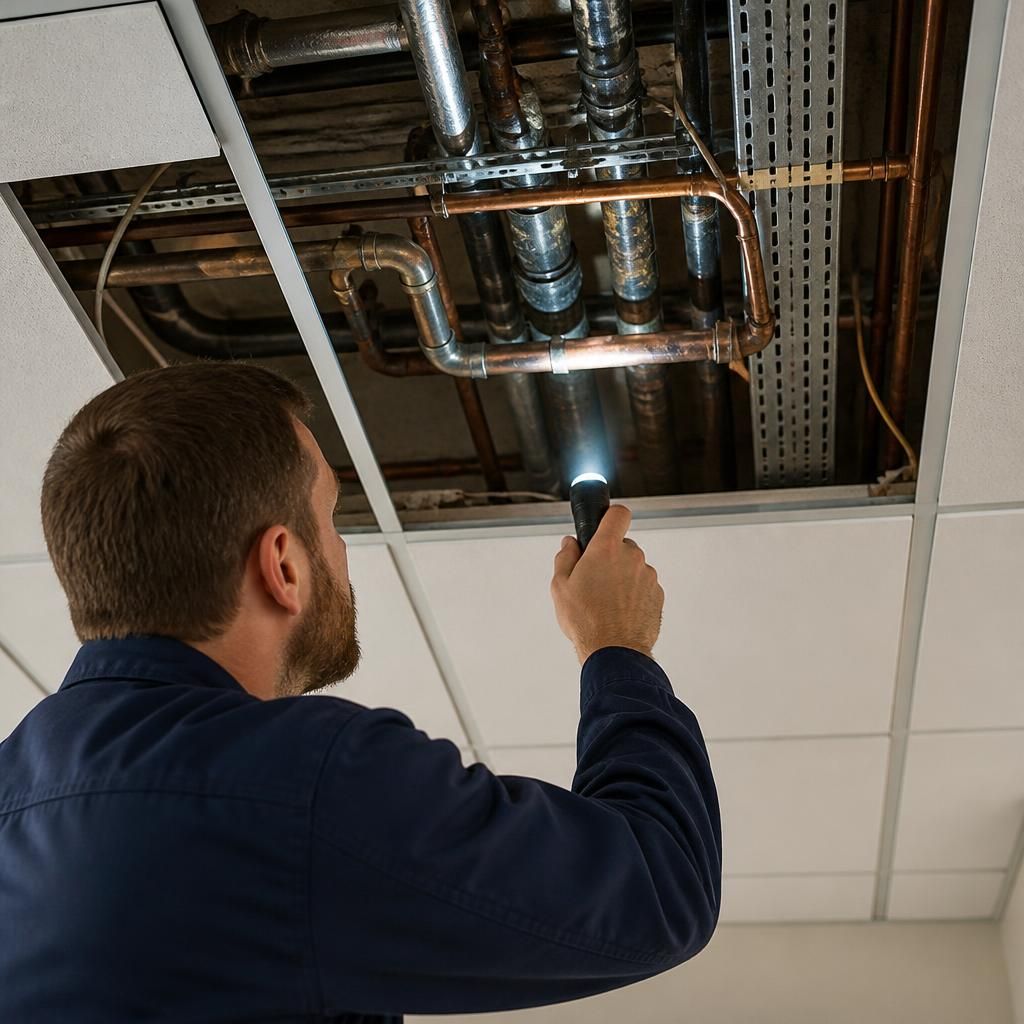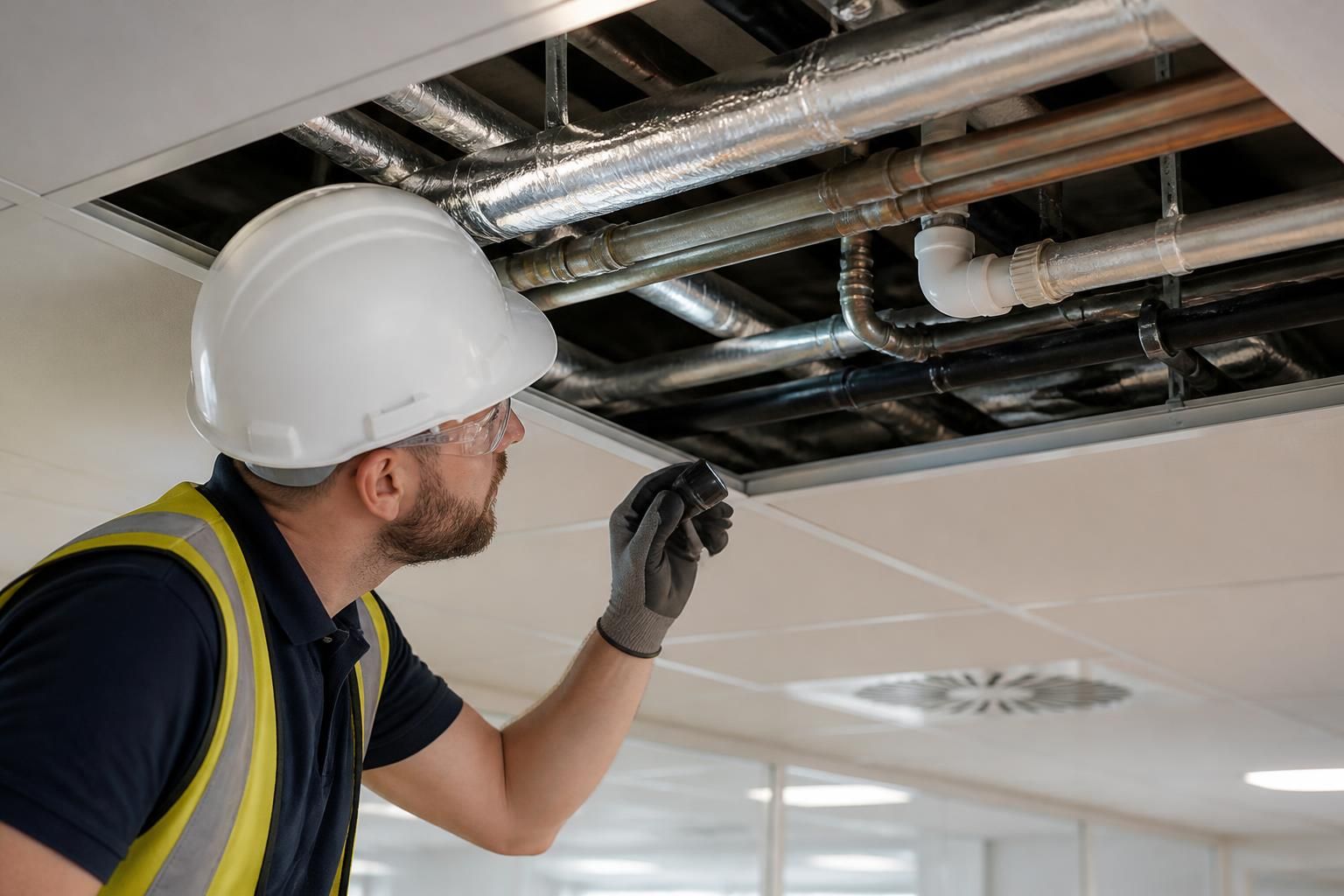
Repairs following commercial leak detection usually involve making the affected installation watertight, replacing any failed components, and restoring areas affected by the investigation. The work required is determined by the leak’s exact position, the condition of the installation, access requirements and whether the issue has affected electrical systems, building materials or business operations.
Once the source has been identified, the plumber will normally explain the recommended repair before work begins. This should cover:
- the confirmed or suspected cause of the leak;
- which part of the installation requires attention;
- whether access involves lifting flooring, opening a wall or reaching a concealed service area;
- any temporary measures needed to control further escape of water; and
- the testing and reinstatement required after the repair.
Some leaks can be resolved with a local repair, while others indicate that a section of the installation has deteriorated and should be renewed. If the affected area is difficult to reach, the repair may also involve carefully removing and replacing an access panel, floor covering, wall finish or ceiling section. Plumbing repairs should be coordinated with the person responsible for the premises so that access, isolation and reinstatement are properly managed.
Where water has entered building materials, further remedial work may be necessary after the plumbing has been made secure. This can include drying affected areas, removing saturated materials and checking for staining, mould or deterioration. A leak detection survey may identify the source, but it does not necessarily assess every consequence of prolonged moisture exposure. A separate inspection may therefore be appropriate for ceilings, walls, flooring or stored contents.
Commercial premises may also need additional checks where the leak has reached electrical equipment, plant rooms, suspended ceilings or other building services. The water supply should remain isolated in the affected area until it is safe to restore it. If contamination is possible, the repair plan may need to include hygiene precautions and controlled disposal of affected materials.
After the repair, the installation should be tested under normal operating conditions. This can involve restoring the supply in stages, checking accessible connections, observing pressure and confirming that no further moisture is appearing. For larger premises, it is sensible to record the work completed, the location investigated and any recommendations for future maintenance. This provides useful information for landlords, facilities managers and insurers.
A leak can also reveal a wider maintenance issue. Corrosion, movement, poor previous workmanship or ageing materials may increase the likelihood of another failure nearby. An experienced commercial plumber can distinguish between a limited repair and a situation where replacing a larger section is more practical. The cheapest immediate option is not always the most suitable if it leaves weakened surrounding components in service.
Before approving the work, businesses should ask whether the quotation includes access, removal of damaged finishes, testing, waste removal and making good. They should also clarify which work is plumbing-related and which may require another specialist. Clear written information helps prevent unexpected charges and allows the premises to plan any necessary disruption.
For commercial properties in Birmingham and across the West Midlands, Ideal Plumbing Services can assess the repair implications of a detected leak and recommend suitable remedial work for the installation and surrounding area.