Commercial properties need specialist leak detection when a leak may be concealed, difficult to trace or capable of disrupting operations beyond the immediately visible damage. This is particularly important where pipework runs beneath floors, behind finished walls, above suspended ceilings or through service ducts, because the point where water appears may be some distance from its source.
Some commercial premises are more likely to benefit from specialist investigation than others:
- Leisure centres and gyms: showers, changing rooms, plant areas and wet services create numerous potential leak points. Water can also move beneath tiled surfaces or through complex heating and circulation systems.
- Care homes and supported accommodation: leaks require careful investigation because residents may be vulnerable to disruption, while shared bathrooms, kitchens and heating systems can make the source difficult to isolate.
- Student accommodation: repeated bathroom or kitchen layouts, shared risers and multiple occupiers can make it unclear which room or section of pipework is responsible.
- Salons and treatment premises: sinks, washing stations, boilers and drainage connections may be installed within fitted units or finished areas where unnecessary opening-up could affect the business.
- Places of worship and public buildings: large floor areas, infrequently accessed rooms and high-level pipework can allow a minor leak to remain hidden until staining, odours or deterioration become noticeable.
- Mixed-use premises: shared services between commercial units and residential areas can make responsibility and fault location more complicated, particularly where pipework passes through communal spaces.
Specialist leak detection is also appropriate for premises with a complex or altered plumbing layout. Extensions, refurbishments and changes of use can leave old pipe runs, redundant connections or undocumented alterations behind walls and floors. In these circumstances, drawings may not reflect the current installation, so a methodical investigation is more reliable than assuming the leak is close to the visible symptom.
The risk is greater where a property has valuable finishes, specialist equipment, stock or sensitive contents. A slow leak beneath a finished floor, for example, may cause progressive damage before it is obvious. In a building with suspended ceilings, water may spread along the ceiling void and affect several rooms. In a property with shared heating or hot-water services, a fault may also affect occupants or neighbouring units without producing a clear local sign.
Warning signs that justify investigation include unexplained increases in water use, damp or discoloured surfaces, recurring mould, musty smells, low pressure, warm patches on floors, sounds of running water when outlets are not in use and repeated damage after apparently minor repairs. A leak can also be suspected when a heating system repeatedly loses pressure or when one area dries and becomes damp again without an obvious cause.
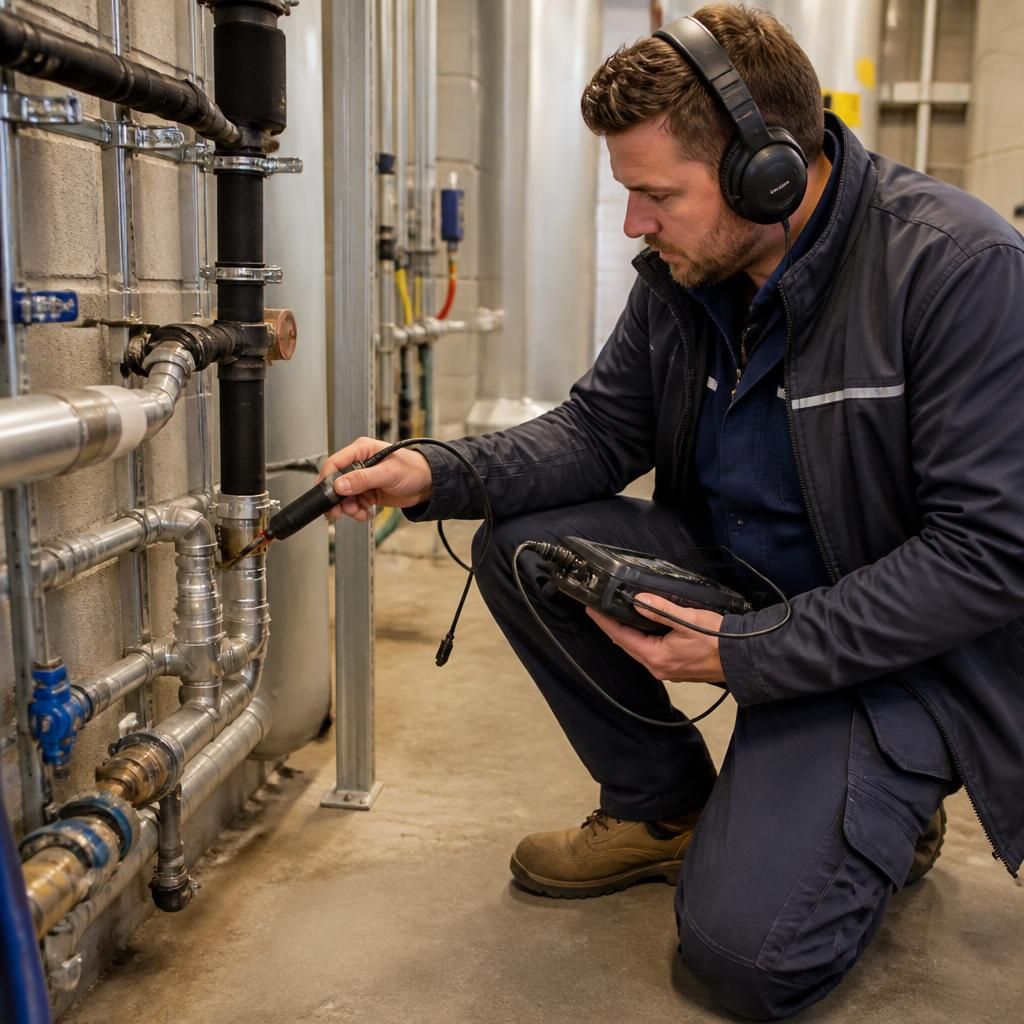
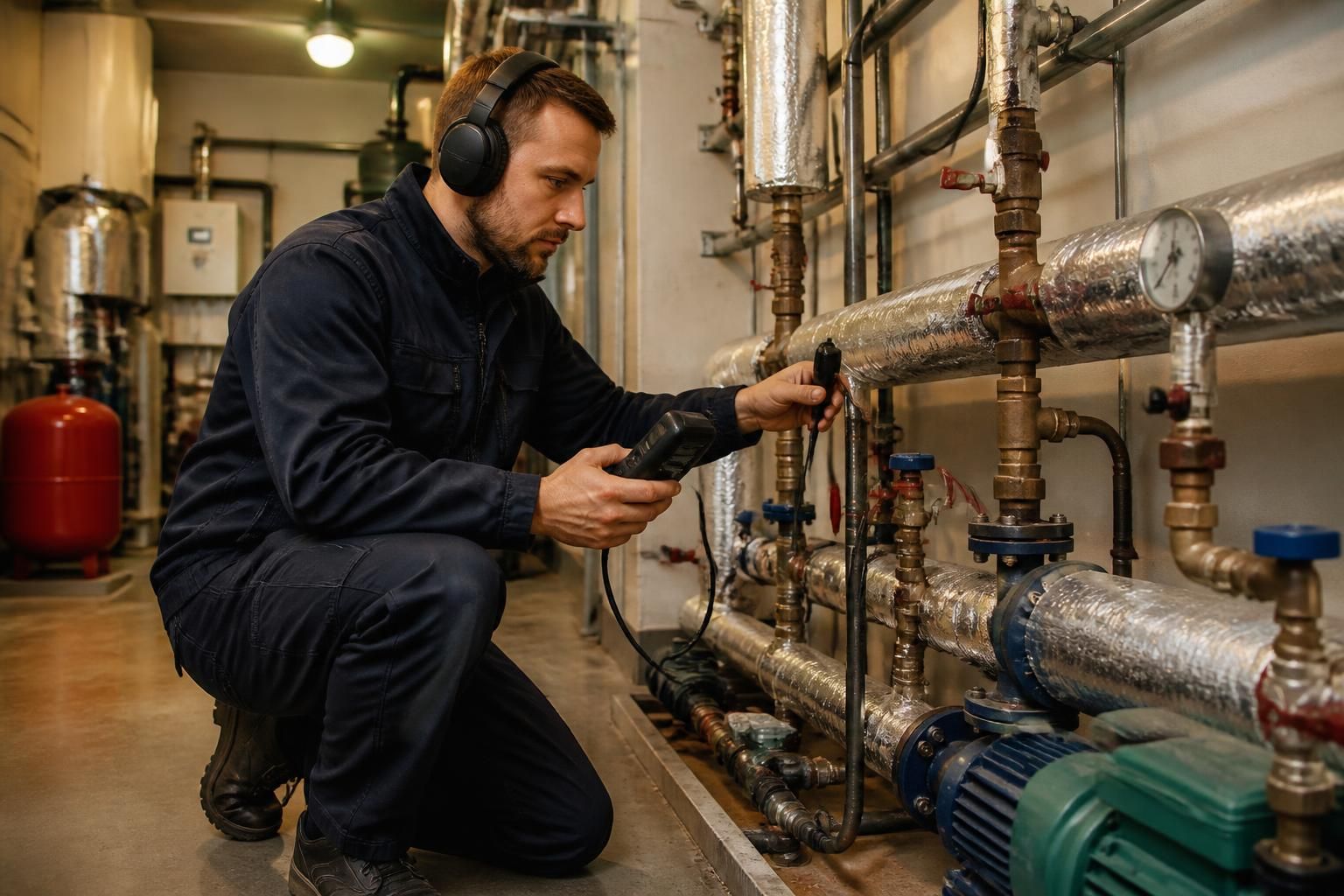
A specialist assessment should aim to establish the source, the route taken by the water and the extent of any affected area. Depending on the building and the suspected fault, an engineer may use acoustic listening equipment, moisture readings, thermal imaging, pressure testing or tracer methods. The appropriate approach depends on the pipe material, access available, the type of water system and whether the suspected leak is from supply pipework, heating, drainage or an appliance connection.
Specialist detection does not mean that every commercial leak requires intrusive technology. If the fault is clearly visible and accessible, a conventional inspection may be sufficient. The value of specialist work is greatest when it can narrow the search, reduce unnecessary removal of floors or finishes and provide useful information for the repair decision.
Ideal Plumbing Services provides commercial leak detection for businesses and property managers in Birmingham and the wider West Midlands. The investigation can help determine whether the next step is a targeted repair, further examination of connected pipework or remedial work to affected areas.