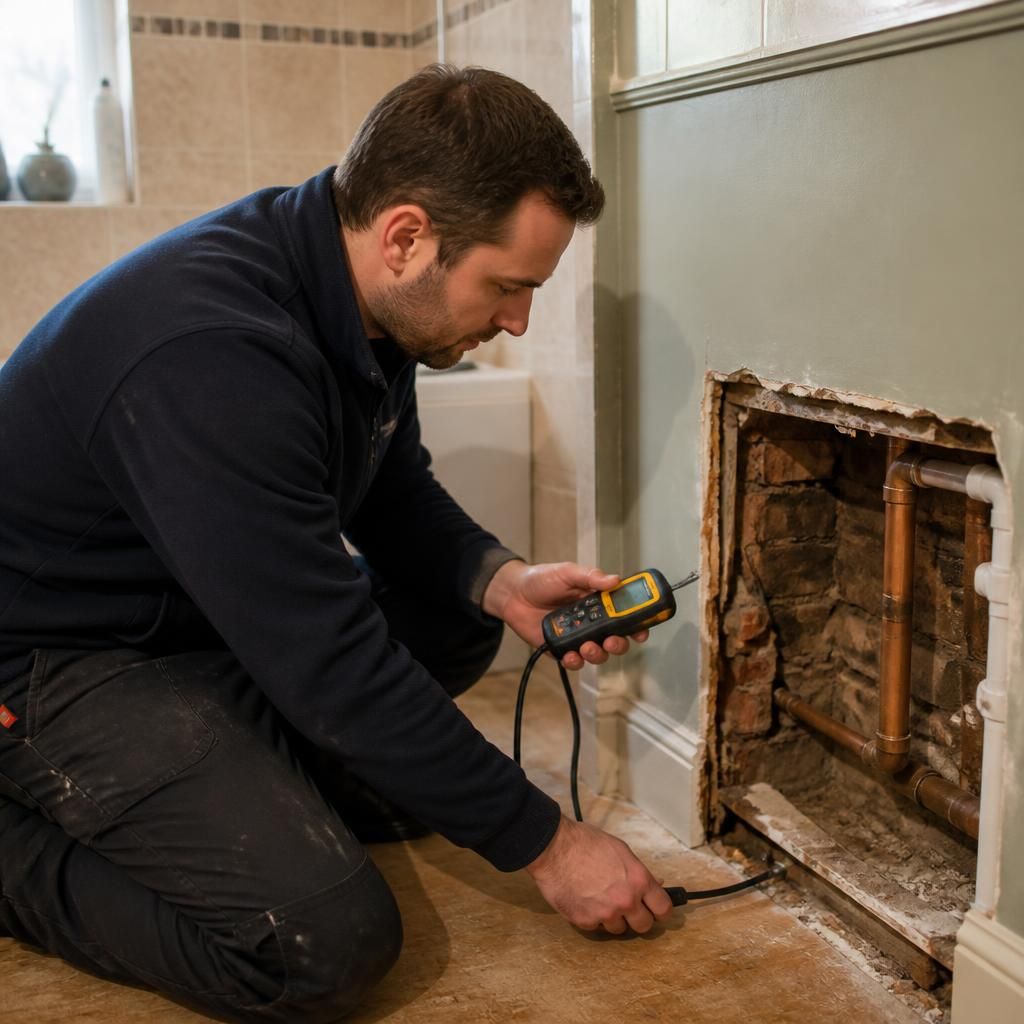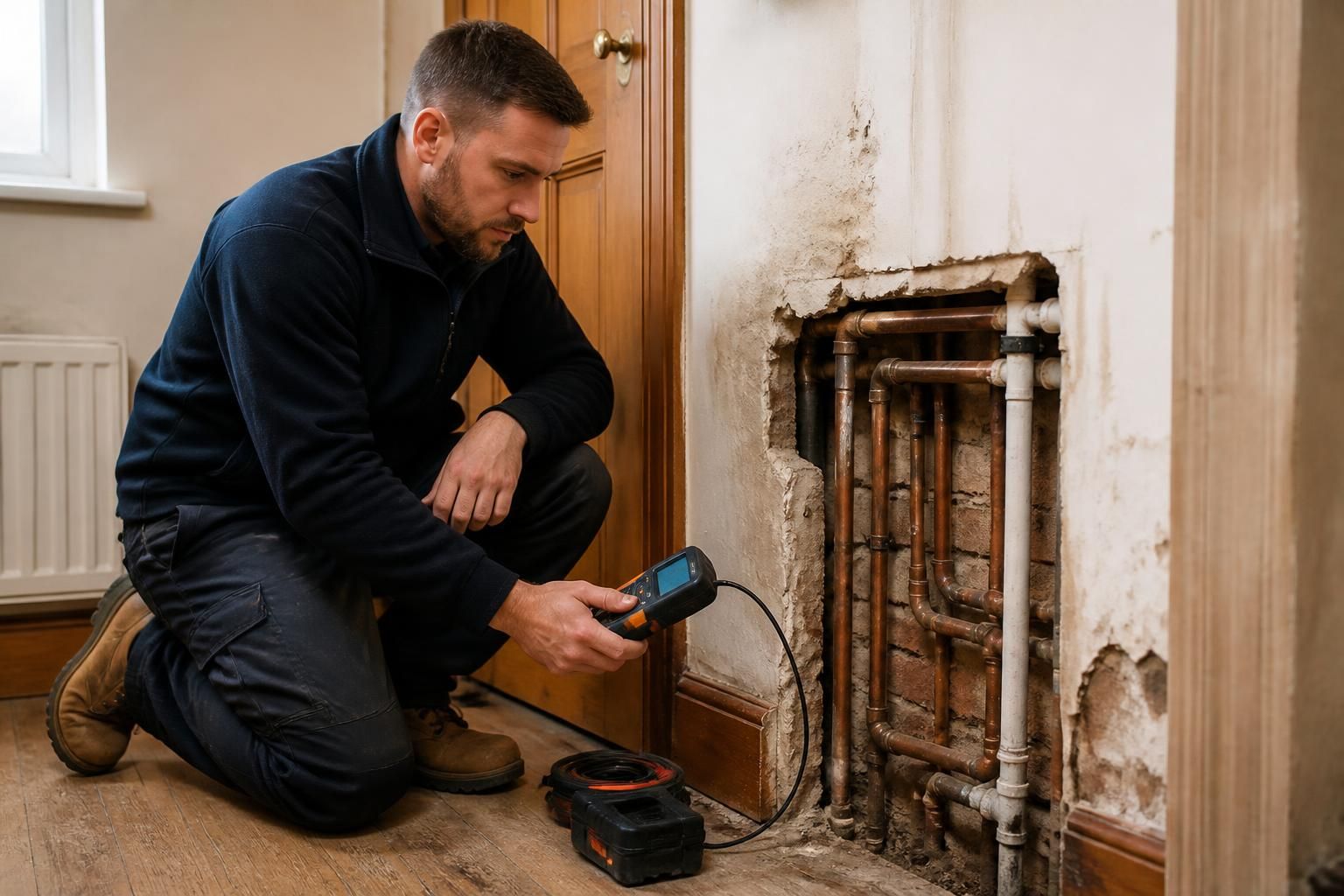
Yes. Older construction does not prevent accurate domestic leak detection, but the investigation must account for the property’s age, pipe materials, alterations and access limitations. A skilled assessment combines the symptoms at the property with suitable testing methods rather than assuming that every leak will appear as a visible damp patch.
Older homes can contain a mixture of original and newer plumbing. Copper, galvanised steel, lead, plastic and cast-iron components may have been joined during previous repairs or extensions. Pipes may also run beneath solid floors, within walls, under suspended floors or through roof spaces. These factors affect how sound, heat and moisture travel, so the equipment and interpretation need to be adapted to the building.
A typical investigation may include:
- Visual inspection: checking ceilings, skirting boards, cupboards, flooring, pipe joints, valves and appliances for staining, corrosion, mould or changes in materials.
- Moisture measurement: comparing readings across affected and unaffected areas to help trace the spread of dampness and identify whether moisture is recent or established.
- Acoustic testing: listening for the sound produced by pressurised water escaping from a supply pipe. Results can be affected by thick walls, insulation, low pressure and the type of pipework.
- Thermal imaging: identifying temperature differences associated with hot-water or heating leaks. A thermal image indicates an area for further investigation; it does not, by itself, prove the exact leak point.
- Pressure testing: checking whether a sealed water or heating system maintains pressure. A pressure loss can confirm that further tracing is needed, although the test alone may not locate the fault.
- Tracer gas or other specialist testing: using an appropriate detection method where a small concealed leak is difficult to distinguish through sound or surface moisture.
Older homes often benefit from a staged approach. The inspection begins with the least disruptive checks, then narrows the search using the evidence gathered. For example, a damp ceiling below a bathroom may result from a supply pipe, a waste connection, a shower seal or water passing around a bath. Surface damage can spread away from the original fault, so repairing the visibly wet area without identifying the source may not resolve the problem.
It is also important to identify what type of leak is being investigated. A pressurised mains-water leak behaves differently from a heating-system leak, a dripping storage tank or a failed waste pipe. Toilet cisterns, radiators, cylinders, washing machines and outside taps can all create symptoms that resemble a concealed pipe leak. Separating these possibilities prevents unnecessary opening-up of floors or walls.
Detection is not always completely non-invasive. If testing identifies a likely area but the pipe or joint cannot be confirmed from the surface, limited access may be required to inspect or repair it. In older properties, previous alterations, fragile finishes, asbestos-containing materials or uncertain pipe routes may also affect how access is planned. These risks should be considered before cutting into plaster, flooring or boxing.
A useful leak detection report should explain the evidence found, the likely source or search area, the type of pipework involved and whether a repair, further investigation or monitoring is appropriate. If no active leak is present during the inspection, the findings may instead point to historic water damage, condensation, groundwater or a drainage problem. That distinction matters because each cause requires a different remedy.
Professional domestic leak detection is therefore suitable for older homes, including properties with concealed, altered or mixed plumbing systems. Its effectiveness depends on choosing the right tests, understanding the building and confirming the diagnosis before repair work begins.