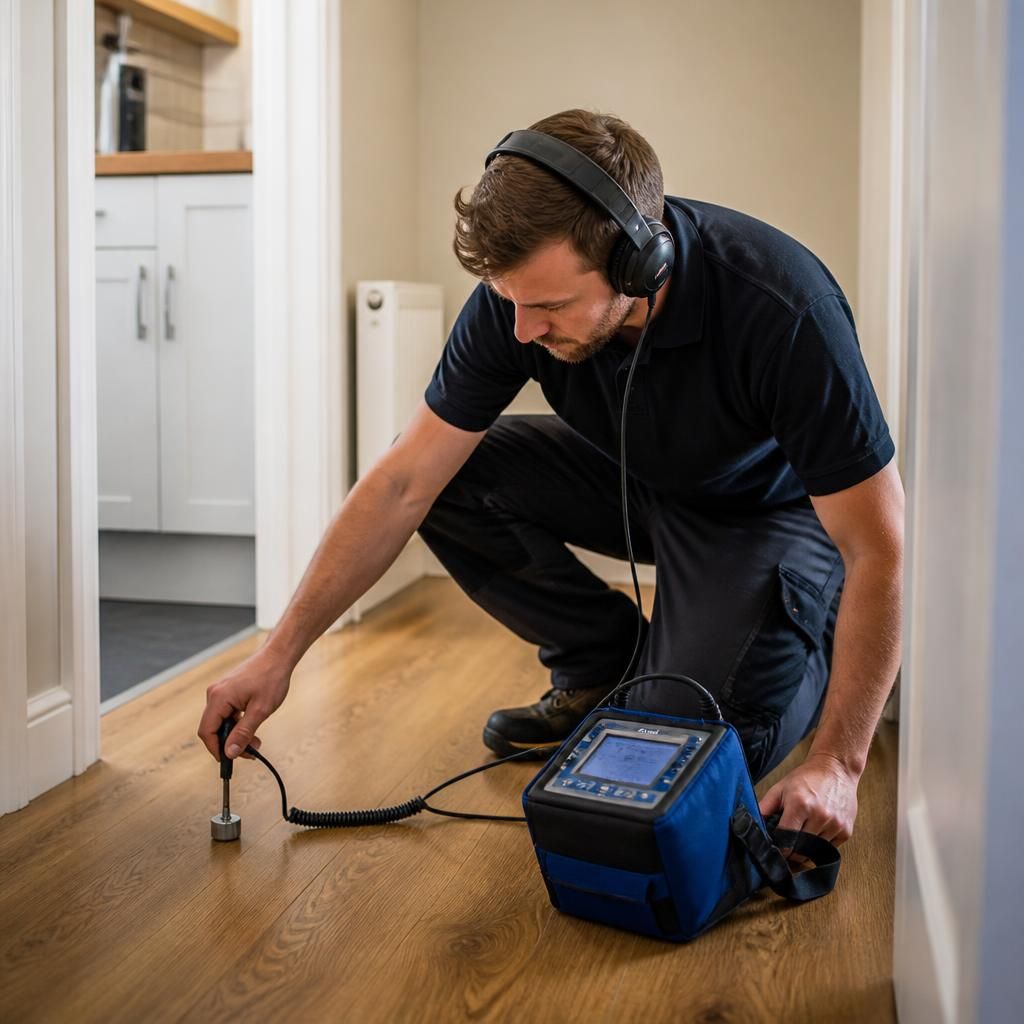
Domestic leak detection is generally priced as a diagnostic service, with the final cost depending on the inspection required and whether the leak is visible or concealed. The charge may cover an initial assessment, specialist detection equipment and a report on the likely source; repairs, replacement parts, access work and making good damaged surfaces are usually considered separately.
What the leak detection charge may include
- Inspection of visible pipework, fittings, appliances and sanitaryware.
- Checks for signs such as damp, staining, mould, unexplained water use or pressure loss.
- Use of suitable non-invasive or minimally invasive equipment.
- Tracing the likely route and position of a concealed leak.
- An explanation of the findings and recommendations for repair.
The plumber may use different techniques depending on the symptoms and construction of the property. Acoustic equipment can help identify the sound of water escaping from pressurised pipes. Thermal imaging may show temperature differences associated with hidden moisture or hot-water pipework. Tracer methods can assist where the leak is difficult to distinguish from other sources. The more involved the investigation, the more likely it is that the cost will be higher than a straightforward visual inspection.
Factors that affect domestic leak detection cost
- Whether the leak is visible: A leaking tap, toilet, radiator valve or exposed joint is usually easier to investigate than moisture appearing some distance from the actual fault.
- Access to the pipework: Pipes beneath floors, inside walls, below concrete or within fitted units can require more time and specialist equipment to trace.
- The location of the suspected leak: A leak from central-heating pipework, mains water pipes, drainage connections or a bathroom installation may require different diagnostic methods.
- The size and layout of the property: Longer pipe runs and multiple bathrooms or heating zones can make it harder to isolate the source.
- Unclear symptoms: If the visible damp patch is not close to the leak, more investigation may be needed to rule out condensation, ingress or another plumbing fault.
- Additional access work: Removing panels, lifting flooring or opening a wall can add to the overall cost. These tasks should be discussed before work begins.
Leak detection and leak repair are not always the same service. Detection identifies the likely source, while repair may involve replacing a fitting, repairing a pipe, renewing a section of flooring or opening and reinstating a wall. Ask whether the quoted detection fee is credited against repair work, or whether the two services are charged independently. A clear quotation should also explain whether parts, labour, equipment and any follow-up visit are included.
Questions to ask before booking
- Is the price for a fixed inspection or based on time spent?
- What detection methods may be used?
- Does the price include a written or verbal report?
- Are repairs included, or will they be quoted separately?
- Could there be additional charges if floors, walls or units need to be accessed?
- Are VAT and any parts clearly identified in the quotation?
- What happens if the source cannot be confirmed during the first inspection?
Before arranging an inspection, record where dampness or staining is appearing, when it was first noticed and whether it changes when taps, toilets, appliances or heating are used. If safe, check accessible isolation valves and note any visible dripping, but avoid removing fixtures or opening walls without advice. Useful information can help the plumber choose an appropriate diagnostic approach and reduce unnecessary investigation.
For homeowners, landlords and tenants, the most useful comparison is not simply the lowest initial price. Check what each quotation covers, whether the investigation is suitable for a concealed leak and how any recommended repairs will be priced. Ideal Plumbing Services provides domestic leak detection and plumbing repairs for residential properties in Birmingham and the West Midlands, with clear explanations intended to help customers understand the work before proceeding.