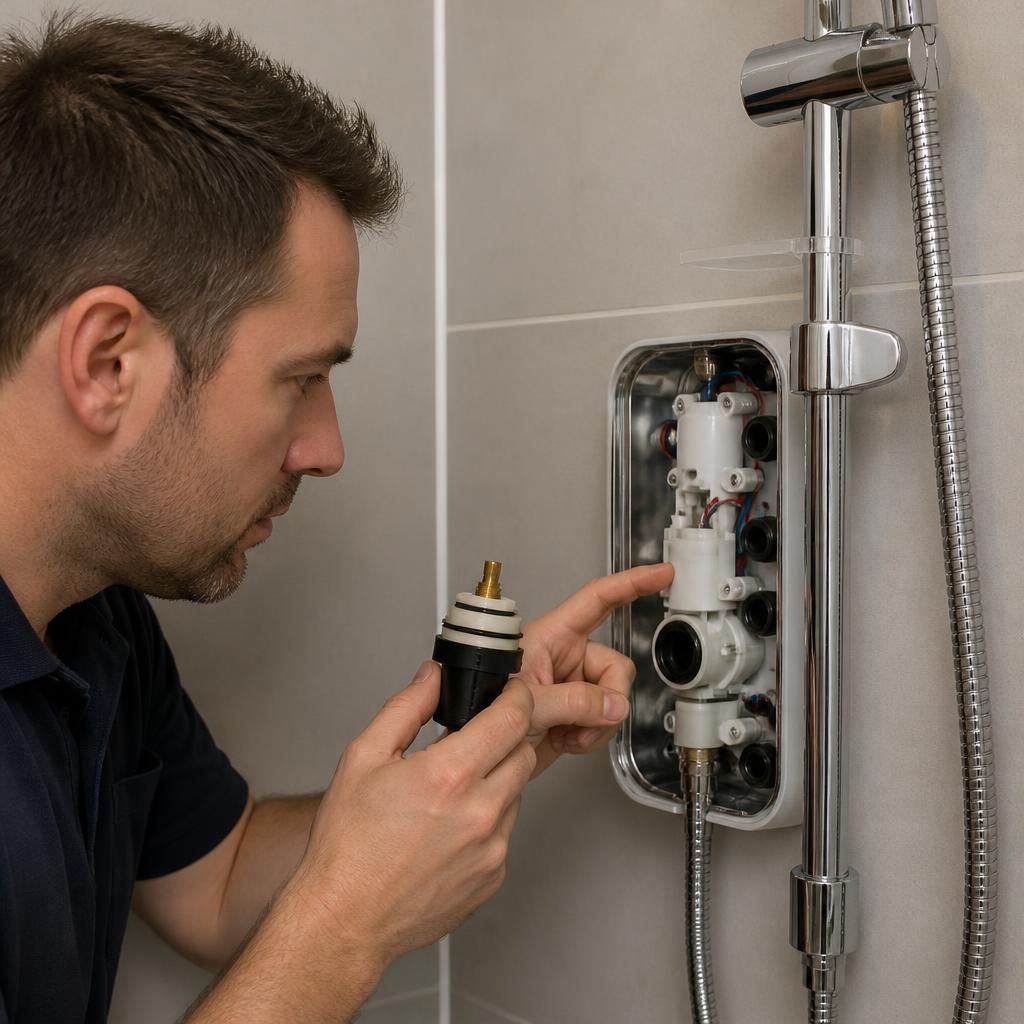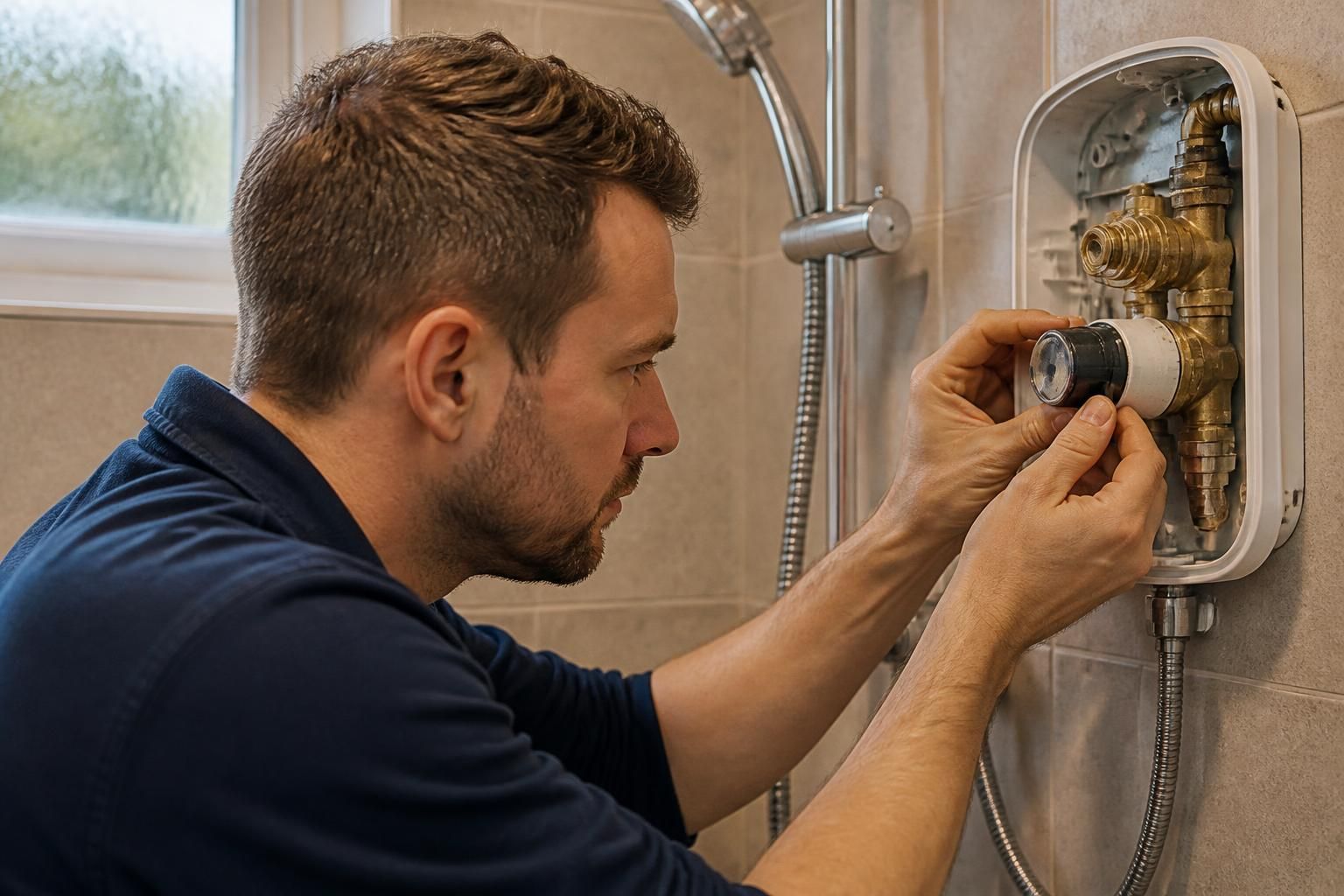
The decision is based on the source of the fault, the condition of the existing installation and whether the shower can be made safe and reliable through a targeted repair. A plumber should diagnose the problem before recommending removal of the complete unit.
Assessment usually begins with isolation and inspection. The water supply is isolated, and an electrical shower is disconnected from its power supply before testing. The engineer can then check where water is escaping, whether the controls are operating correctly, and whether the problem is caused by the shower itself or by connected pipework, fittings or drainage.
A repair is generally suitable when the main housing and fixed connections remain sound. The work may involve cleaning or replacing an internal mechanism, renewing a worn seal, correcting a loose connection or fitting a compatible replacement part. This approach keeps the existing installation in place and limits the work to the failed area.
The type of shower affects the diagnosis:
- Mixer showers: faults may relate to the thermostatic mechanism, temperature control or supply balance.
- Electric showers: symptoms such as no heat, fluctuating temperature or loss of flow can involve the heating assembly, filter, switchgear or electrical supply. Electrical testing should be carried out by a suitably competent professional.
- Power showers: the pump, inlet supply and control components need checking, as a fault may not originate in the visible shower unit.
- Concealed showers: access can be more difficult if the valve is behind tiles or within a wall, so the repair method depends on available access and the condition of the surrounding finish.
Replacement becomes more appropriate when repair would not provide a safe or dependable result. Examples include severe corrosion, cracked casings, damaged concealed pipework, repeated failure of the same assembly, obsolete parts that cannot be sourced, or damage affecting the wall and surrounding bathroom. A unit that has been incorrectly installed may also need more extensive work rather than a simple component change.
Water damage must be considered separately from the shower fault. Persistent leakage can affect plasterboard, flooring, sealant, cabinetry and nearby electrical points. Stopping the leak does not automatically restore these materials, so the plumber should identify any secondary damage and explain which work relates to the shower and which requires another trade.
A sensible repair assessment should explain:
- the confirmed or most likely cause of the fault;
- which parts or connections need attention;
- whether the existing shower remains safe to use;
- any access, tiling or electrical implications;
- the repair cost compared with replacing the unit; and
- what is included in the proposed work, including removal and disposal if replacement is necessary.
For tenants, the shower should be isolated if it is leaking, overheating, producing an electrical smell or creating a risk near electrical fittings. The landlord or managing agent should be informed before replacement work is authorised, unless immediate action is needed to control active water damage. Homeowners should avoid removing covers or attempting electrical repairs without the appropriate competence.
Ideal Plumbing Services can investigate emergency shower faults for homeowners, landlords and tenants in Birmingham and across the West Midlands. The aim is to identify whether a precise repair is suitable before treating complete replacement as the only option, with clear information about the required work and any associated risks.