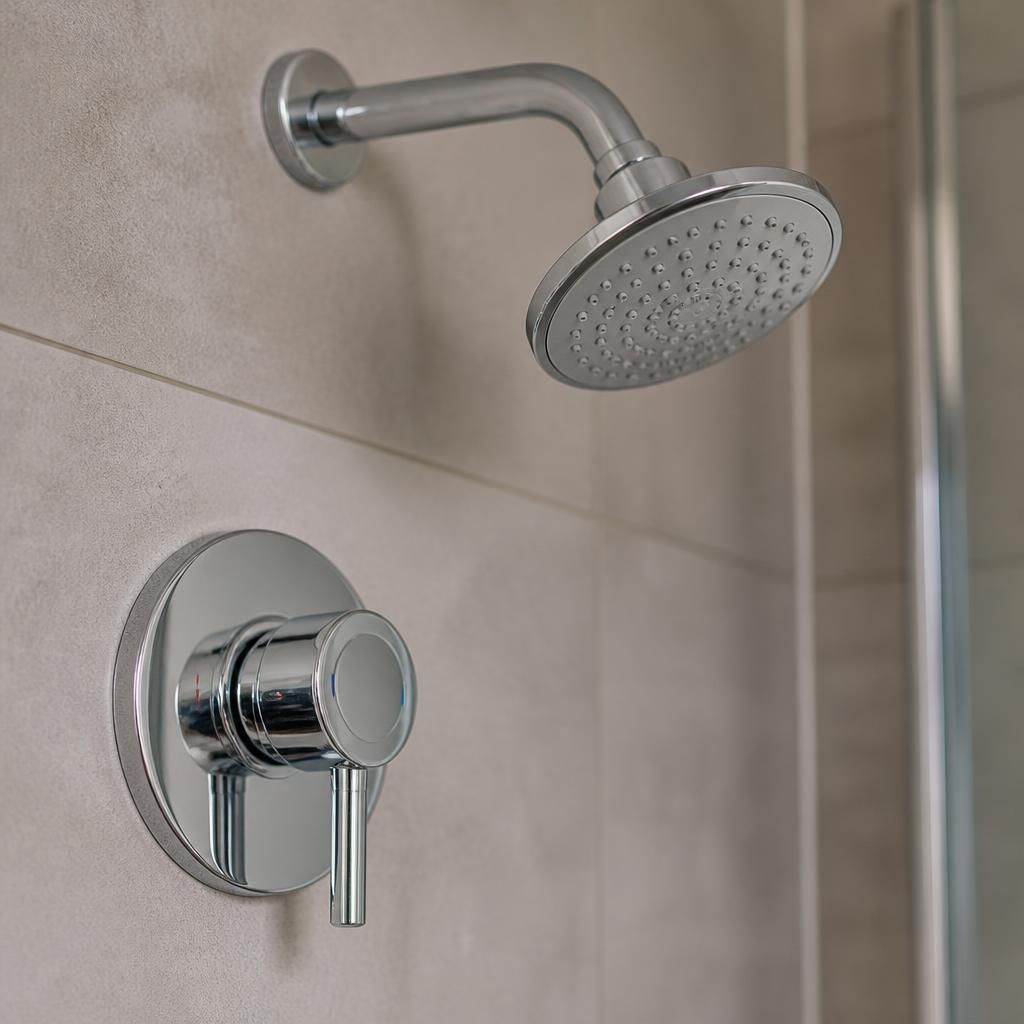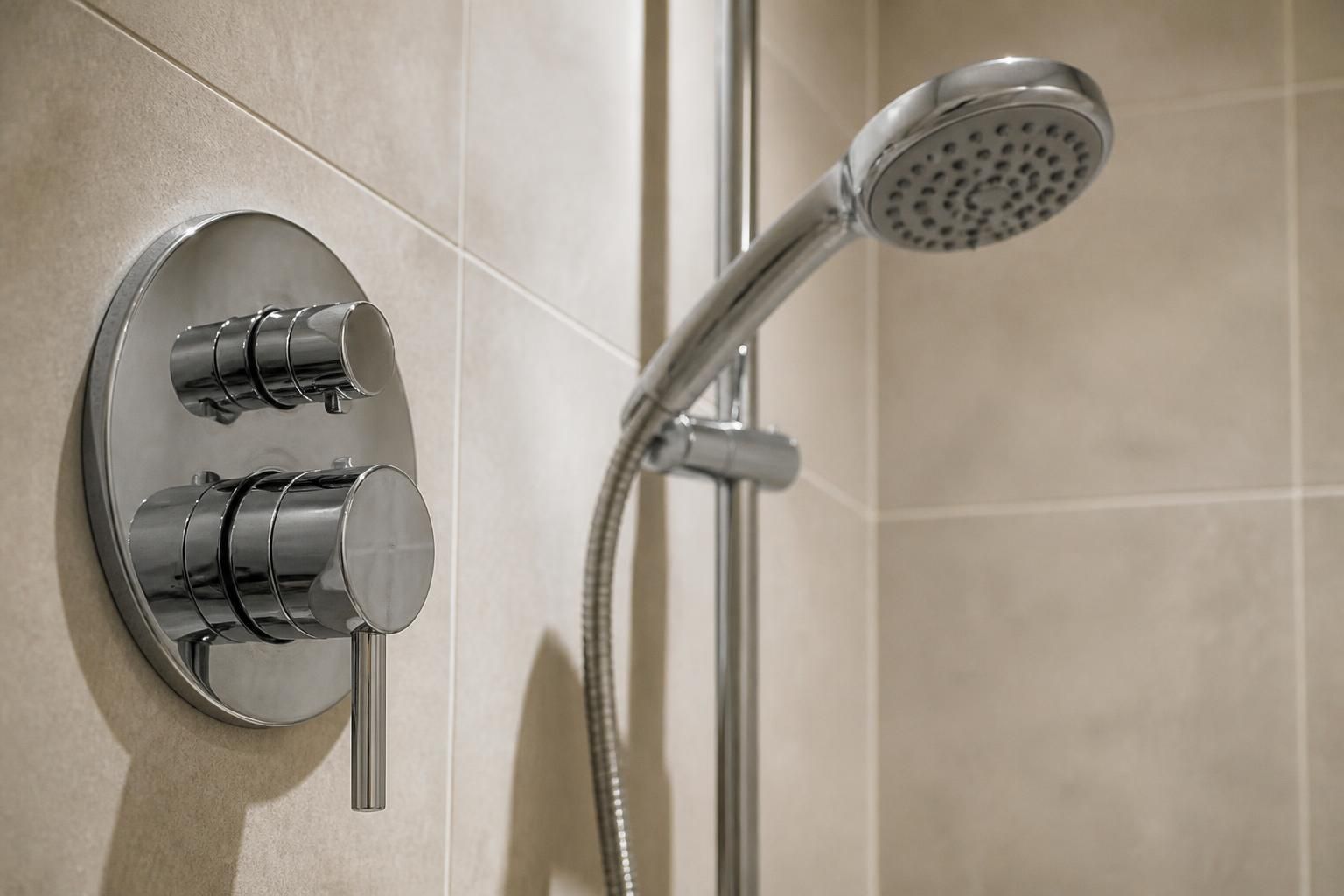
When a shower produces no water, the fault is usually within the shower’s own controls, valve, pump or electrical system rather than the showerhead. The correct next step depends on the type of shower and whether the problem affects both hot and cold water or only one temperature.
Identify the shower type
- Electric shower: this takes a cold-water supply and heats it internally. If the unit has no display, no indicator light or no response from its controls, its electrical supply may have tripped or the unit may have developed an internal fault.
- Mixer shower: this blends hot and cold water through a cartridge or thermostatic valve. A seized, worn or obstructed cartridge can prevent water from passing through, particularly if the controls feel unusually stiff.
- Pumped shower: a pump may be used to increase pressure from a stored hot-water system. A failed pump, electrical fault or airlock can stop or severely restrict the flow, even when the rest of the plumbing appears normal.
- Digital or concealed shower: these may have a separate control box, solenoid valve or remote power supply. A fault in one of these components can stop the outlet while leaving other bathroom fittings unaffected.
If the shower is completely dry but other fixtures work normally, avoid repeatedly forcing the handle or pressing the controls. Excessive force can damage a cartridge or concealed valve and may turn a straightforward repair into a more disruptive one. For an electric shower, do not remove the casing or work on internal wiring. If the unit has an electrical fault, switch off its circuit at the consumer unit if it is safe to do so and arrange inspection by a suitably qualified professional.
It is also useful to distinguish a flow problem from a heating problem. Water coming out cold points towards the heating element, thermostat, boiler or temperature-control system, whereas no water at all suggests a supply, valve, pump or control fault. A mixer shower that supplies only one temperature may have a failed thermostatic cartridge or an imbalance between the hot and cold feeds.
Look for related warning signs before using the shower again. Dampness around the control plate, staining on the ceiling below, a dripping connection, unusual pump noise, a burning smell, repeated electrical tripping or a sudden change in pressure can indicate a concealed leak or component failure. Do not continue testing the shower if water is reaching electrical fittings or if the surrounding wall, ceiling or floor is becoming wet.
A plumber diagnosing the fault will normally establish which shower system is installed, test the available feeds, inspect accessible valves and controls, and check for leaks or pressure problems. They can then determine whether the appropriate solution is a replacement cartridge, valve, pump, electrical component or another repair. In some cases, access to a concealed part may require careful removal of a panel or fitting; this should be assessed before any work begins.
For rented accommodation, report the loss of shower water to the landlord or managing agent as soon as possible and keep a record of any visible leak or electrical issue. Tenants should not remove concealed fittings or attempt repairs that could affect the property’s plumbing or wiring. Homeowners should arrange a professional inspection where the basic external checks have not identified the cause, particularly if the shower is the only affected fitting or the fault keeps returning.
Until the cause is confirmed, avoid using a shower that is leaking, smells of overheated wiring, trips the electrical supply or has controls that are stuck. A qualified plumbing inspection can establish whether the problem is limited to the shower or connected to a wider fault and identify a suitable repair without assuming that the whole shower needs replacing.