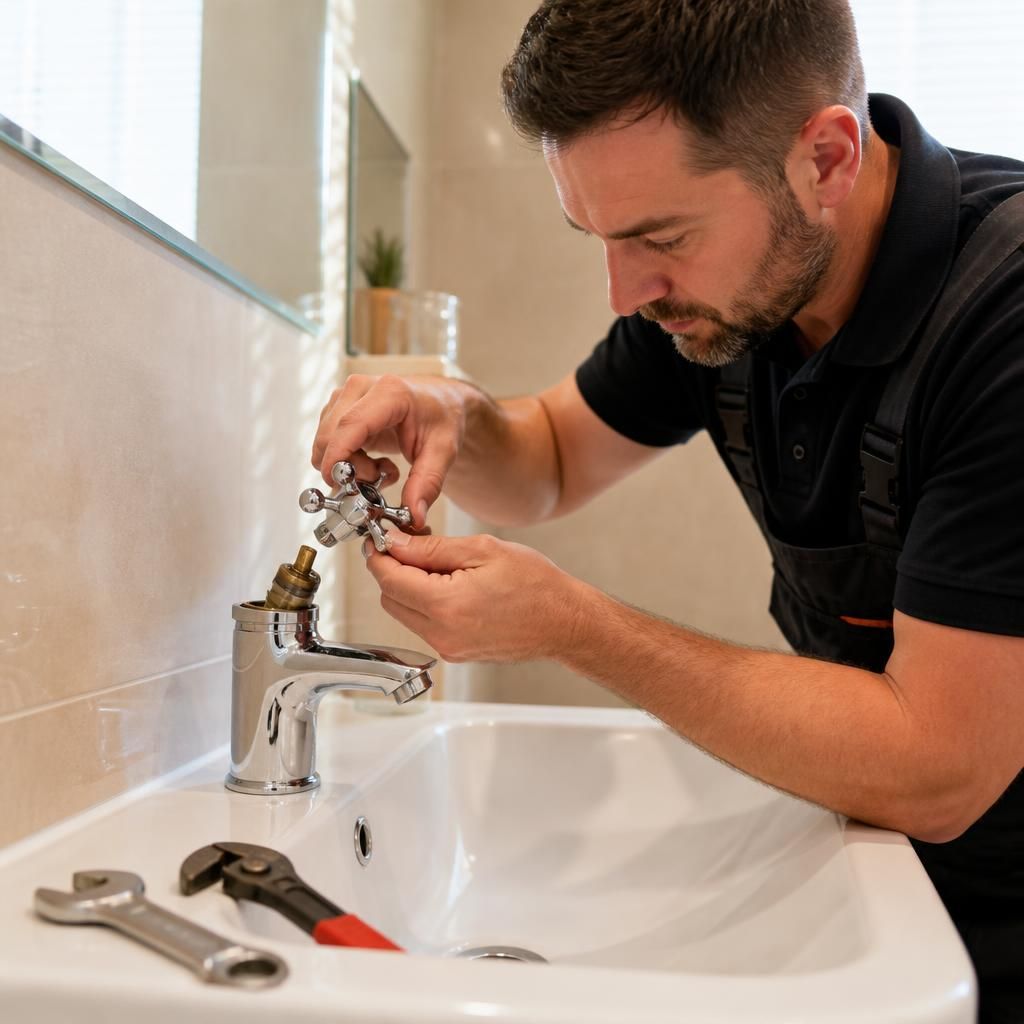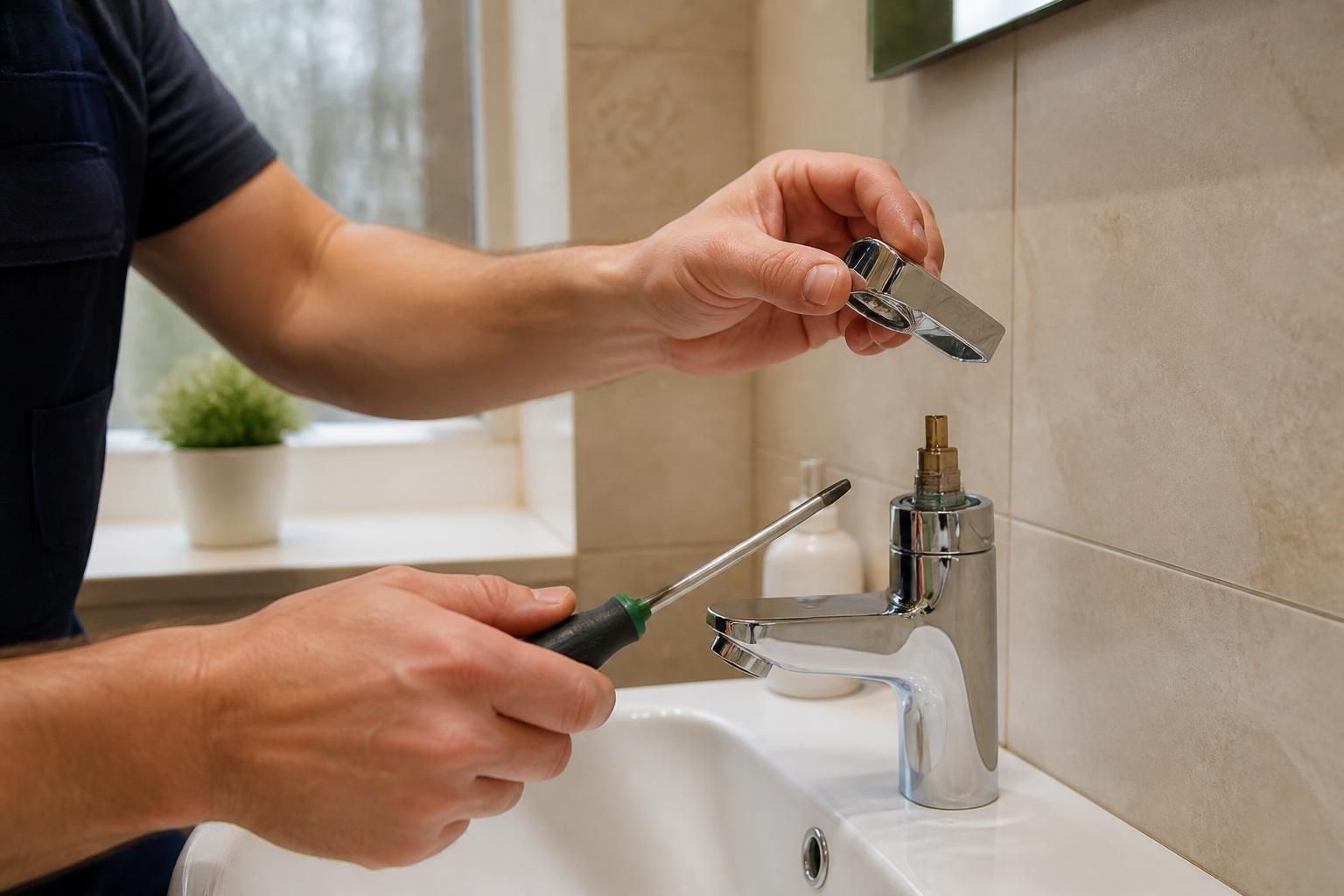
An emergency bathroom tap repair generally causes less disruption than replacing the complete tap assembly or opening up surrounding surfaces. The main interruption is usually the temporary loss of water to the affected fitting while the plumber checks the fault and carries out the work. Once the repair is complete, the area should be tested for leaks and normal use can resume.
The extent of disruption depends on the type of fault. A worn washer, cartridge, valve or seal may be dealt with at the tap itself. This usually involves removing the handle or selected parts of the fitting, rather than disturbing the basin, bath or wall. If the tap body is cracked, heavily corroded or incompatible with replacement components, a full tap change may be more practical and can involve additional handling around the sanitaryware.
During the repair, expect the following practical interruptions:
- The water supply to the bathroom, or to the property if there is no suitable local isolation valve, may need to be turned off.
- The tap and nearby surfaces will need to remain accessible and clear of toiletries, towels and stored items.
- There may be some minor noise from loosening fittings, removing seized components or testing the pipe connections.
- The basin, bath or work surface may be protected while tools and replacement parts are used.
- The tap will need to remain unused during final checks to confirm that the repair has stopped the leak.
Most of the work takes place at the fitting, so it should not normally require substantial disturbance to the bathroom. The situation is more involved where the isolation valve does not operate correctly, pipe connections are difficult to reach, or earlier repairs have left fittings seized or damaged. A plumber may then need to spend additional time gaining safe access or replacing associated components rather than simply adjusting the tap.
Water damage can create a separate source of disruption. If water has reached a vanity unit, flooring, sealant or the inside of a cabinet, those areas may need to be dried and inspected after the tap has been repaired. Repairing the tap stops the source, but it does not automatically restore materials that have already swollen, stained or deteriorated. Any electrical item near the leak should be kept away from water and assessed safely before the bathroom is used normally.
Replacement parts can also affect the visit. If the correct component is available, the existing fitting may be retained. If the tap is obsolete or the fault cannot be repaired reliably, replacing the complete fitting may involve checking the mounting hole, pipe tails and available space beneath the basin. This can create more work than a straightforward internal repair, although it still does not necessarily mean removing the surrounding bathroom fixtures.
For rented properties, the tenant should avoid dismantling the tap or attempting to force a seized valve, as this can increase the risk of flooding or damage. The landlord or managing agent may need to approve a replacement where the fitting cannot be repaired. Keeping the area clear and explaining when the leak started, whether the water can be isolated and whether any cabinet or flooring has been affected helps the plumber assess the work without unnecessary interruption.
After the repair, the supply should be restored gradually and the connections checked while the tap is opened and closed. The surrounding cabinet or floor should be monitored for residual moisture. If water continues to appear after the tap has been repaired, the source may be a supply connection, waste fitting or another part of the bathroom rather than the tap itself, requiring further investigation.