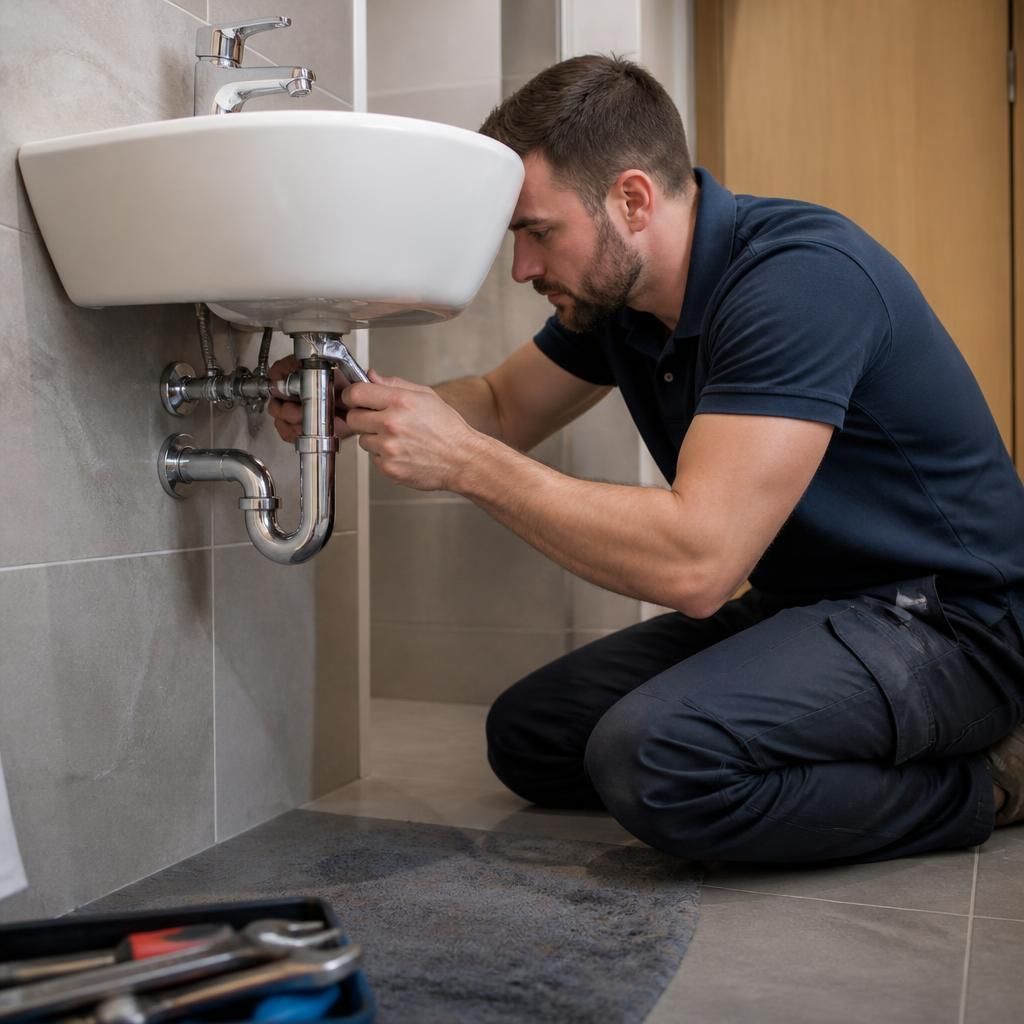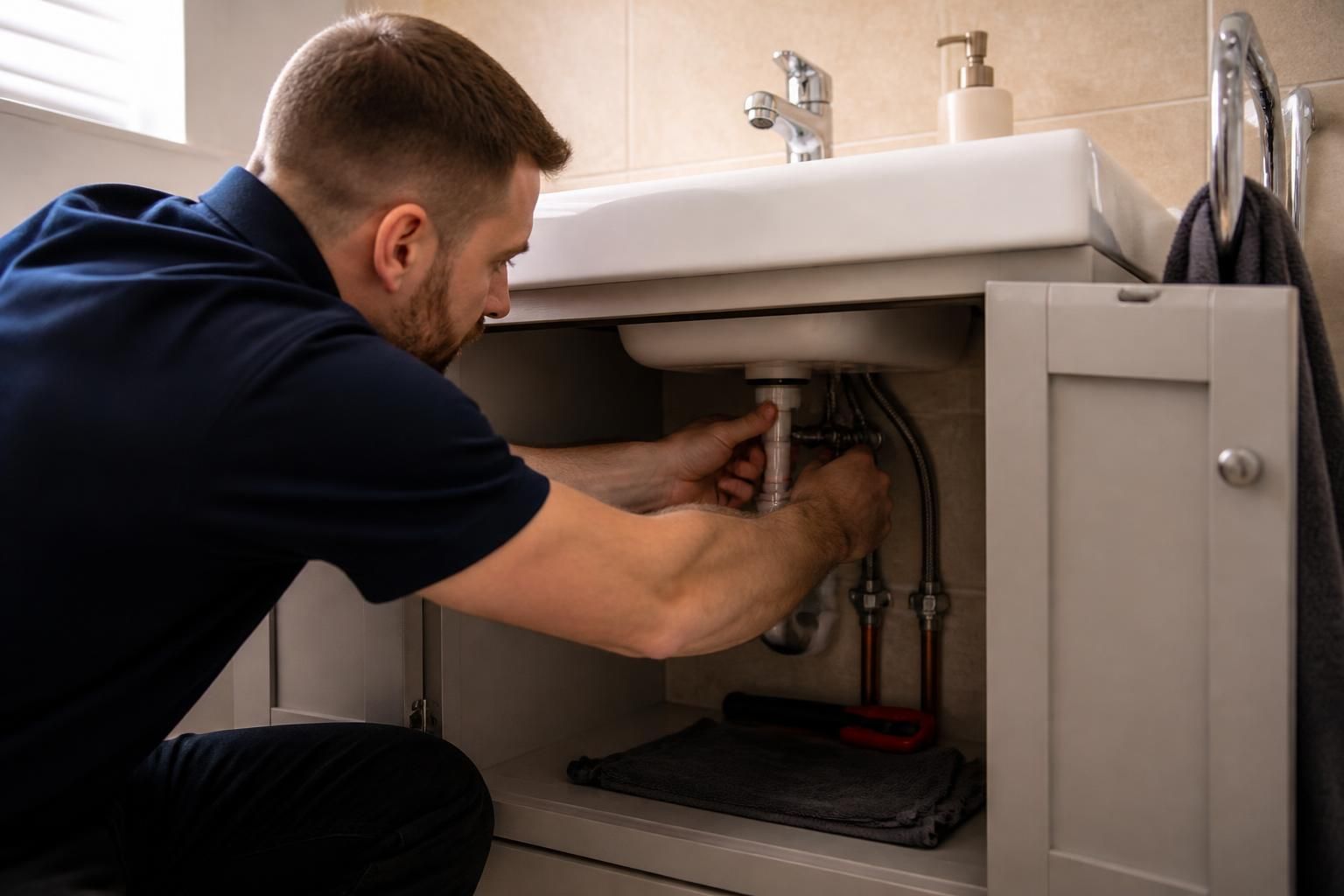
For an emergency bathroom tap repair, the plumber needs enough physical and visual access to identify the fault, operate the tap safely and reach the components that may need adjustment or replacement. The exact access required depends on whether the tap is basin-mounted, bath-mounted or connected through concealed pipework.
A basin tap is normally serviced from above and below. Access beneath the basin allows the plumber to inspect the retaining fittings, supply tails, washers, seals and connections. Where a vanity unit is fitted, a removable drawer or shelf may need to be taken out temporarily to create room for tools. This should be done carefully so that the unit, waste pipe and water connections are not damaged.
Bath taps can require more involved access because the retaining nuts and pipe connections are often positioned beneath or behind the bath. A properly fitted removable panel or service hatch usually provides the required route. If the bath has been boxed in permanently, the plumber may first assess whether the repair can be completed through the available opening. Removing tiles, boxing or fixed panels should not be assumed; any invasive work should be explained and agreed before it starts.
Wall-mounted taps present a different access issue. The visible tap may be straightforward to reach, but the connections behind the wall can be concealed. The plumber may need to establish whether the fault is within the tap itself or further back in the pipework. If the connection cannot be reached from the bathroom side, access from an adjoining room or through an existing inspection point may be considered. Breaking into a wall or tiled surface is not normally the first option.
- A clear route into the bathroom helps the plumber bring tools and remove faulty components safely.
- Good lighting is useful when checking small seals, threaded connections and signs of moisture.
- The floor and area around the basin or bath should be kept free from items that could obstruct kneeling or positioning equipment.
- Any removable furniture, panels or access covers should be identified, but should not be forced if they are stuck or sealed.
- If the property is rented, the landlord or managing agent may need to approve removal of fixed panels or any opening-up work.
In some cases, access to the bathroom alone is not enough. A failed local shut-off point, a leak from concealed pipework or water tracking into another room may require inspection elsewhere in the property. This could include the room behind a bathroom wall, the space below a ceiling or the area around the property’s main stopcock. Providing information about recent damp patches, staining or changes in water pressure can help direct the inspection.
The plumber will usually assess the least disruptive access route before beginning the repair. A tap washer, cartridge, seal or flexible connector may be replaceable without disturbing surrounding fixtures, whereas a damaged connection behind a bath or wall may need additional preparation. If the available access is insufficient, the repair options and any further work should be discussed before components are removed or surfaces are opened.