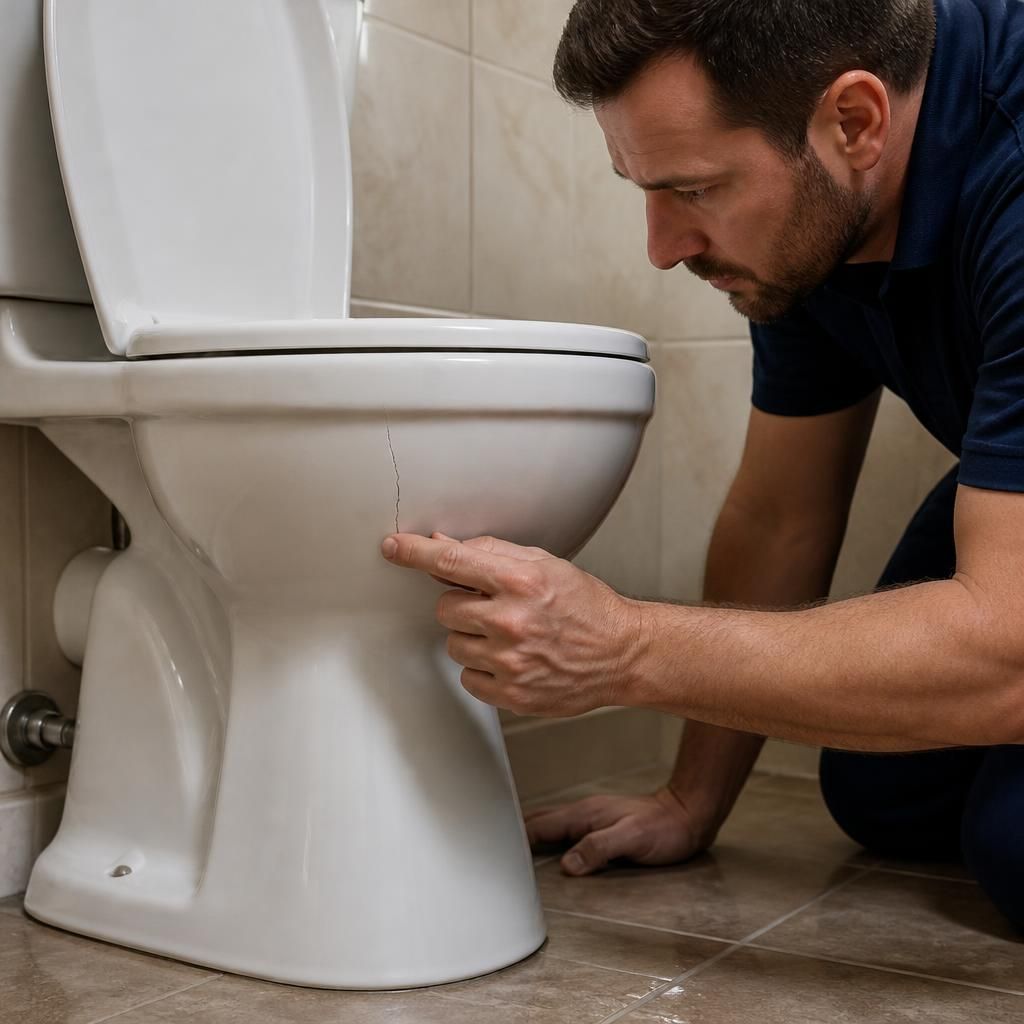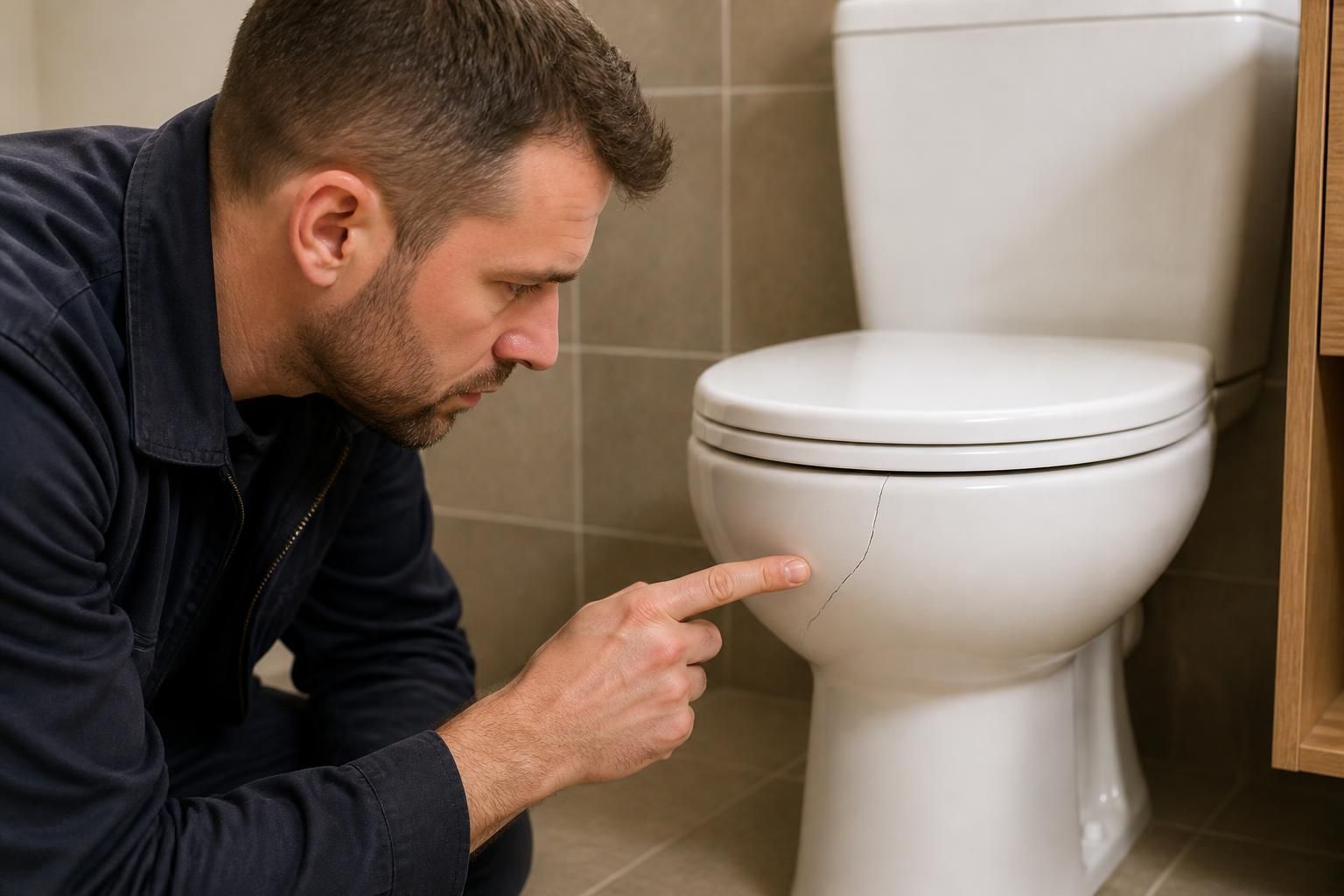
A repair is generally suitable only for a small, stable surface crack that does not pass through the bowl or allow water to escape. Because a toilet bowl is made from rigid vitreous china, it cannot be welded back together; repair products bond across the damaged area but do not restore the original strength of the ceramic.
Cracks that may be repairable
- Very fine hairline marks confined to the glazed surface.
- Minor chips around non-structural areas, provided they do not affect the rim, trapway or fixing points.
- Damage that is completely dry, clean and stable, with no sign of movement when the toilet is used.
A suitable repair normally involves emptying and drying the bowl, cleaning the affected area, applying a compatible ceramic repair compound and allowing it to cure fully before the toilet is used. The finished area may be smoothed and sealed, but it can remain visible and may not match the original glaze perfectly.
When repair is not appropriate
- A crack that is wet, dripping or causing water to appear around the base.
- A line that extends from the bowl into the rim, pedestal, outlet or fixing area.
- A crack that grows, opens when the toilet is pressed, or is accompanied by movement.
- Damage caused by impact, freezing, overtightened fixings or an unstable floor.
- Any fracture that could allow the bowl to separate under the weight placed on it.
In these situations, replacing the bowl or the complete toilet is normally the safer option. A concealed leak can damage flooring and surrounding materials, while a weakened bowl may fail without much warning. Applying sealant over a leaking crack may hide the symptom temporarily but does not make the ceramic structurally safe.
What needs checking before deciding
- Turn off the water supply and avoid using the toilet if the crack is leaking or the bowl feels unstable.
- Dry the area thoroughly so the full length of the damage can be identified.
- Check whether the line is a surface mark, a genuine fracture or a stain caused by a failed seal.
- Inspect the floor, pan connector, cistern connection and fixing points for related movement or leakage.
- Assess whether a replacement bowl is available and compatible with the existing cistern, seat and waste connection.
Sometimes what appears to be a cracked bowl is a failed pan seal, loose fixing or leak from the cistern. Correctly identifying the source avoids repairing the wrong component. Conversely, a crack can be missed when water has tracked along the outside of the toilet, so the surrounding floor should also be checked.
DIY repair kits are not a reliable solution for structural damage. They may be acceptable for a small cosmetic chip after the ceramic has been assessed, but they should not be used to keep a leaking or unstable toilet in service. A plumber can determine whether the bowl is safe to retain, whether only a component needs replacing, or whether a complete toilet replacement is required.
Ideal Plumbing Services can assess cracked toilet bowls and carry out appropriate repair or replacement work for residential properties. The decision should be based on the crack’s position, movement, leakage and effect on the bowl’s strength—not simply on how small the mark appears.