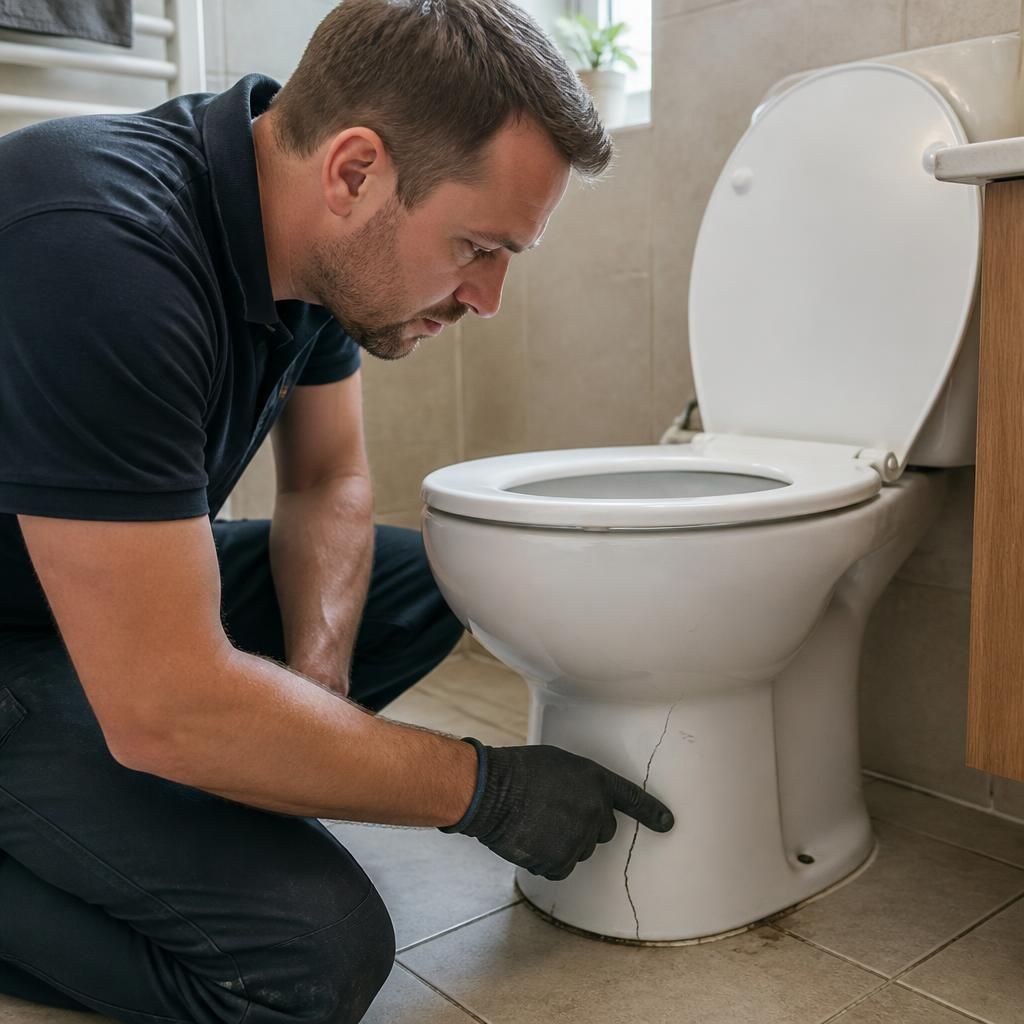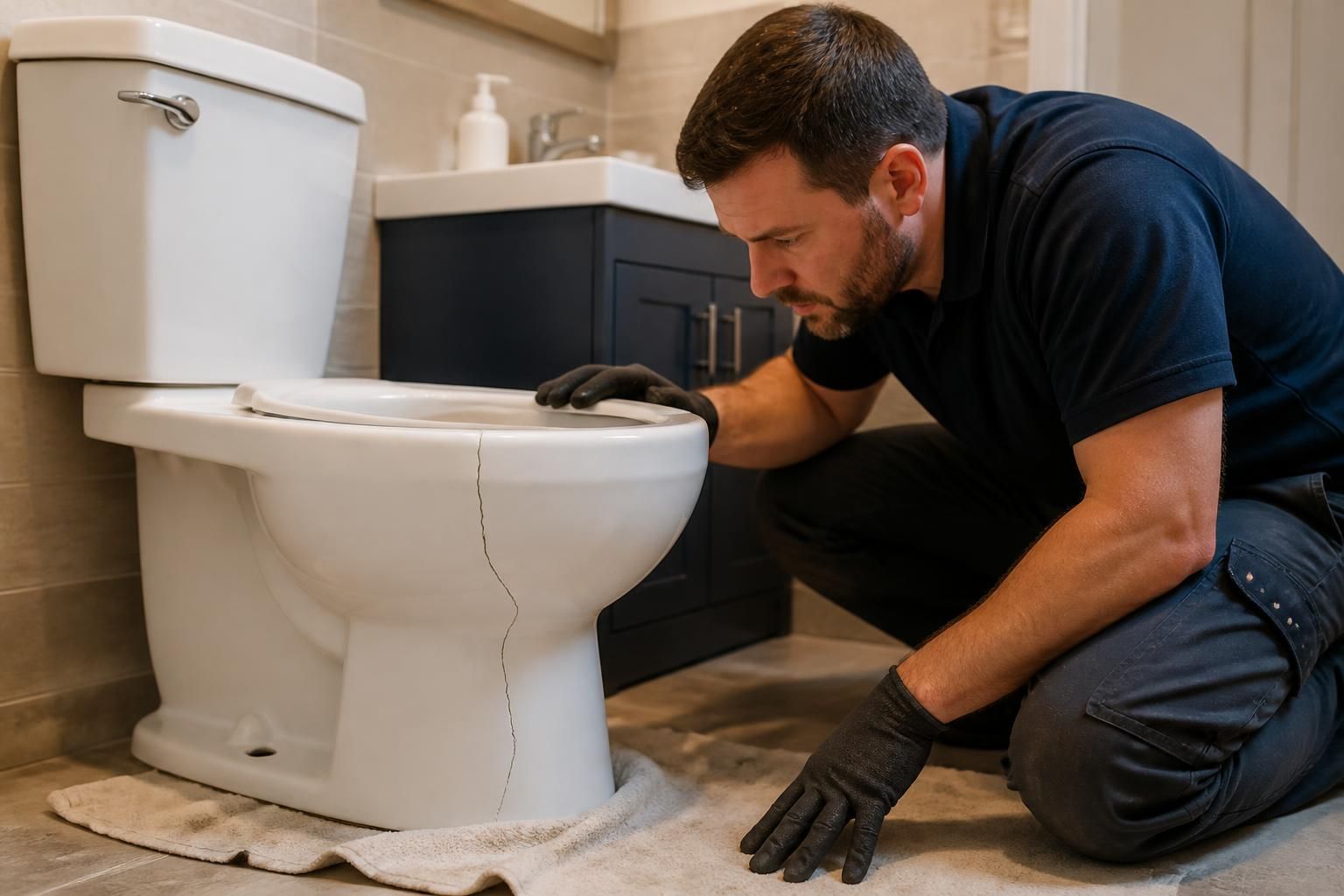
The disruption from emergency toilet bowl repair is generally limited to the affected bathroom, but it can become more extensive when the bowl is unstable, the damage affects the waste outlet, or water has reached surrounding materials. The main interruption is the temporary loss of use of that toilet while the plumber assesses the fault, carries out the repair or replacement, and confirms that the finished installation is watertight.
What determines the level of disruption?
- Type of damage: A small, accessible defect may require less work than a fracture through the bowl, base or outlet connection. A damaged bowl must not be used until it has been assessed, as movement or flushing can worsen the fault.
- Location of the toilet: A toilet in a separate cloakroom may cause less household disruption than the only toilet in a family bathroom. Where there is more than one bathroom, residents may be able to use another facility while work is completed.
- Condition of the surrounding area: A leak may affect sealant, flooring, skirting boards or the toilet fixing points. Any damp materials need to be considered before the toilet is put back into service.
- Access: Restricted space, boxed-in pipework or fitted bathroom furniture can make the work more involved. In some cases, surrounding panels or fittings may need careful removal to reach the connections.
- Availability of a suitable replacement: If the bowl cannot be repaired safely, replacement may involve matching the pan, cistern, flush connection and waste outlet. The toilet may remain unusable until compatible parts are available and fitted.
What happens during the work?
The plumber will normally establish the source of the fault, inspect the bowl and its connections, and decide whether a repair is technically sound. Cosmetic cracks are not automatically suitable for repair: the bowl must remain strong enough to support its load and withstand normal flushing. If its structural integrity is doubtful, replacement is the safer option.
For a repair, the affected area may be cleaned, prepared and sealed using a suitable plumbing repair method. The work must then be checked for movement, leakage and proper operation. A replacement involves disconnecting the existing toilet, fitting the new pan or complete toilet as required, reconnecting the waste and water connections, and testing the flush.
Will the bathroom need to be emptied?
Usually, only items close to the toilet need to be moved. Clearing toiletries, mats, cleaning products and removable storage from the immediate work area gives the plumber safer access and reduces the risk of damage. If the toilet is close to a bath, basin or fitted unit, additional space may be needed around those areas.
Residents should avoid using the damaged toilet, placing weight on it or attempting to seal a structural crack with household adhesive. A temporary container or alternative toilet may be needed if it is the only facility in the property, particularly while replacement parts or further remedial work are being arranged.
How can disruption be kept under control?
- Keep the route to the bathroom clear before the inspection.
- Tell the plumber about any previous leaks, unusual movement or failed DIY repairs.
- Identify the location of the stop tap and any access panels.
- Protect personal items by removing them from the room rather than leaving them near the work area.
- Ask whether the recommended solution is a repair or replacement and what further work may be needed around the toilet.
After the work, the toilet should be tested for leaks, stability, flushing and correct waste discharge. If dampness, movement, an odour or recurring leakage remains, the toilet should not be used until it has been rechecked. Ideal Plumbing Services provides emergency toilet bowl repair for homeowners, landlords and tenants in Birmingham and the West Midlands, with the repair method based on the condition of the toilet and the surrounding installation.