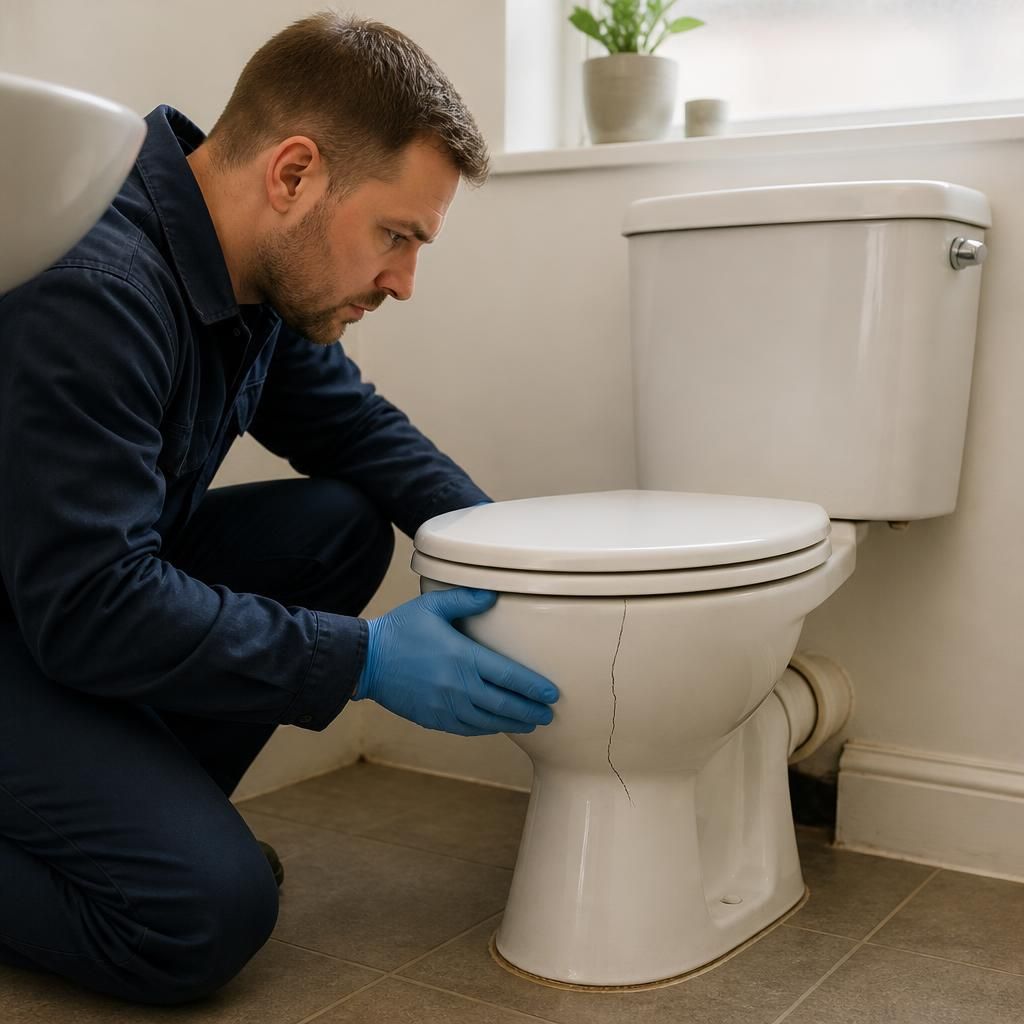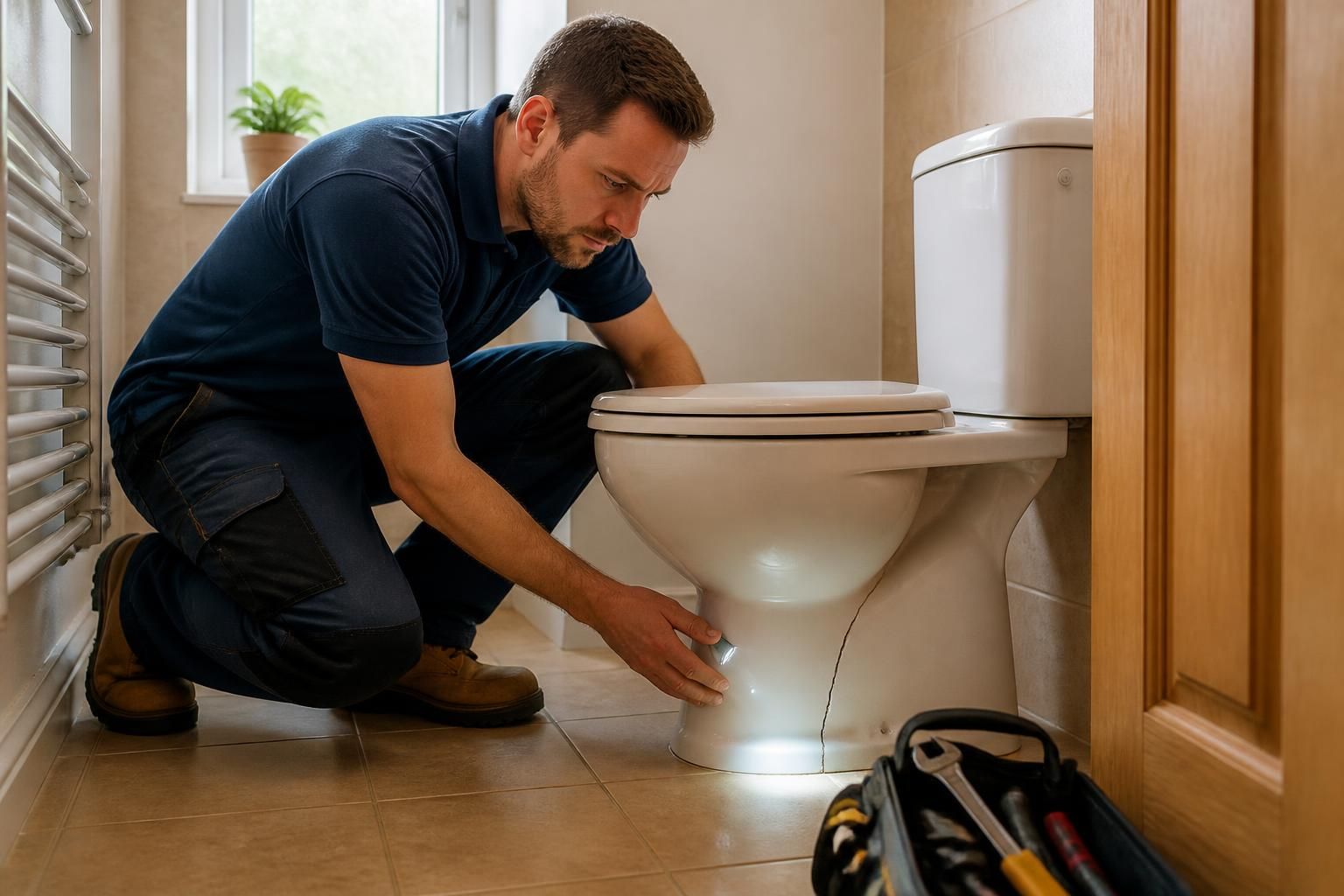
Emergency toilet bowl repair is generally suitable in a rented property when the damage can be made safe without compromising the bowl’s structural strength. A plumber will assess whether the problem is a minor connection or seal issue, a repairable surface defect, or a crack that makes replacement the safer option. The tenancy agreement and the cause of the damage determine who should arrange and pay for the work.
Tenants should report the problem to the landlord or letting agent as soon as it is identified, particularly if the bowl is leaking, unstable or cannot be used safely. Include clear photographs and a brief description of what happened. This creates a record of the condition and allows the responsible party to decide whether a repair, replacement or further inspection is appropriate.
In many rented homes, the landlord is responsible for maintaining fixed sanitary fittings and keeping the property in a usable condition. However, responsibility can differ where the damage resulted from misuse, accidental impact or an alteration carried out by the tenant. The tenancy agreement may set out the reporting procedure, access arrangements and any rules about appointing contractors, so it should be checked before authorising chargeable work.
A tenant should avoid using a cracked or unstable ceramic bowl. Continuing to use it can worsen the damage, allow water to reach flooring or ceilings below, and increase the risk of injury. If water is escaping, turn off the toilet’s isolation valve if it can be reached safely, stop using the pan and keep the affected area clear until it has been assessed. Do not attempt to bond a load-bearing crack with household adhesive, as this may conceal deterioration without restoring the bowl’s strength.
A repair may be considered where the fault is confined to a replaceable component, such as a flush mechanism, inlet connection, pan connector or seal, rather than the ceramic itself. A fractured ceramic bowl is different: surface fillers or resin repairs may not provide a dependable long-term solution, especially where the crack is spreading or located around the base, rim or fixing points. In those circumstances, replacing the pan or complete toilet may reduce the risk of another leak.
Before work starts, the person arranging it should confirm:
- Whether the toilet is still safe to use and whether the water supply has been isolated.
- Whether the landlord, agent or tenant has authority to approve the work.
- Whether the inspection fee, repair cost or replacement cost will be payable by a particular party.
- Whether matching dimensions, fittings and access requirements need to be considered if a replacement is necessary.
- Whether the plumber will provide written details of the defect and the work completed.
Good records are useful if responsibility later becomes disputed. Keep the original report, photographs, messages with the landlord or agent, invoices and any notes explaining why repair or replacement was recommended. If the issue affects the property’s sanitation or causes continuing water damage, the landlord or agent should be told that the toilet is not functioning safely rather than receiving only a general maintenance request.
Ideal Plumbing Services can assess toilet-bowl faults for rented homes in Birmingham and across the West Midlands, helping the relevant party understand whether a repair is technically appropriate or whether replacement should be considered. The final decision should reflect the bowl’s condition, the risk of further leakage and the permissions set out in the tenancy arrangement.