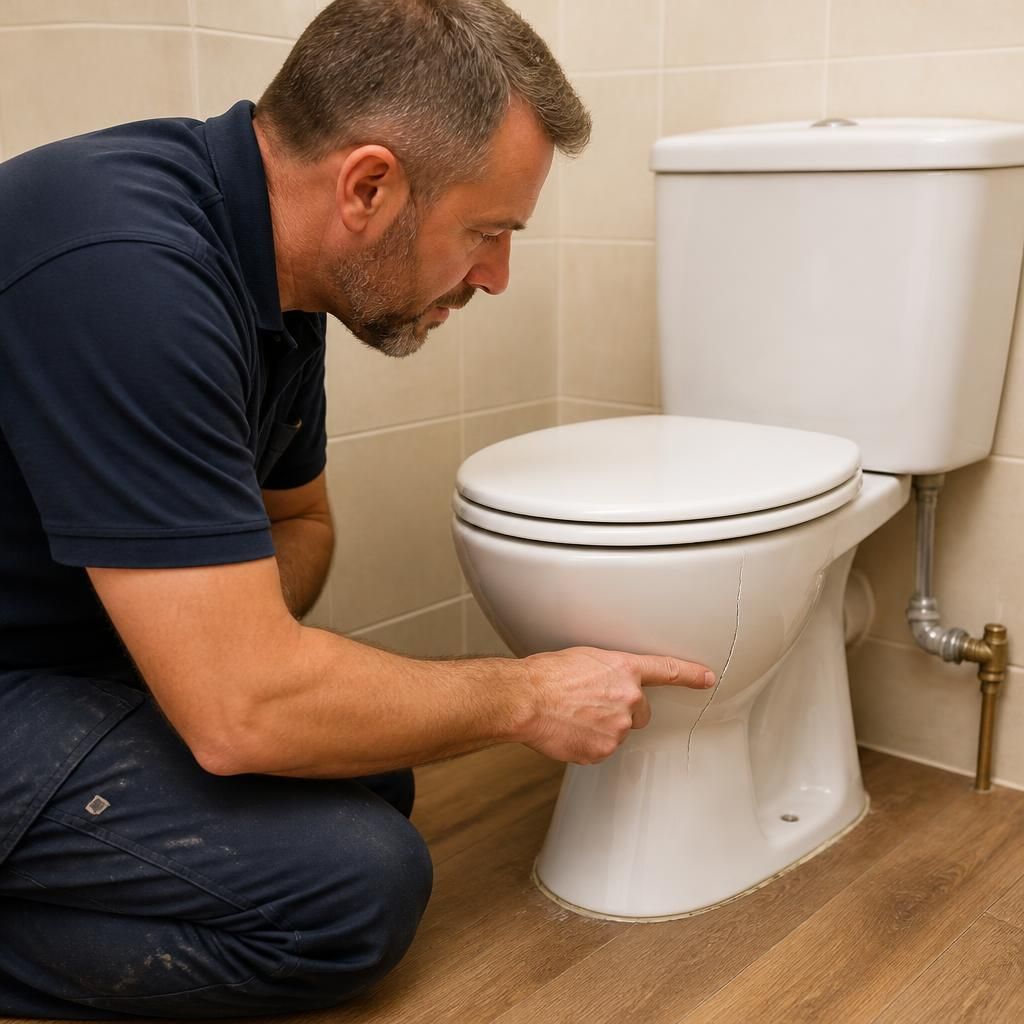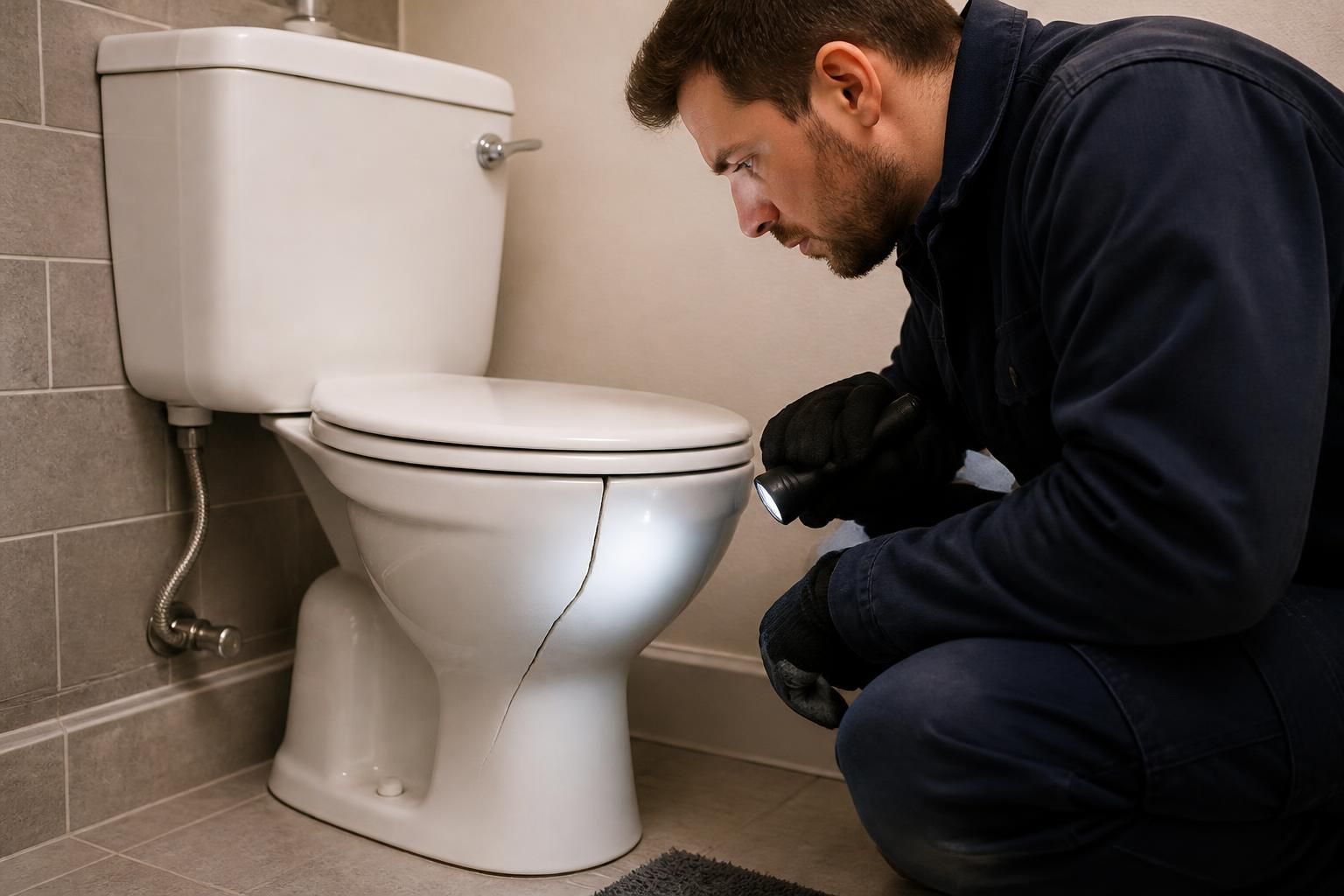
Preparing a bathroom for emergency toilet bowl repair means making the area safe, preserving useful information about the fault and giving the plumber unobstructed access to the toilet’s connections. Good preparation can reduce the risk of further damage and help establish whether the problem is limited to the bowl or involves the cistern, waste connection or surrounding floor.
Make the bathroom safe. Keep children and pets out of the room until the repair has been assessed. If there is wastewater on the floor, avoid direct contact, wear suitable waterproof gloves when dealing with contaminated materials and wash your hands thoroughly afterwards. Do not use the toilet again to test it, even if the leak appears to have stopped.
Do not dismantle the toilet. A cracked pan, loose fixing or damaged seal can become worse if the toilet is rocked, lifted or tightened without the correct support. Avoid applying silicone, adhesive, expanding foam or other improvised sealants. These materials can conceal the fault, make safe removal more difficult and may not withstand the movement or moisture around a toilet.
Record what happened. If it is safe to do so, take clear photographs of the visible crack, water marks, damaged fittings or affected flooring. Note when the problem was first noticed, whether water appears during flushing or continuously, and whether the toilet has become loose or unstable. This information can help distinguish between a bowl fracture, a failed seal, a supply-side leak and a drainage problem.
Provide access to the surrounding structure. The repair may require inspection behind the toilet, beneath the cistern or around the soil pipe. If there is a removable boxing panel or access hatch, identify it without taking anything apart. Clear a safe route to the bathroom and make sure lighting is adequate. If the toilet is in a confined room, tell the plumber about any access restrictions before work begins.
Protect items that could be affected. Move toiletries, towels, cleaning products and soft furnishings away from possible splashes, but do not place heavy objects against the toilet or pipework. If water has reached skirting boards, cabinetry or flooring, note the affected areas and avoid covering them with materials that trap moisture. A clean, dry cloth can be used to identify fresh seepage, but it should not be pushed underneath a damaged pan.
Keep relevant information available. Tell the plumber whether the toilet is close-coupled, wall-hung or connected to a concealed cistern, and mention any previous leaks, repairs or movement. If you have records of recent plumbing work or know that the property has unusual pipework, have those details available. Do not assume that a visible crack is the only defect: impact damage can affect the pan, seat fixings, cistern or waste connection at the same time.
Consider responsibility in a rented home. Tenants should inform the landlord or managing agent and follow any procedure for authorising repairs, while still taking sensible steps to prevent further damage. Avoid arranging alterations or replacing the toilet without permission unless there is an immediate safety reason and the responsible party cannot be reached. Landlords should provide details of the toilet model or previous repair history where available.
Before repair work starts, explain any concerns about damaged flooring, suspected contamination or a toilet that feels unstable. The plumber can then assess the full installation and advise whether a local repair is appropriate or whether replacing a damaged component is the safer option.