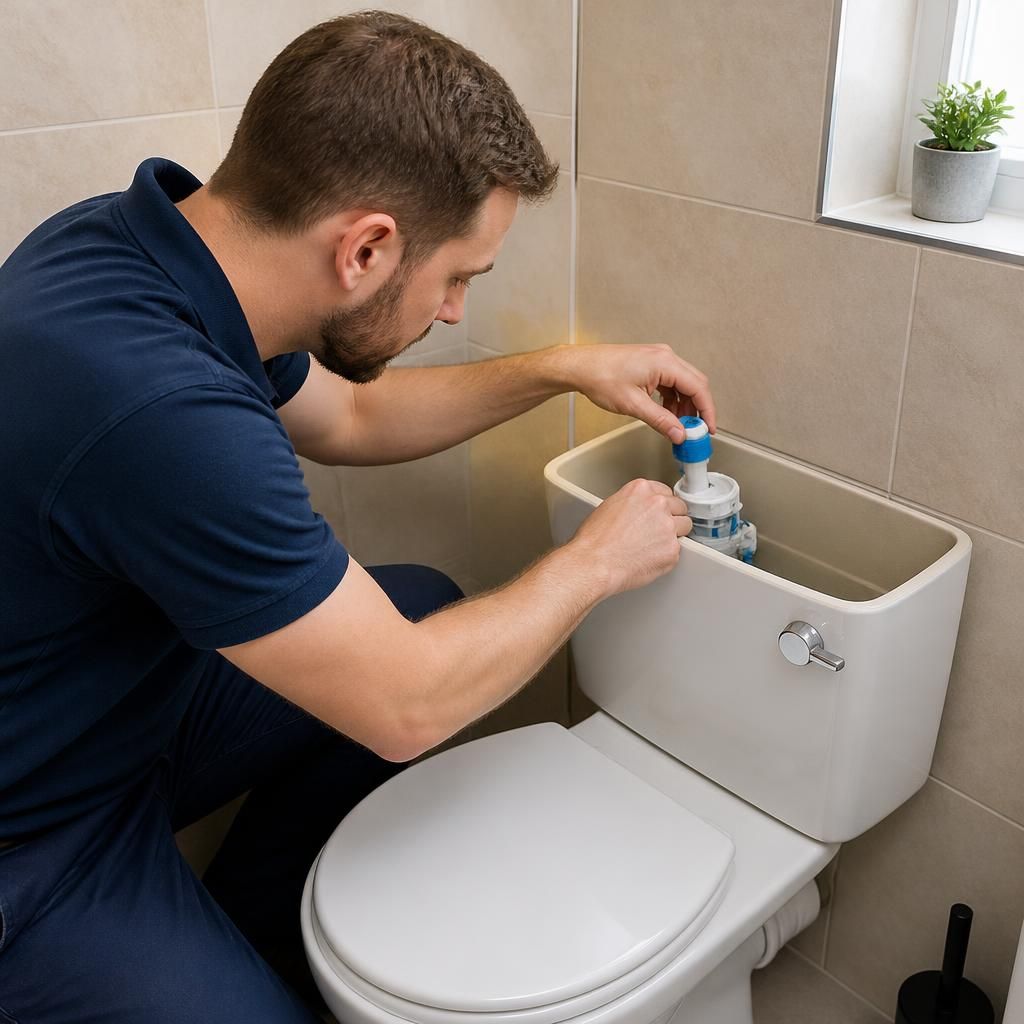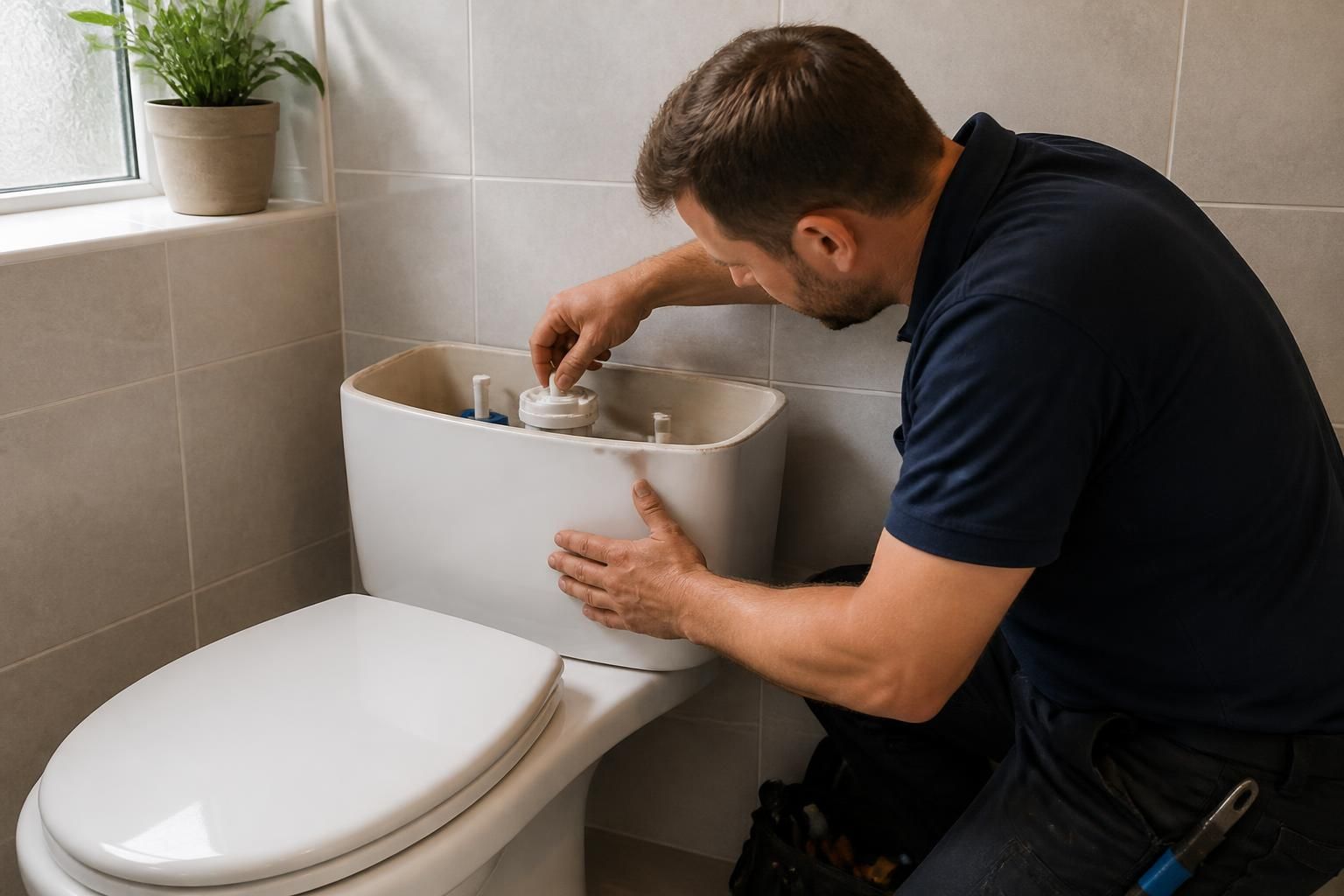
A blocked toilet needs professional attention when the obstruction cannot be safely removed with simple, appropriate methods, when the toilet cannot be used without risking an overflow, or when the cause may lie in the connected drainage system rather than the pan itself. Prompt assessment helps prevent contaminated water, damage to flooring and repeated blockages.
Stop flushing as soon as the water level rises or the toilet behaves unusually. If safe to do so, turn the isolation valve on the inlet pipe clockwise to stop the cistern refilling. Keep children and pets away from the area, and do not use the toilet again until the obstruction has been assessed. If water has escaped, avoid contact with it and clean affected surfaces using suitable disinfectant.
A plunger may be suitable for a straightforward, soft blockage, provided it is used with the correct toilet plunger and controlled pressure. Avoid repeatedly forcing the handle, as this can worsen an obstruction or damage fittings. Do not pour chemical drain cleaner into a blocked toilet. These products may fail to remove the blockage, damage seals or pipework, and create a hazard for anyone who later has to dismantle the toilet or clear the drain.
Arrange a plumber if you suspect that an item has been dropped into the pan. Toys, sanitary products, wipes, cleaning products and other solid objects may lodge in the trap and will not necessarily respond to plunging. A plumber can determine whether the item can be removed safely or whether access to the trap or waste pipe is required. Do not try to retrieve an object with improvised tools, as it may be pushed further into the pipe.
Professional help is also appropriate where the blockage is accompanied by a poor flush, slow drainage or an unusual change in the toilet’s water level between uses. These symptoms can point to restricted flow, a defective component or a developing problem in the waste pipe. A toilet that is cracked, loose, leaking from its base or moving when used should also be inspected, because continuing to use it may allow water to reach the surrounding floor and subfloor.
The likely source can often be narrowed down by checking other fixtures. If only one toilet is affected, the obstruction may be close to that toilet. If sinks, baths or other toilets are also draining poorly, the restriction may be further along the branch pipe or shared drain. A plumber can inspect the accessible pipework, use suitable clearance equipment and check that the waste route is flowing correctly after the blockage has been removed.
Before a visit, note what happened immediately before the problem appeared, whether anything may have been flushed accidentally and which other fixtures are affected. Do not dismantle the toilet or remove inspection covers unless you are confident they can be handled safely. Clear access around the toilet and keep any information about previous repairs available. These details can help identify the cause and avoid unnecessary disruption.
Once the toilet is working again, reduce the risk of another blockage by flushing only toilet paper and human waste, keeping wipes and hygiene products out of the pan, and dealing with a weak or incomplete flush before it becomes a larger drainage problem. In rented accommodation, tenants should report the issue to the landlord or managing agent while taking the immediate precautions above; landlords should arrange a proper inspection where the cause may involve shared drainage or defective plumbing.
Ideal Plumbing Services provides residential plumbing support for homeowners, landlords and tenants in Birmingham and across the West Midlands, including investigation and repair of blocked toilet and drainage problems.