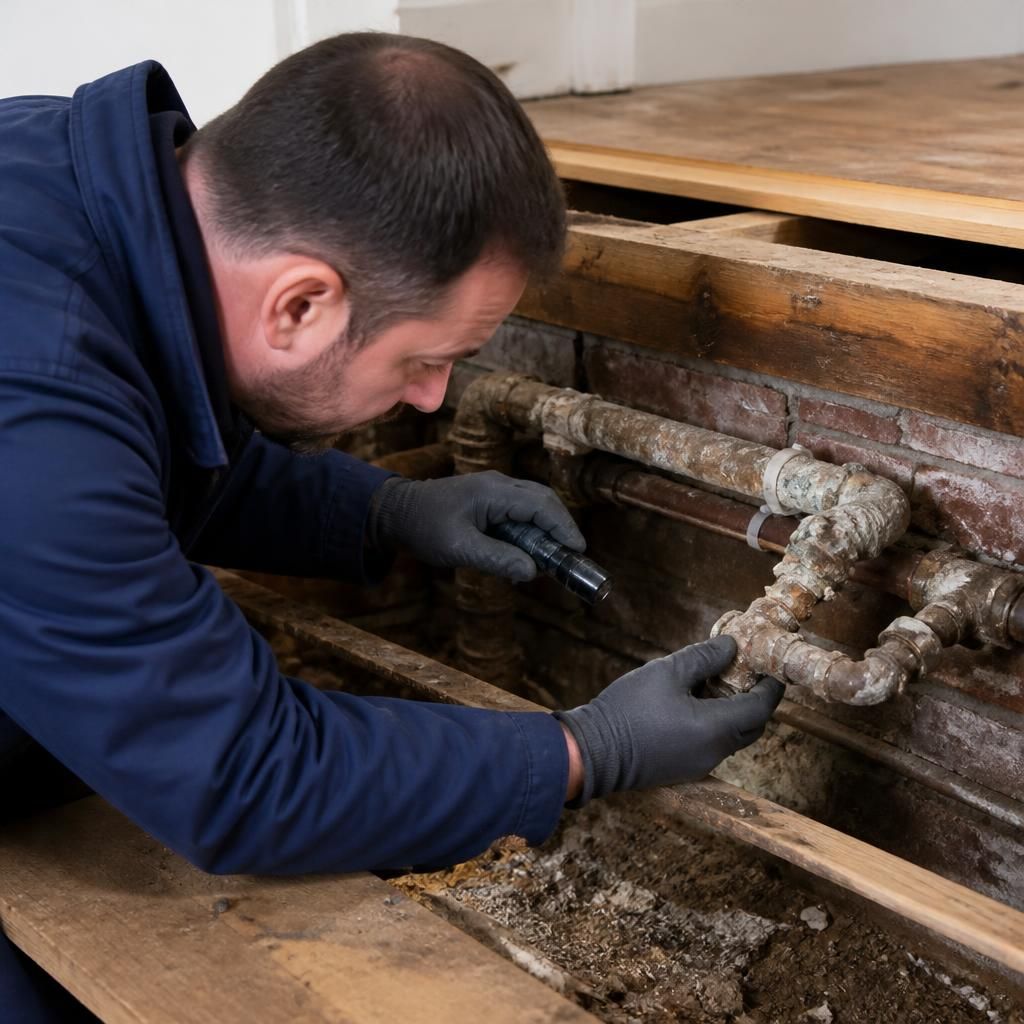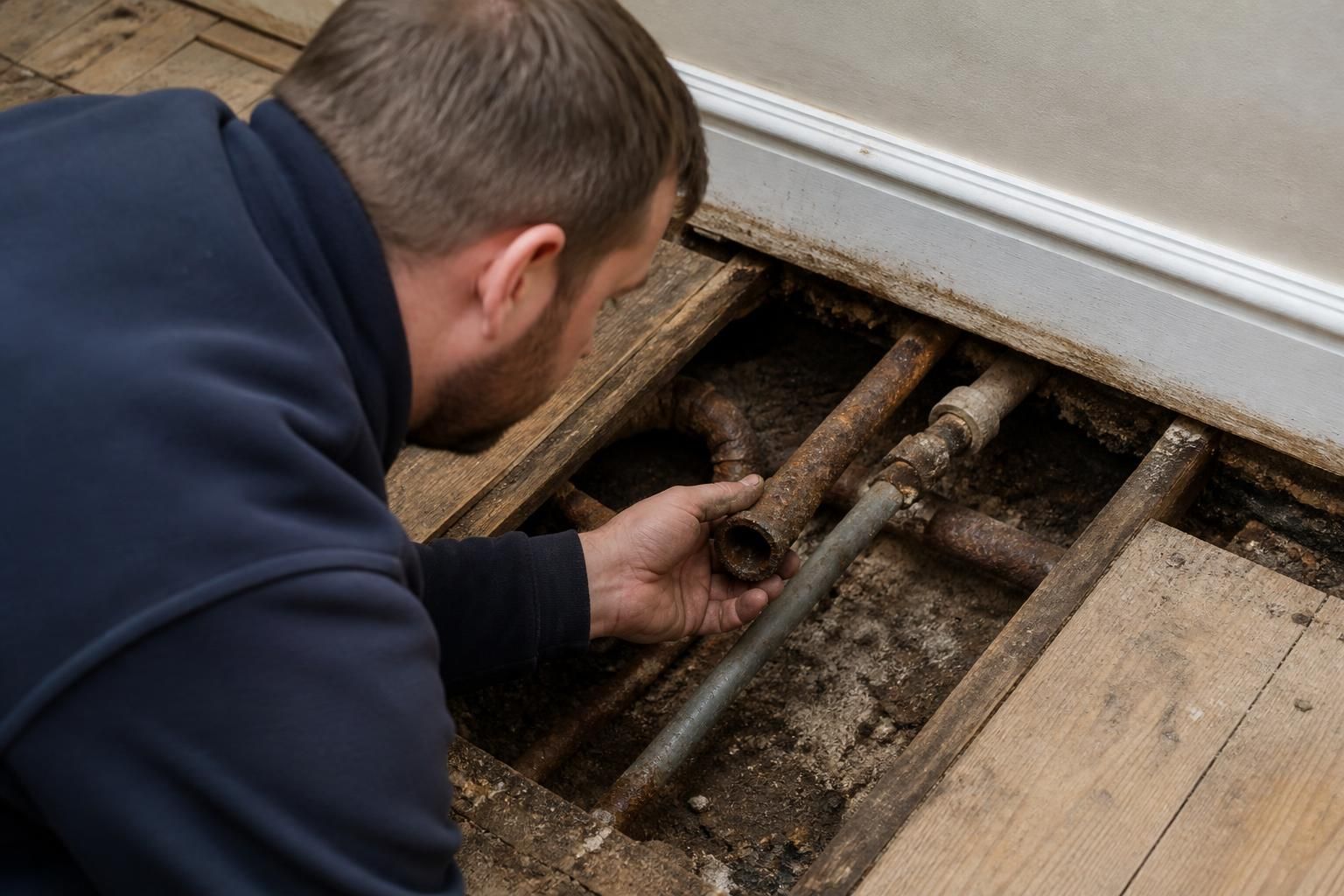
Old pipework should be replaced rather than repaired when the problem is caused by the condition, design or material of the wider system, not just by one isolated defect. Replacement is usually the more dependable option where further patching would leave weakened sections in place, restrict water flow, create a health concern or make future access difficult.
A repair may be suitable when the damage is limited to one accessible section and the surrounding pipe is structurally sound. For example, a plumber may replace a short length or a failed joint if the rest of the installation is in good condition and there is no evidence of a wider fault. This approach is less disruptive, but it should be based on inspection rather than on the location of the first visible leak alone.
Several signs can indicate that replacement is the better long-term decision:
- Progressive internal scaling: Older metal pipes can narrow internally as deposits build up. This may reduce flow and cause uneven pressure, even where the pipe has not yet failed.
- Fragile or heavily pitted material: Pipework that breaks, flakes or develops multiple thin spots may not provide a reliable surface for another repair.
- Lead components: Lead water-supply pipes should be discussed with a qualified plumber because replacing them can reduce the risk of lead entering drinking water. A partial replacement may also leave a section of the original material in place.
- Obsolete or unsuitable installation: Pipework may no longer meet the practical needs of the property if alterations, extensions or changes to water demand have left it undersized or poorly arranged.
- Concealed and inaccessible sections: Repairing a pipe beneath floors, inside walls or under fitted units may involve repeated disruption if the surrounding installation is also near the end of its useful life.
- Incompatible previous alterations: A mixture of materials, unsuitable connectors or poorly executed earlier work can increase the risk of further joint failures.
The extent of replacement does not always have to be the same as the extent of the building’s pipework. A plumber may recommend replacing one branch, a supply run, pipework serving a particular room or the complete system. A localised replacement can be reasonable where the remaining sections have been inspected and are expected to continue performing reliably. Full replacement is more appropriate when faults are spread through several areas, access is already open or piecemeal work would leave a patchwork of different materials and connections.
Pipe material is an important part of the assessment. Copper, steel, lead and plastic pipework each have different failure patterns, connection methods and compatibility requirements. A visual inspection can identify exposed deterioration, but concealed pipes may require access through an inspection point or a carefully planned opening. Water pressure, pipe diameter, the route of the installation and the condition of valves and joints should also be considered before choosing a replacement method.
Cost should be compared over the expected life of the work rather than judged only by the initial invoice. Repeated call-outs, damage to surrounding finishes and the labour involved in exposing hidden sections can make a series of small repairs less practical than one planned replacement. However, replacing pipework that is accessible, sound and correctly sized may create unnecessary disruption. The right decision balances reliability, access, disruption, health considerations and the likely need for future work.
Before work begins, ask for the affected sections to be identified and for the reason behind the recommendation to be explained. The plumber should clarify whether the proposal is a repair, partial replacement or complete renewal; which materials will be used; how existing connections will be dealt with; and whether walls, floors or cabinets need to be opened. This makes it easier to compare options and avoid replacing serviceable pipework without a clear reason.
Where the condition of old pipework is uncertain, a professional inspection is the safest starting point. Ideal Plumbing Services can assess domestic plumbing systems in Birmingham and the wider West Midlands and explain whether targeted repair or replacement is more appropriate for the property.