Call a plumber when a suspected leak is active, difficult to locate, affecting building materials or likely to involve concealed pipework. Even a small leak can continue behind a wall, beneath flooring or inside a kitchen unit, so the absence of a large visible puddle does not necessarily mean the problem is minor.
Arrange professional advice promptly if you notice:
- the sound of water flowing when all taps and appliances are turned off;
- fresh staining, bubbling paint, peeling wallpaper or swollen plaster;
- flooring, skirting boards, cupboards or ceilings that feel unusually wet or have begun to warp;
- water appearing beneath a sink, bath, toilet, radiator or washing machine connection;
- water that returns after you have dried the area;
- a leak that cannot be traced to a clear, accessible connection; or
- damage spreading to an adjoining room, lower floor or neighbouring property.
A plumber is also appropriate where the leak is intermittent. Pipework can leak only when a tap is used, a toilet refills, a heating system runs or an appliance operates. These faults may stop temporarily while still releasing water during particular parts of the system’s cycle. Recording when the moisture appears can help identify whether it is linked to a fitting, appliance or section of pipework.
Some situations need more urgent action. Contact a plumber without delay if a pipe has split, water is escaping under pressure, a ceiling is bulging, or water is spreading towards electrical equipment. Do not touch wet electrical fittings or enter an area where water may have reached electrical components. If it is safe to do so, turn off the property’s main stopcock and isolate the water supply to the affected appliance. Place a container or towels beneath a small, accessible leak, but do not delay professional help by attempting a repair you cannot complete safely.
If the source is a simple, isolated drip from an accessible tap or connection, it may not require emergency attendance, but it should still be repaired if tightening or replacing a washer does not resolve it. Avoid overtightening fittings, using unsuitable sealant or opening walls and floors to search for a concealed leak. Incorrect work can worsen the damage and make the eventual repair more difficult.
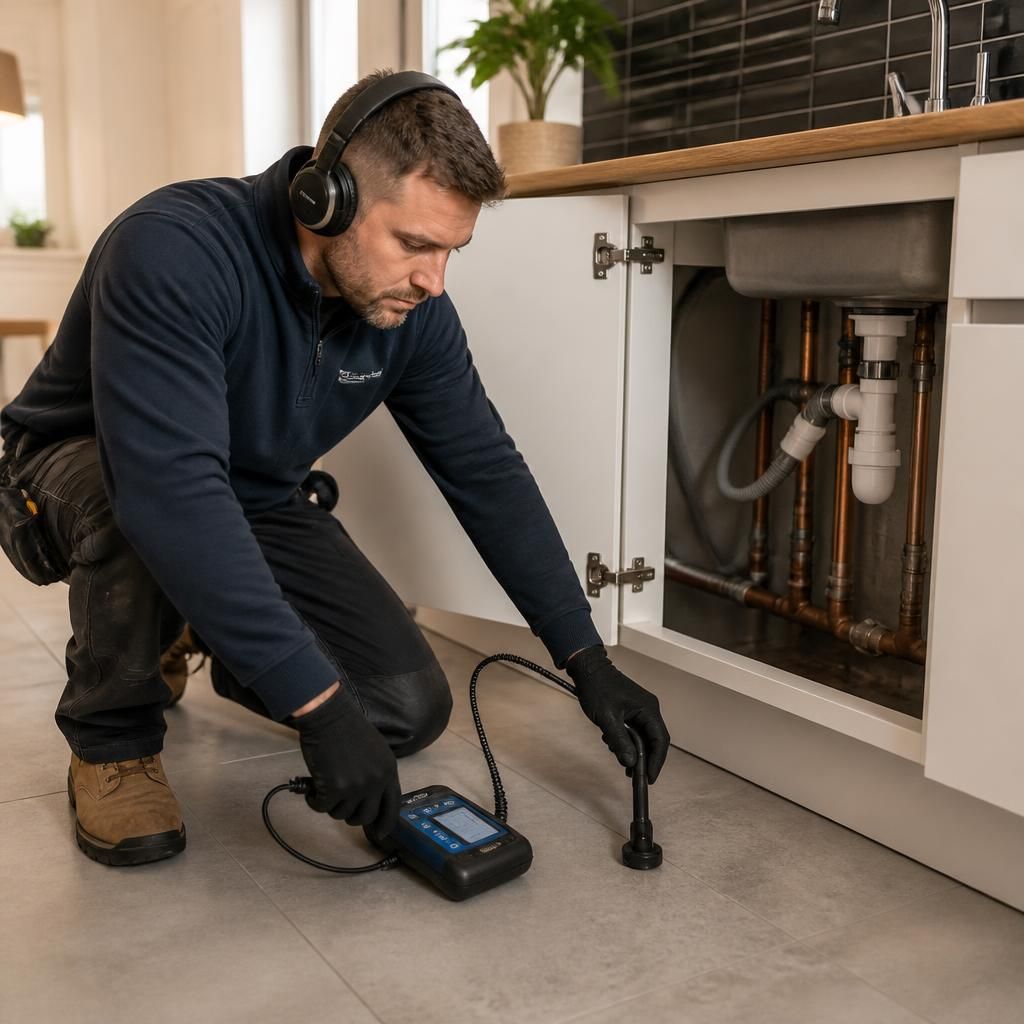
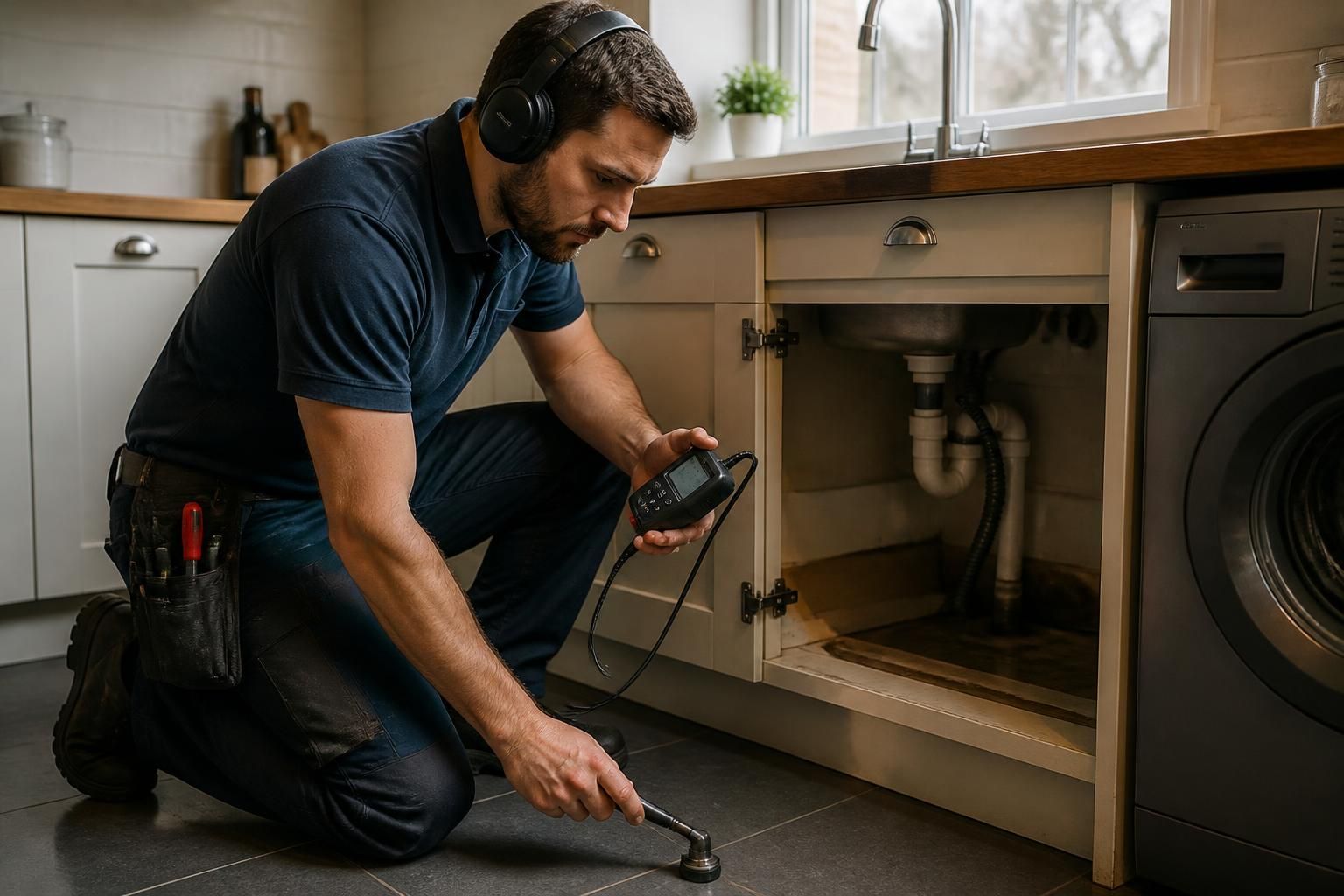
Professional leak detection is particularly useful when the source is hidden. A plumber can trace the water’s route, distinguish a supply-pipe leak from a waste-pipe or appliance fault, and inspect the affected fittings before recommending a repair. Once the leak has been stopped, damaged materials should be dried and checked for continuing moisture; simply cleaning the visible water does not address the underlying fault.
When arranging a visit, provide details of where water was first noticed, whether it appears continuously or only during use, which fixtures may be involved and whether the stopcock has been turned off. Photographs of staining or damaged surfaces can also help explain the problem. Keep records of any temporary steps and damage if an insurer or landlord may need to be informed.
Ideal Plumbing Services provides leak detection and plumbing repairs for homeowners, landlords and tenants in Birmingham and across the West Midlands, drawing on over 20 years of experience with residential plumbing problems.