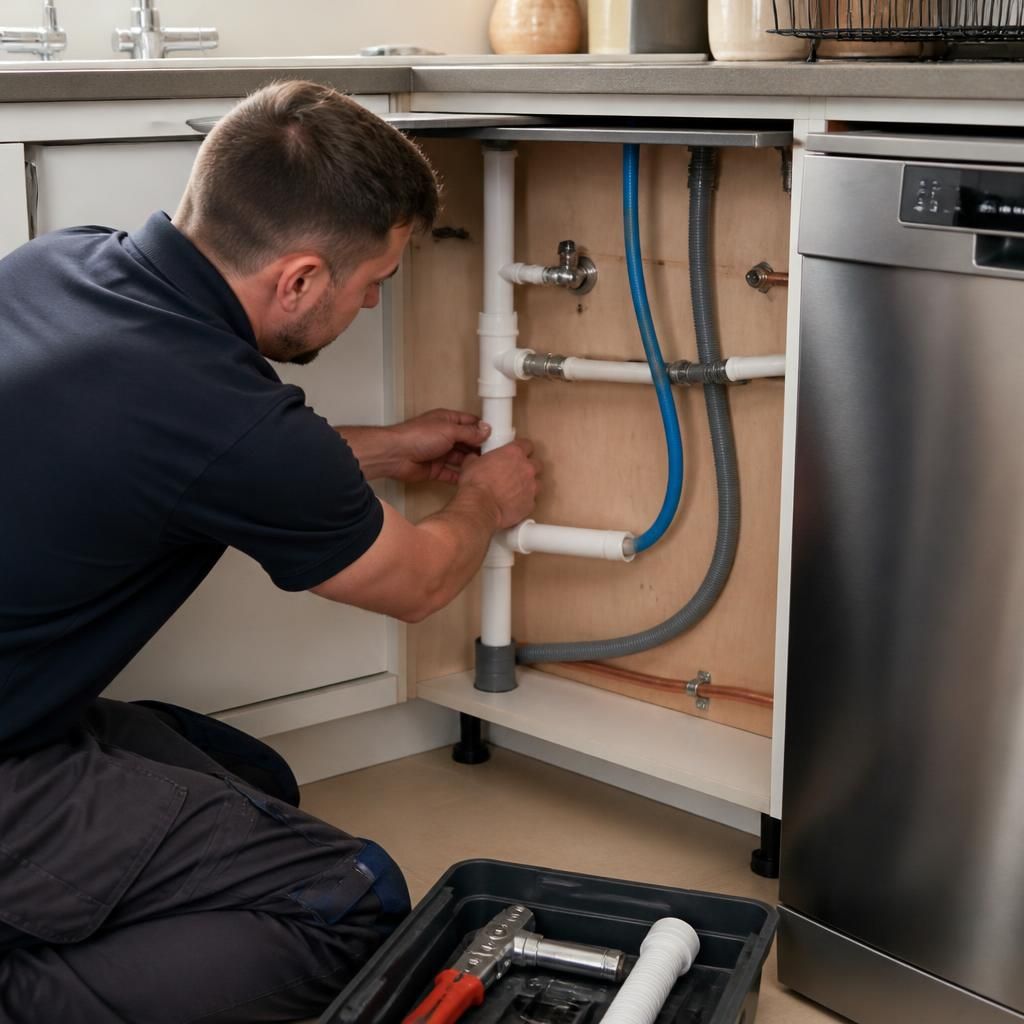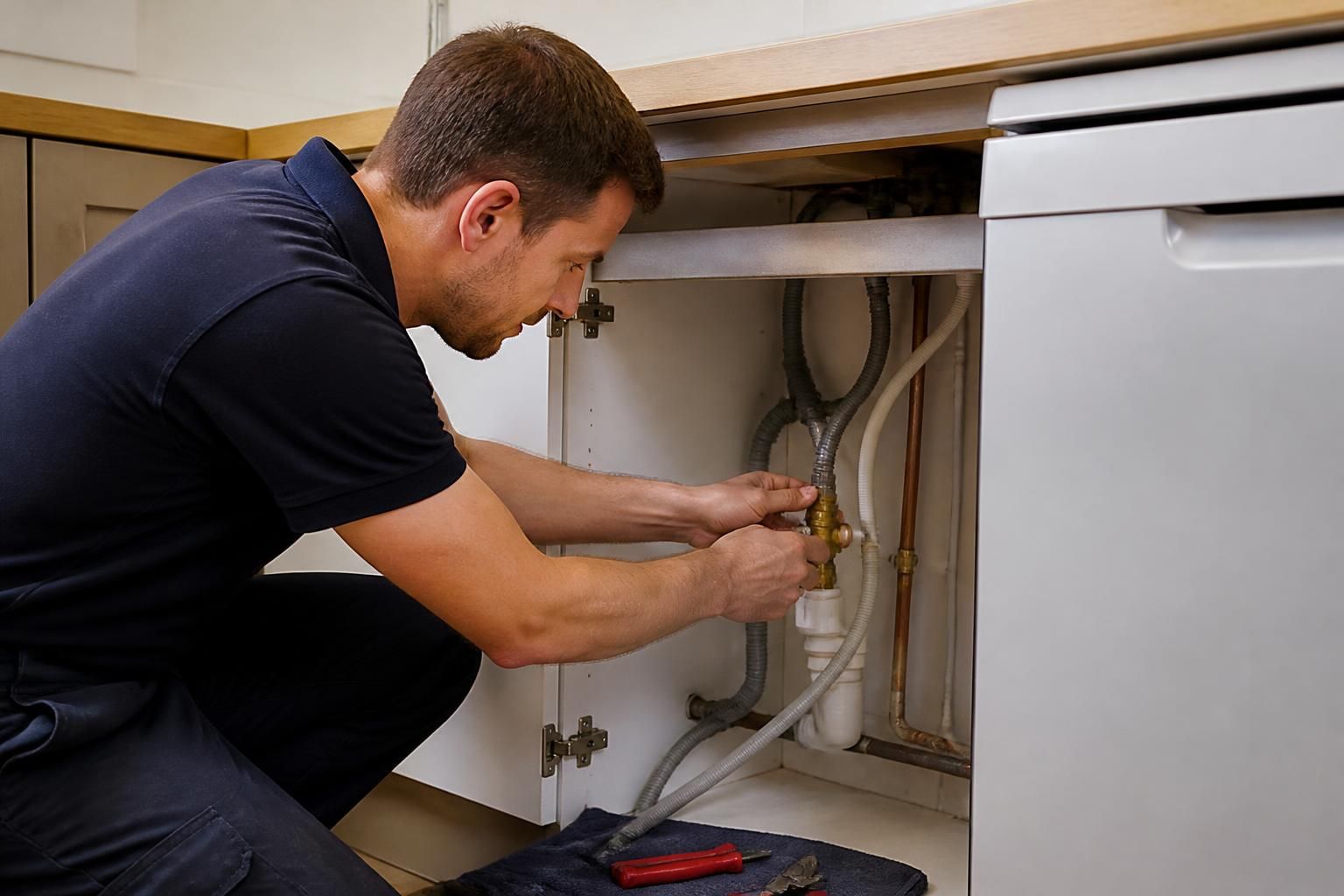
Yes. A kitchen plumber can design and install new pipework where an appliance is being added, relocated or connected to a previously unused part of the kitchen. The work may involve extending the water supply, creating a new waste connection, fitting isolation valves and positioning the connections so the appliance can be safely installed and removed for maintenance.
New pipework is commonly required when:
- a dishwasher or washing machine is being installed for the first time;
- an appliance is moving to a different position;
- the existing supply or waste connection is too far away;
- old pipework is damaged, poorly routed or unsuitable for the new appliance; or
- several appliances need to share a properly arranged supply and waste system.
Before starting, the plumber will assess the available hot or cold water supply, the existing waste arrangement and the space behind or beneath the kitchen units. The route needs to avoid sharp bends, unnecessary joints and areas where pipework could be crushed by cupboards or the appliance itself. Accessible isolation points are also important, as they allow the individual appliance supply to be shut off without interrupting water to the rest of the kitchen.
For a washing machine or dishwasher, the waste connection must be arranged to prevent leaks, backflow and unpleasant odours. Depending on the layout, this could involve connecting to a suitable trap, replacing an unsuitable trap or adapting the waste route. The pipe should be supported and positioned correctly so that movement, vibration and regular use do not place strain on the joints.
The type of appliance affects the pipework required. A dishwasher generally needs a water supply and waste connection, while a washing machine also needs connections that can accommodate vibration during its cycle. An appliance such as an American-style fridge freezer may need a dedicated water connection if it has a plumbed-in dispenser or ice maker. The plumber should confirm the appliance manufacturer's connection requirements before selecting fittings or finalising the layout.
Where existing plumbing is concealed behind units, access may be needed to install or test the new route. This does not always mean removing kitchen units, but the amount of access available can affect the installation method. A competent plumber will explain any necessary access work before proceeding and should avoid leaving concealed joints in locations that cannot be inspected or reached.
Once the pipework is installed, the connections should be checked under pressure and the waste system tested for leaks. The appliance can then be connected and the supply and waste routes inspected while it operates. Pipework that passes through cabinetry should be protected from sharp edges, and exposed connections should remain accessible for future servicing.
Plumbing work does not normally include every part of an appliance installation. Electrical connections, alterations to kitchen cabinetry and specialist gas work may need to be handled by the appropriate qualified professional. If an appliance uses gas, its connection must be assessed separately by a suitably qualified gas engineer.
Ideal Plumbing Services provides residential plumbing and appliance pipework assistance for homeowners, landlords and tenants in Birmingham and the wider West Midlands. The right approach depends on the appliance, the position of the existing services and the access available beneath or behind the kitchen.