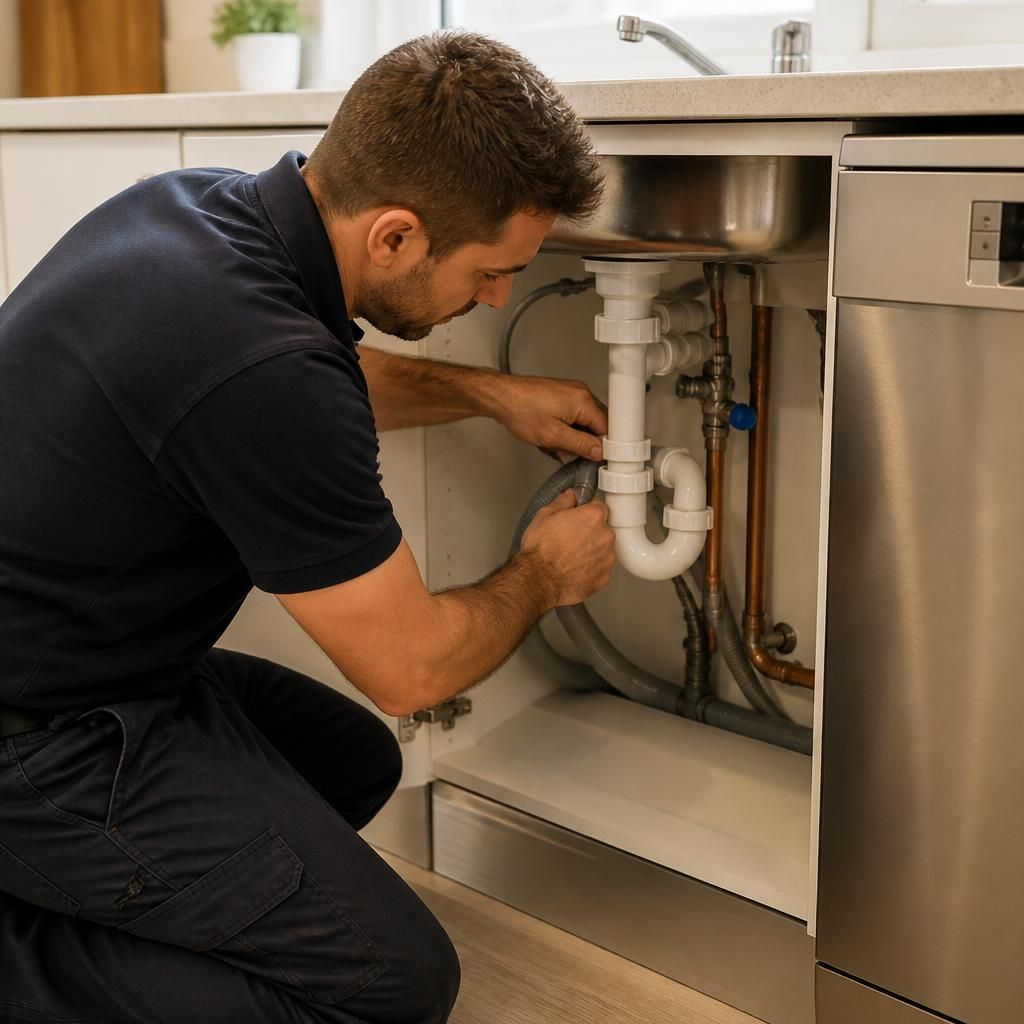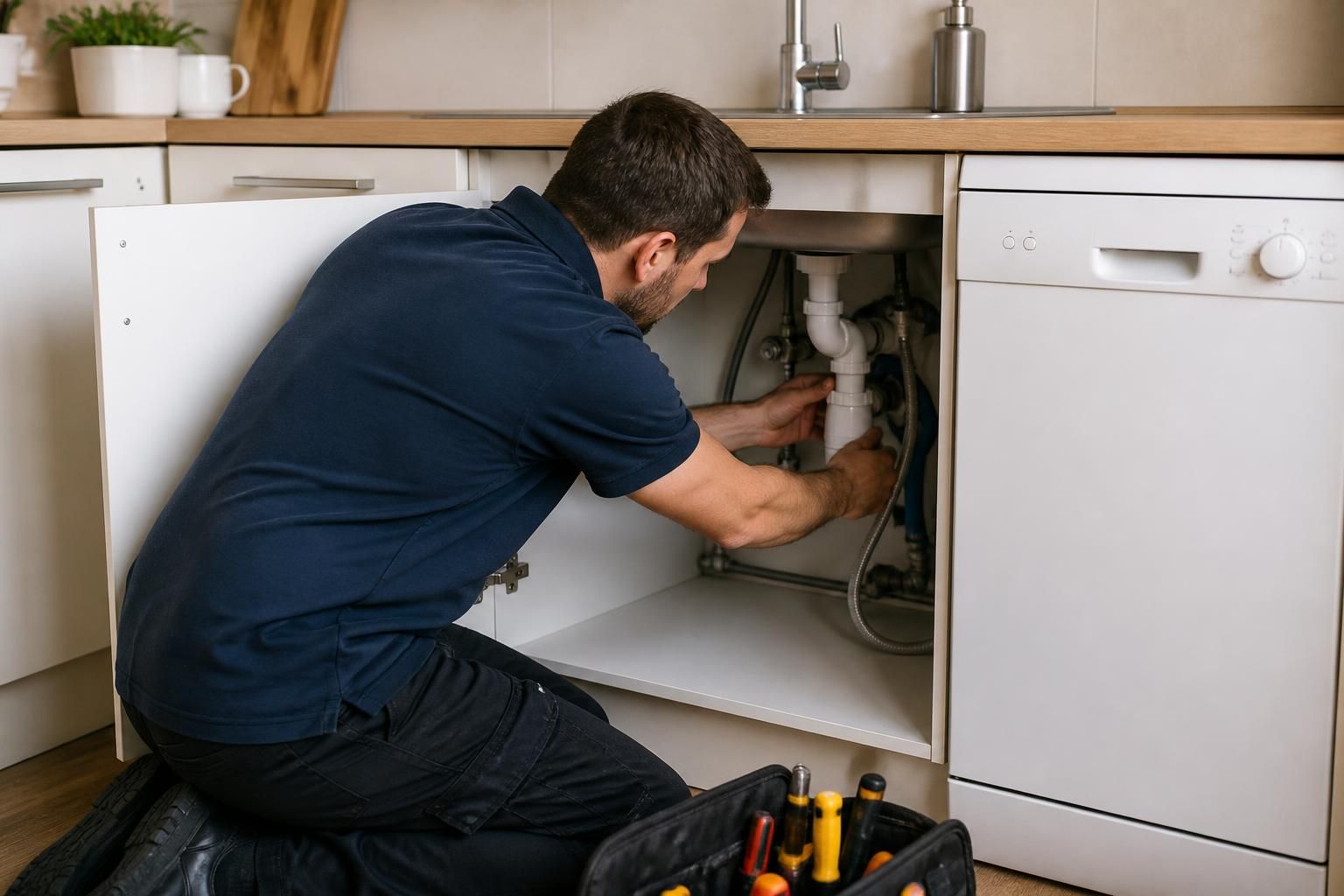
Kitchen appliance plumbing can often be carried out without taking out the surrounding units, but access is the deciding factor. A plumber must be able to reach the appliance connections, shut-off valve, water supply, waste outlet and any relevant pipework safely. If those parts are concealed behind fixed cabinetry or cannot be reached without moving the appliance, a unit may need to be removed or altered.
Situations where units may stay in place
Removal is less likely when the appliance has been installed with accessible connections. For example, a dishwasher or washing machine may be connected through a nearby service valve and waste connection housed beneath the sink. In that arrangement, the appliance can usually be disconnected and moved forward while the sink unit remains in position.
- The isolation valve can be reached without dismantling cabinetry.
- The waste trap or appliance waste spigot is accessible for inspection.
- Flexible hoses and electrical leads are not trapped behind fixed panels.
- The appliance can be pulled out without damaging flooring, worktops or adjacent doors.
- The pipework has enough slack to disconnect and reconnect it safely.
Even where the units remain installed, the plinth or kickboard may need to be unclipped or removed. This is a minor access measure rather than the removal of a full cabinet, but it allows the plumber to inspect the floor-level connections and check for signs of a leak.
When partial or full removal may be necessary
More extensive access may be required where the plumbing was fitted before the kitchen was completed, or where a previous installation left the connections behind a cabinet. Common examples include a shut-off valve positioned at the rear of a cupboard, a waste pipe passing through an inaccessible panel, or a supply hose compressed between the appliance and the wall.
- A cabinet has been built tightly around the appliance.
- Pipework runs through the back of a unit without an adequate access panel.
- The appliance is fixed beneath a worktop and cannot be withdrawn normally.
- A leak has affected the cabinet base, making careful inspection necessary.
- The existing valve, waste connection or pipework needs replacement rather than simple reconnection.
- The appliance is being relocated and a new route must be created for the supply or waste pipe.
Usually, the least disruptive option is attempted first. This may involve removing the plinth, taking off a removable access panel or sliding out the appliance. A cabinet is more likely to be dismantled only when there is no safe way to reach the plumbing or when the unit itself prevents the appliance from being removed.
How the plumber assesses the kitchen
Before disconnecting anything, the plumber should identify the water supply, locate the isolation point and establish where the waste connection leads. They will also consider whether the appliance is secured to a worktop or adjacent unit, whether the flooring can support it being moved, and whether the surrounding cabinetry is fitted or freestanding.
The condition of the connections matters as much as their position. A valve that is difficult to turn, a brittle hose, a leaking compression joint or a waste pipe with poor fall may need attention during the appliance work. Simply forcing an appliance out can pull on old pipework and turn a minor access problem into a leak, so connections should be disconnected in a controlled manner.
What happens if a unit has to be removed
Where removal is unavoidable, the extent should be agreed before work starts. A plumber may be able to remove a door, shelf, plinth or back panel, but fixed kitchen units can involve screws, sealant, worktop supports and adjoining cabinets. Plumbing work does not always include reinstating damaged cabinetry, decorative panels or worktops, so this should be clarified in advance if substantial dismantling is expected.
After the plumbing is completed, the connections should be checked for leaks while the appliance is run through an appropriate test cycle. The appliance should then be positioned without crushing hoses or trapping cables, and access panels or plinths should be refitted where they have been removed. Any new pipe opening through a cabinet should be protected from sharp edges and sealed where appropriate.
How to reduce the need for removal
Information about the kitchen layout can help the plumber plan the work. Photographs showing the appliance, the area beneath the sink and any visible valves or waste connections are useful, as are details of whether the appliance is integrated or freestanding. Do not cut cabinet panels or disconnect water pipes yourself unless you are confident that the correct isolation point has been identified.
For future installations, service valves and waste connections should be positioned where they can be reached without removing a cabinet. Removable access panels also make later maintenance easier. Properly planned access supports repairs, replacements and leak checks while preserving the kitchen units.
Ideal Plumbing Services can assess the available access and explain whether the work is likely to involve the appliance only, a plinth or panel, or a larger section of cabinetry. This allows the plumbing requirements and any access-related work to be considered before the installation or repair begins.