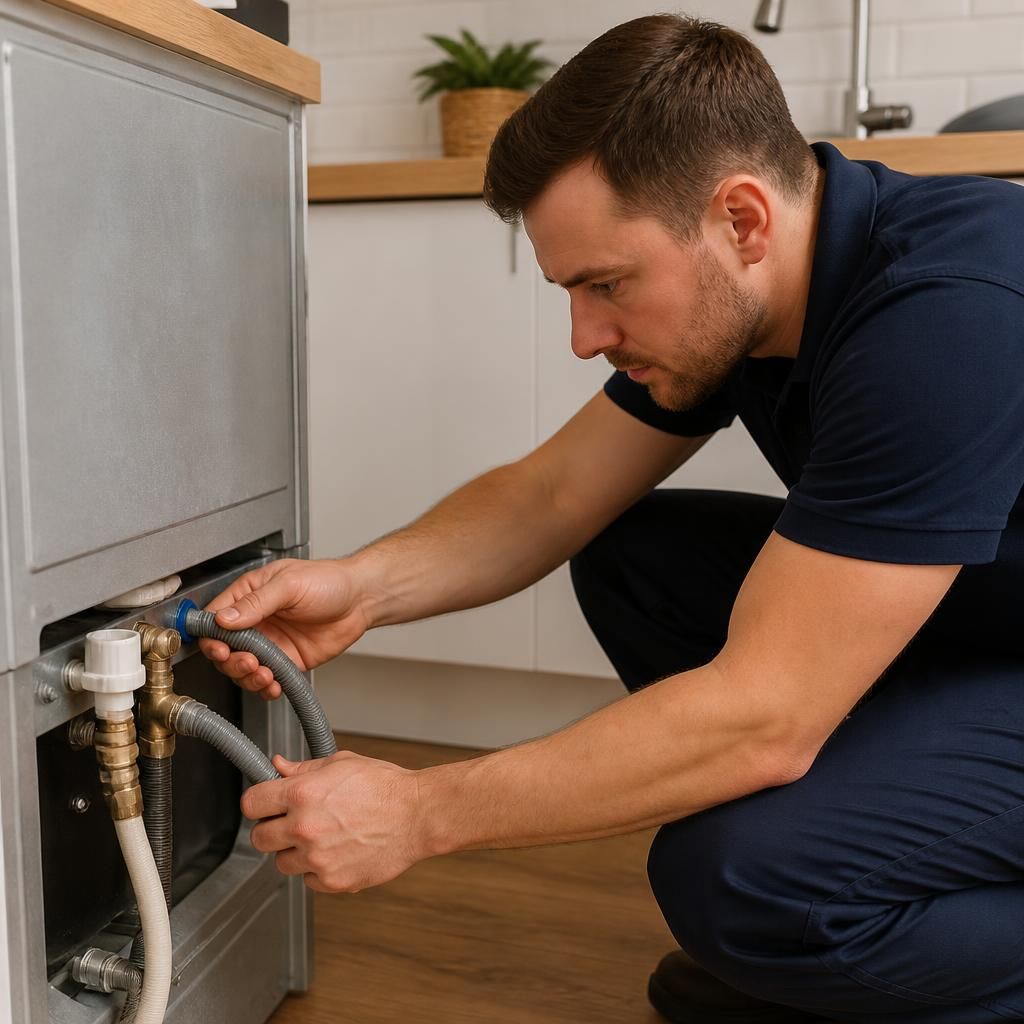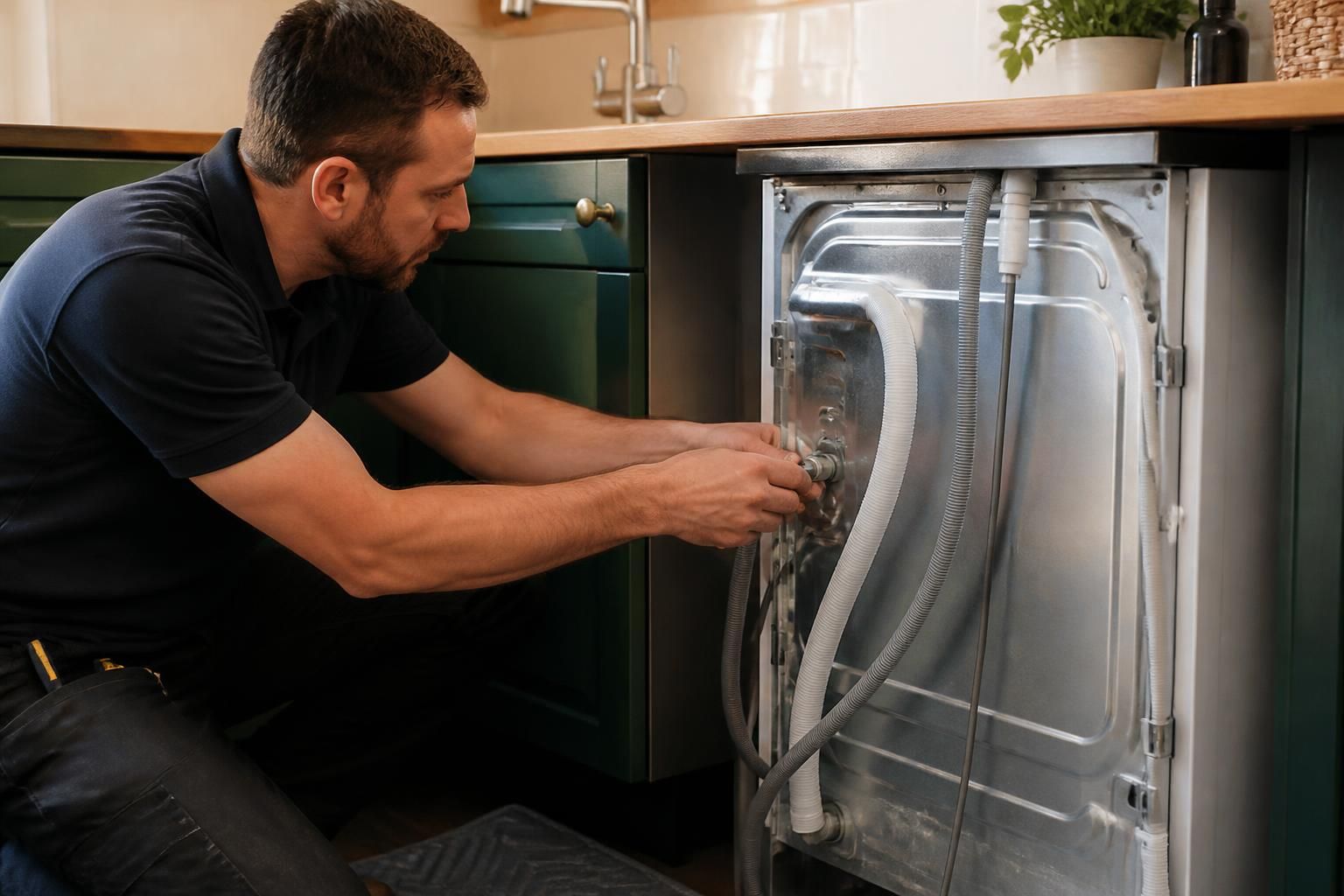
In a rented home, kitchen appliance plumbing is usually dealt with according to who owns the appliance, whether the plumbing is part of the property, and whether the work is a repair or an alteration. The tenancy agreement and the cause of the problem will normally determine who should arrange the work and meet the cost.
Landlord responsibility commonly includes:
- Repairing fixed water supply and waste pipework serving the kitchen.
- Maintaining isolation valves, appliance connections and other plumbing installations provided with the property.
- Repairing or replacing a dishwasher, washing machine or other appliance supplied as part of the tenancy, unless the problem resulted from misuse or damage by the tenant.
- Addressing leaks, failed connections and defective pipework that affect the condition or safe use of the rented home.
A landlord may use a plumber to inspect the installation, replace a faulty valve or hose, repair a waste connection, alter pipework or reconnect a provided appliance. The appropriate repair depends on whether the fault is within the appliance itself or within the property’s plumbing.
Tenant responsibility is often limited to reasonable care and prompt reporting. Tenants should tell the landlord or managing agent about leaks, blocked wastes, loose connections and appliance faults as soon as they are noticed. Leaving a small leak unattended can cause damage to units, flooring or neighbouring properties, and may affect how responsibility is assessed.
Tenants are also commonly responsible for damage caused by misuse, poor installation or unauthorised alterations. For example, forcing an appliance into a connection, fitting unsuitable waste pipework or removing a cabinet to reroute plumbing without approval could create a repair issue that the tenant may have to resolve. The exact position depends on the tenancy terms and the evidence about what happened.
Tenant-owned appliances require particular care. A tenant may own and arrange the installation of a washing machine, dishwasher or similar appliance, but should obtain written permission before connecting it if the agreement requires consent. Permission may be needed where the work involves changing supply pipes, drilling cabinetry, altering a waste connection or making any permanent modification. The landlord can reasonably require the installation to be completed safely and without damage to the property.
Even where the tenant owns the appliance, the landlord may still be responsible for fixed plumbing serving it. For instance, a tenant might arrange repair of a faulty appliance, while the landlord deals with a leaking isolation valve or damaged waste pipe that forms part of the property. A plumber can help identify which part of the installation has failed, but the responsibility for authorising the work should be agreed before non-urgent repairs proceed.
Before arranging kitchen appliance plumbing in a rented property:
- Check the tenancy agreement for clauses covering appliances, alterations, maintenance and emergency repairs.
- Confirm whether the appliance belongs to the landlord or the tenant.
- Report the problem to the landlord or agent, preferably in writing, and provide photographs where useful.
- Ask who has authority to instruct the plumber and how the cost will be handled.
- Obtain written consent for any installation or pipework alteration that is not a straightforward like-for-like connection.
- Keep the plumber’s invoice and any notes describing the fault, work completed and parts replaced.
If water is leaking, turn off the appliance and use its isolation valve if it can be reached safely. Where necessary, turn off the property’s main stopcock and notify the landlord or managing agent. Do not dismantle a concealed connection or continue using an appliance that is discharging water, as this can increase property damage.
Kitchen appliance plumbing can therefore cover rented properties, but the plumber may need confirmation from the person responsible for the home before carrying out chargeable work. Ideal Plumbing Services can assess appliance connections, supply and waste pipework, leaks and related plumbing faults for homeowners, landlords and tenants in Birmingham and the wider West Midlands. The tenancy agreement remains the key document for deciding who should authorise the work and pay for it.