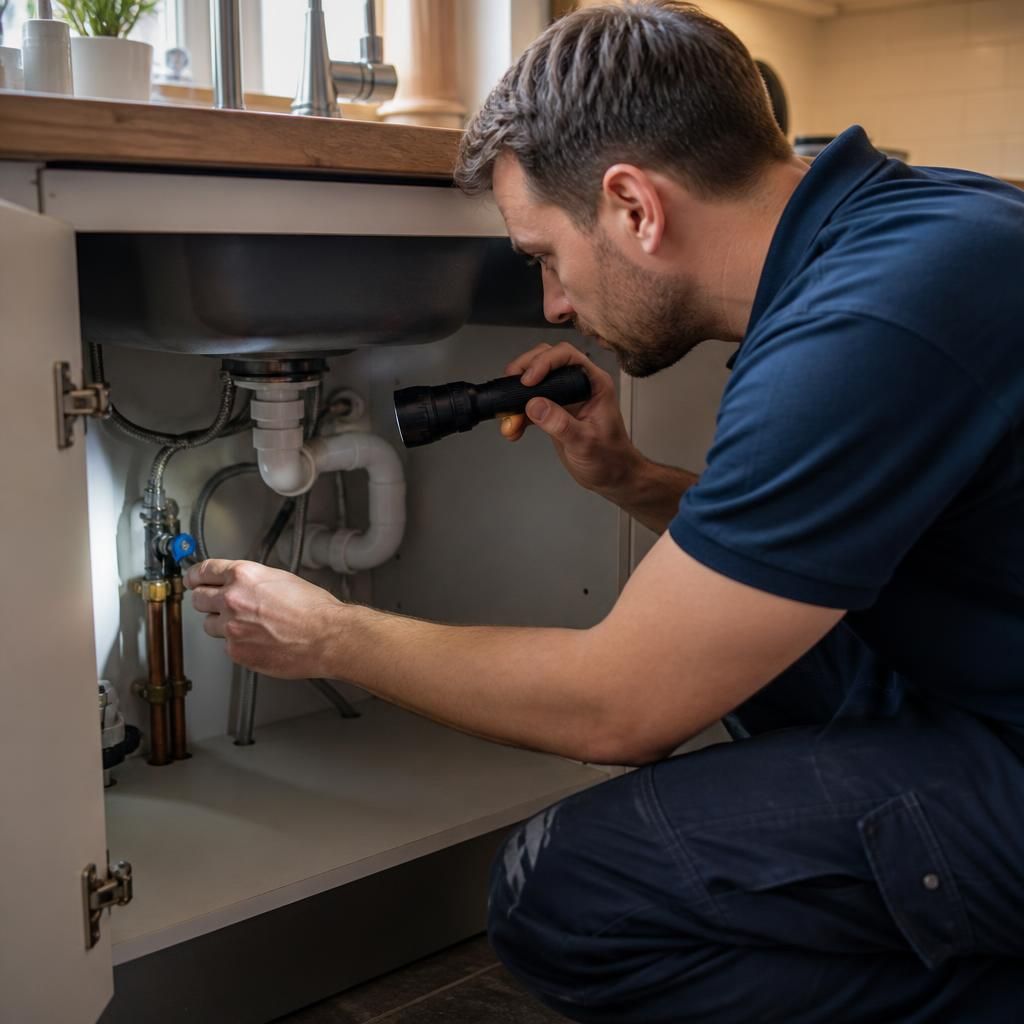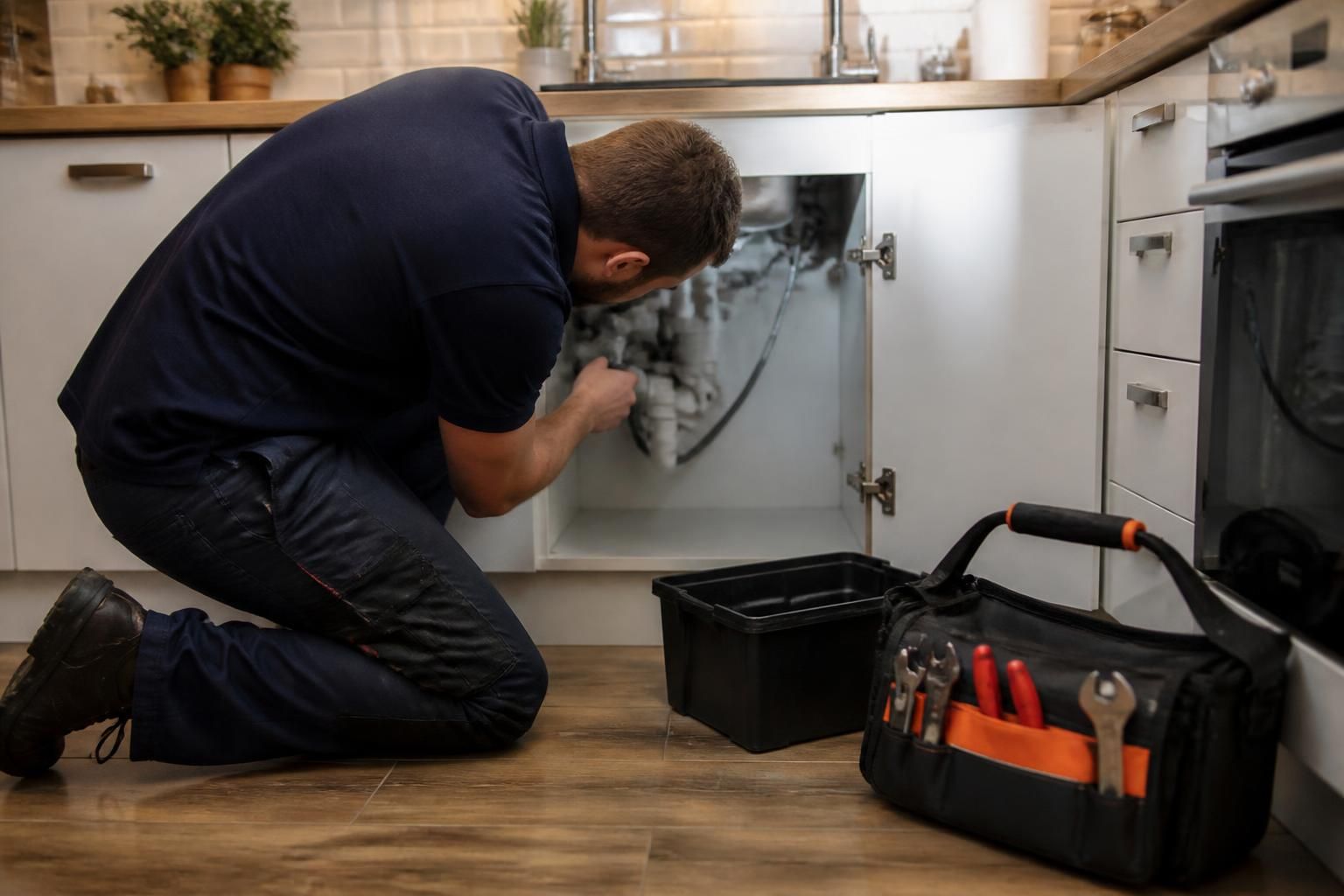
The most useful preparation is to record what has gone wrong, protect the surrounding area and make relevant property information available, without attempting to dismantle the appliance or alter gas and electrical connections. This gives the kitchen appliance plumber a safer, clearer starting point for diagnosis and repair.
Record the symptoms accurately. Note when the problem began and what happens during a cycle or when the appliance is used. Useful details include:
- Whether the appliance fails to fill, drain or complete its cycle
- Where water appears, such as beneath the appliance, around a waste connection or inside a cupboard
- Whether the issue is constant or only occurs at a particular stage
- Any error message, warning light, unusual smell or change in noise
- Whether the appliance has recently been moved, installed or connected to new pipework
If it can be done without moving the appliance or coming into contact with water near electrical equipment, take clear photographs of visible leaks, error displays and affected pipework. These may help establish the nature of the problem before the inspection.
Keep the surrounding area safe. Remove standing water with suitable towels or a container if there is no electrical hazard, and keep children and pets away from the affected area. Do not touch plugs, sockets or controls that are wet. If water has reached electrical equipment, leave it alone and tell the plumber exactly what has happened.
Do not dismantle the kitchen. Avoid removing plinths, cupboard panels, traps or hoses unless a qualified professional has specifically instructed you to do so. An appliance may need to be moved to inspect its connections, but forcing it out can damage flooring, cabinetry, hoses or waste pipework. If access is restricted, the plumber can explain what needs to be removed and whether another trade or the property owner must approve that work.
Prepare property and tenancy information. Homeowners should have details of any previous plumbing work or recurring faults. Tenants should check whether the landlord or managing agent needs to authorise repairs before work takes place. If the appliance is in a managed property, have the relevant contact details available so decisions about replacement parts or additional work are not delayed.
Make the inspection area usable. Keep the floor dry where possible and remove fragile items from the immediate work area, without moving the appliance itself. Make sure the plumber can reach the kitchen, the appliance connections and any accessible pipework serving the sink or waste system. If the fault has affected flooring, units or stored belongings, move only items that can be removed safely.
Be ready to explain what has already happened. Tell the plumber whether anyone has tried to restart the appliance, whether a temporary repair has been made, and whether the fault followed another plumbing issue. This helps distinguish an appliance fault from a problem with the supply, waste connection or surrounding pipework.
During the visit, ask what has caused the fault, which repair is recommended and whether any related pipework should be monitored. Before work begins, confirm the proposed scope and any parts or additional access requirements. A clear description of the symptoms and safe access to the relevant area will usually make the assessment more straightforward.