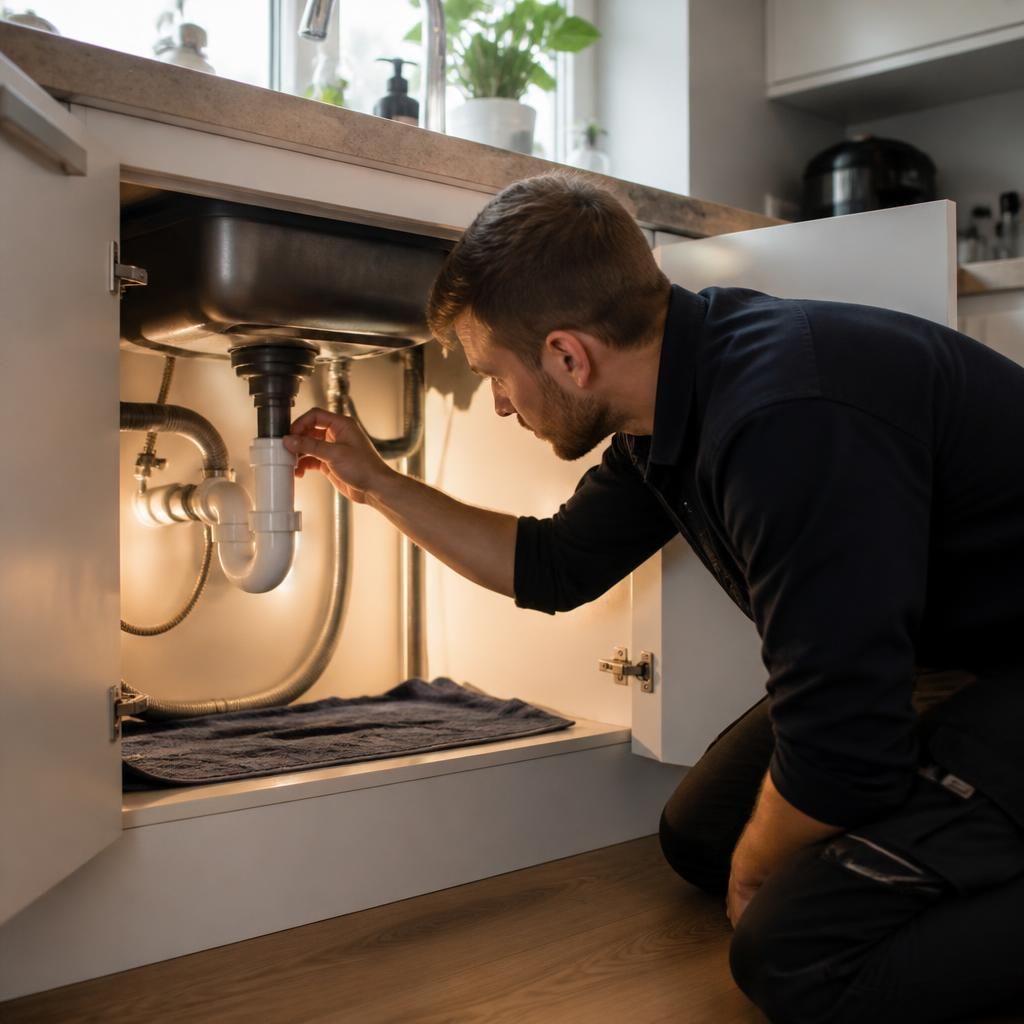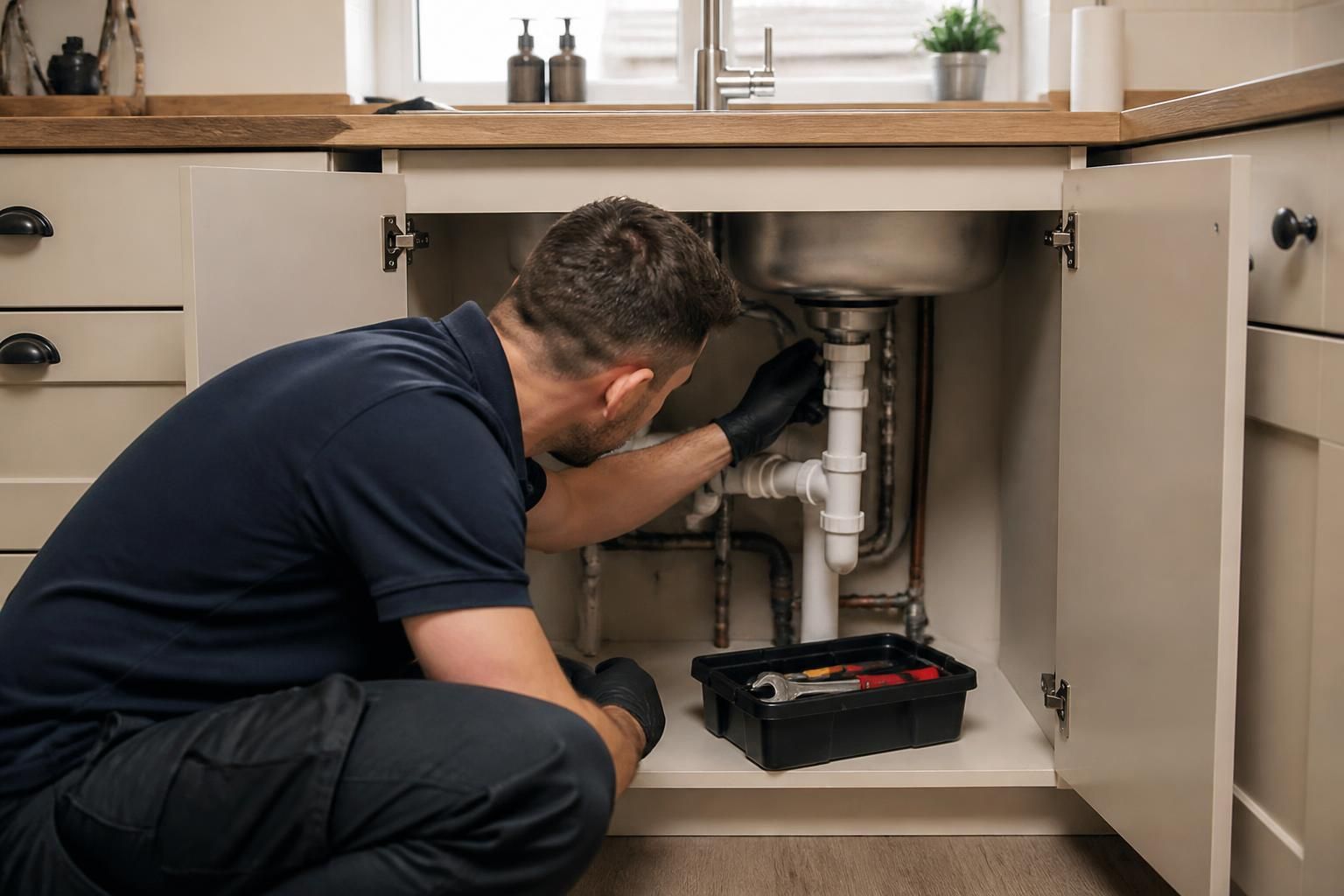
Access beneath the kitchen sink is usually sufficient when the faulty component can be reached, isolated, removed and replaced from inside the cupboard. This commonly applies to sink traps, waste connections, tap fittings and accessible isolation valves. The available space must also allow a plumber to use tools safely without damaging the cabinet, pipework or surrounding fittings.
Before starting a repair, a plumber will normally assess several practical points:
- Where the fault is located: A leak from a visible compression joint, trap, flexible connector or waste fitting can generally be investigated from beneath the sink.
- Whether the water supply can be isolated: Isolation valves should be reachable and operable. If they are seized, hidden or absent, the supply may need to be isolated elsewhere before work begins.
- Whether there is enough working room: Cleaning products, stored items, removable shelving and waste bins can obstruct tools and make it difficult to see connections clearly.
- How components are fixed: Some fittings can be undone from the cupboard, while others are secured through the sink, worktop or an adjacent unit.
- Whether the pipework can be tested: After a repair, the plumber needs to run water and inspect the connections under operating conditions.
Access from the cupboard may not be enough where the pipe route passes behind a fixed cabinet panel or where a connection is positioned at the rear of a deep unit. A tap may also require access from above the sink, particularly if its retaining nut is underneath the worktop and there is limited room for a spanner. In some installations, the sink or worktop has to be supported while a fitting is loosened, so the condition and construction of the surrounding units are relevant.
Additional access is sometimes required when the visible leak is only a symptom of a concealed problem. Examples include a damaged pipe inside a wall, a waste pipe beneath the floor, or a persistent damp area extending beyond the cupboard. The appropriate opening depends on the pipe layout and the need to minimise disruption. A plumber should identify the likely access point before cutting panels, flooring or plasterboard, rather than creating a large opening unnecessarily.
Built-in appliances and fixed shelving can make the situation more complicated. A dishwasher or washing machine may restrict access to the sink waste or supply pipes, while an integrated cupboard front may need to be removed carefully. These items should not be disconnected or moved unless it is safe to do so and the relevant water and electrical supplies have been dealt with appropriately.
You can help the assessment by emptying the cupboard, removing loose shelving where possible and clearing the area around the sink. Keep towels or a shallow container available for residual water, but do not disturb a leaking connection if doing so could make the leak worse. If the repair is in a rented property, obtain the landlord or managing agent's permission before any alteration to units, walls or flooring is considered.
For a straightforward fault, clear access beneath the sink is often all that is needed. If the plumber cannot see the full pipe route, reach a fixing, isolate the supply or test the repaired connection, further access may be necessary. An inspection can establish whether a removable panel is sufficient or whether a more involved opening is justified.