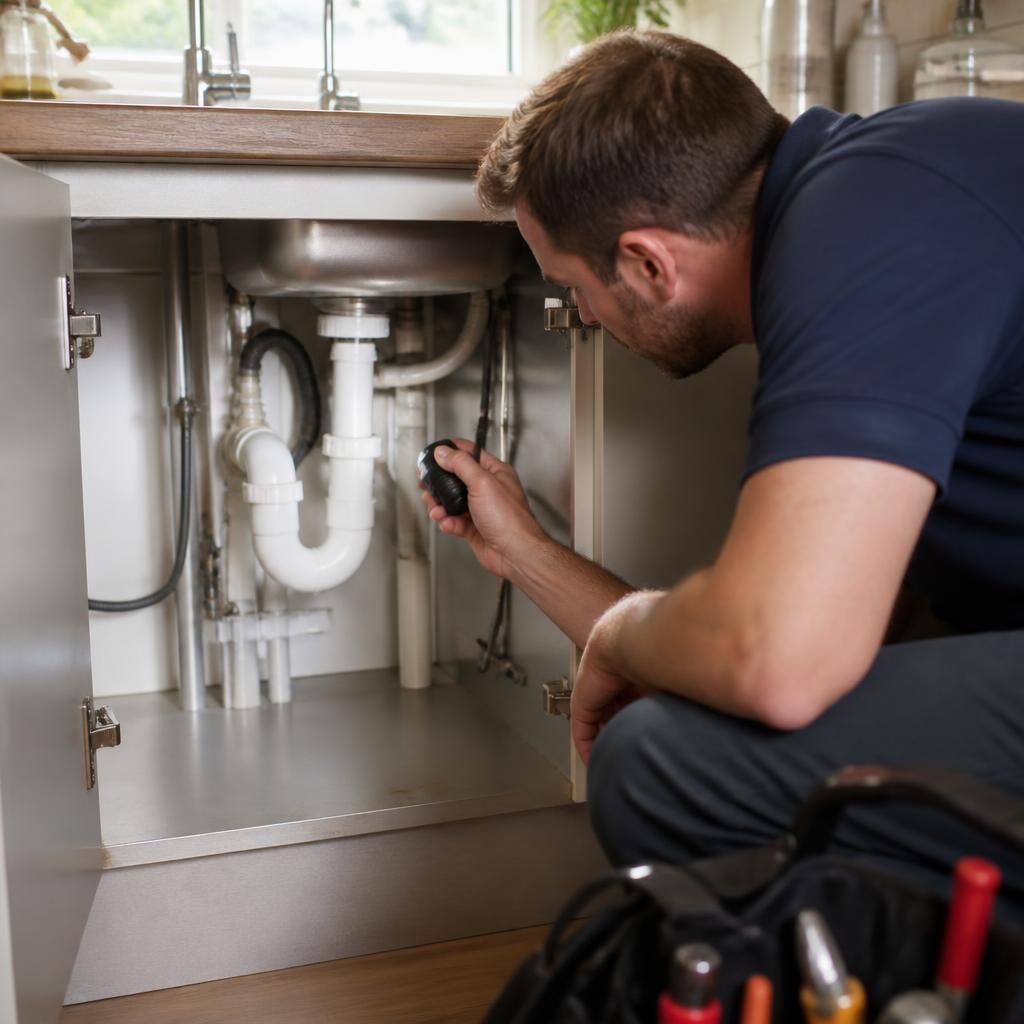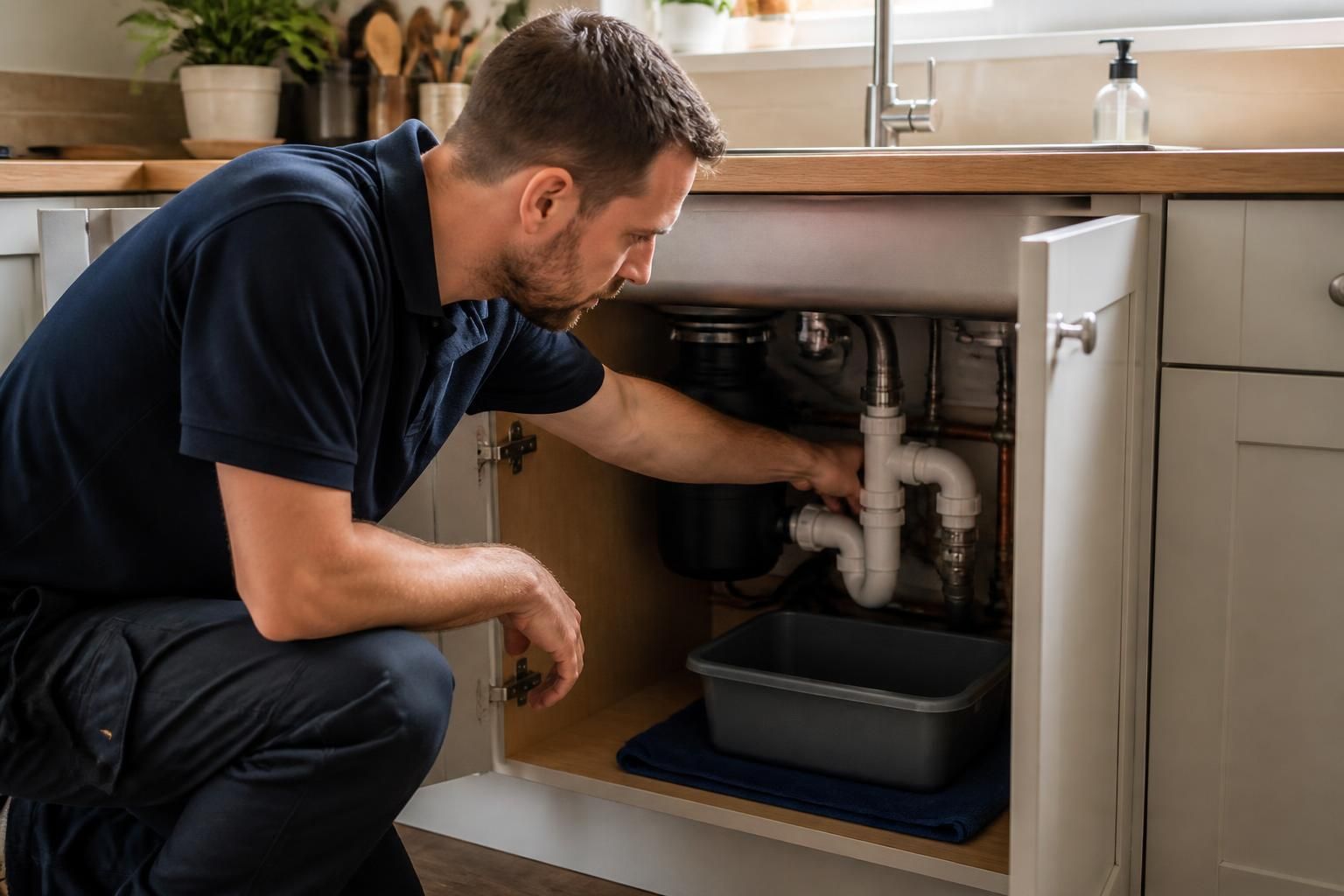
Before a kitchen sink plumber arrives, make the area safe and accessible, gather useful information, and avoid attempting a repair that could worsen the fault. Clear the floor and work area around the sink, keep children and pets away, and leave connected plumbing components in place so the plumber can inspect the installation accurately.
Prepare the sink area
- Remove cleaning products, bins and other objects from around the sink and nearby work surfaces.
- Clear a straightforward route from the entrance to the kitchen, particularly if tools or replacement parts may need to be carried in.
- Move anything that could be damaged by moisture away from the sink, including small appliances, food, paperwork and electrical items.
- If a dishwasher or washing machine is connected to the sink plumbing, do not pull it out or disconnect its hoses unless specifically instructed. The connections may form part of the fault investigation.
Do not dismantle the trap, loosen compression fittings, remove the tap or cut into a pipe before the plumber arrives. A temporary adjustment can hide the source of a leak, release trapped water or make the eventual repair more extensive. Avoid using chemical drain cleaners where possible, especially if the blockage has not been identified. Residue can remain in the pipework and create a handling hazard during inspection.
Record useful details
Write down which fixtures are affected and what happens when the sink, tap or connected appliance is used. For example, note whether water drains slowly, backs up into the bowl, appears around a joint, or causes a smell. If the issue is intermittent, record the conditions in which it occurs. Photographs or a short video can also help show the location and pattern of a leak that is not present during the visit.
Have relevant information available, such as the date of a recent tap, waste or appliance installation, previous repair details, and any unusual noises or changes you have noticed. If you know whether the sink has a single or double bowl and whether the waste pipe connects to an appliance, mention this when arranging the visit or when the plumber arrives.
Take sensible safety precautions
If water has reached sockets, plugs, an under-sink waste-disposal unit or another electrical fitting, do not touch wet electrical equipment. Keep away from the affected area and only isolate the relevant electrical circuit if this can be done safely without contacting water. A qualified professional can then assess whether the plumbing fault has created an electrical risk.
Do not use the sink to test whether the problem has improved. If there is a strong sewage smell, contaminated water or substantial water damage, keep people and animals away from the affected area and mention this clearly to the plumber. Do not mix drain-cleaning chemicals or add more products in an attempt to clear the problem.
Prepare access and property information
Some kitchen sink repairs require inspection beyond the visible cupboard, including the waste pipe, wall connection, supply pipework or floor area. Make sure any removable plinths, kickboards or stored items that obstruct these areas can be accessed, but do not remove fixed panels or alter kitchen units yourself. Tell the plumber if a panel is fragile, damaged or difficult to remove.
If you rent the property, check whether the landlord or managing agent needs to authorise the repair and keep any relevant contact details available. This can prevent uncertainty about approval, access or responsibility for associated damage. Homeowners should also have details of any previous plumbing work if it may affect the current installation.
Finally, prepare specific questions about the proposed repair. Ask what has caused the fault, whether the repair is temporary or permanent, whether any pipework or fittings need replacing, and whether the work could affect the units, flooring or connected appliances. Request an explanation of any recommended follow-up maintenance and ensure you understand the agreed work before it begins. This gives the plumber the information needed to assess the sink properly without unnecessary interference before the inspection.