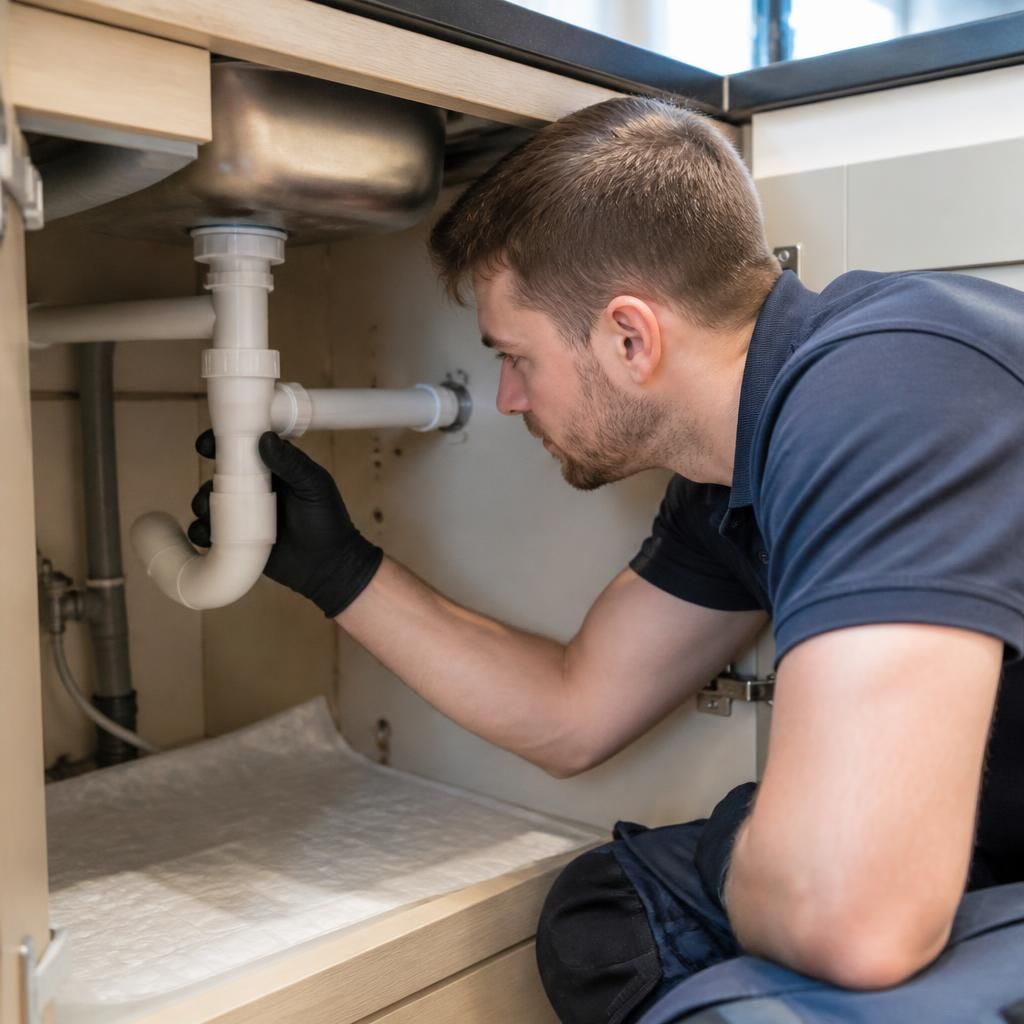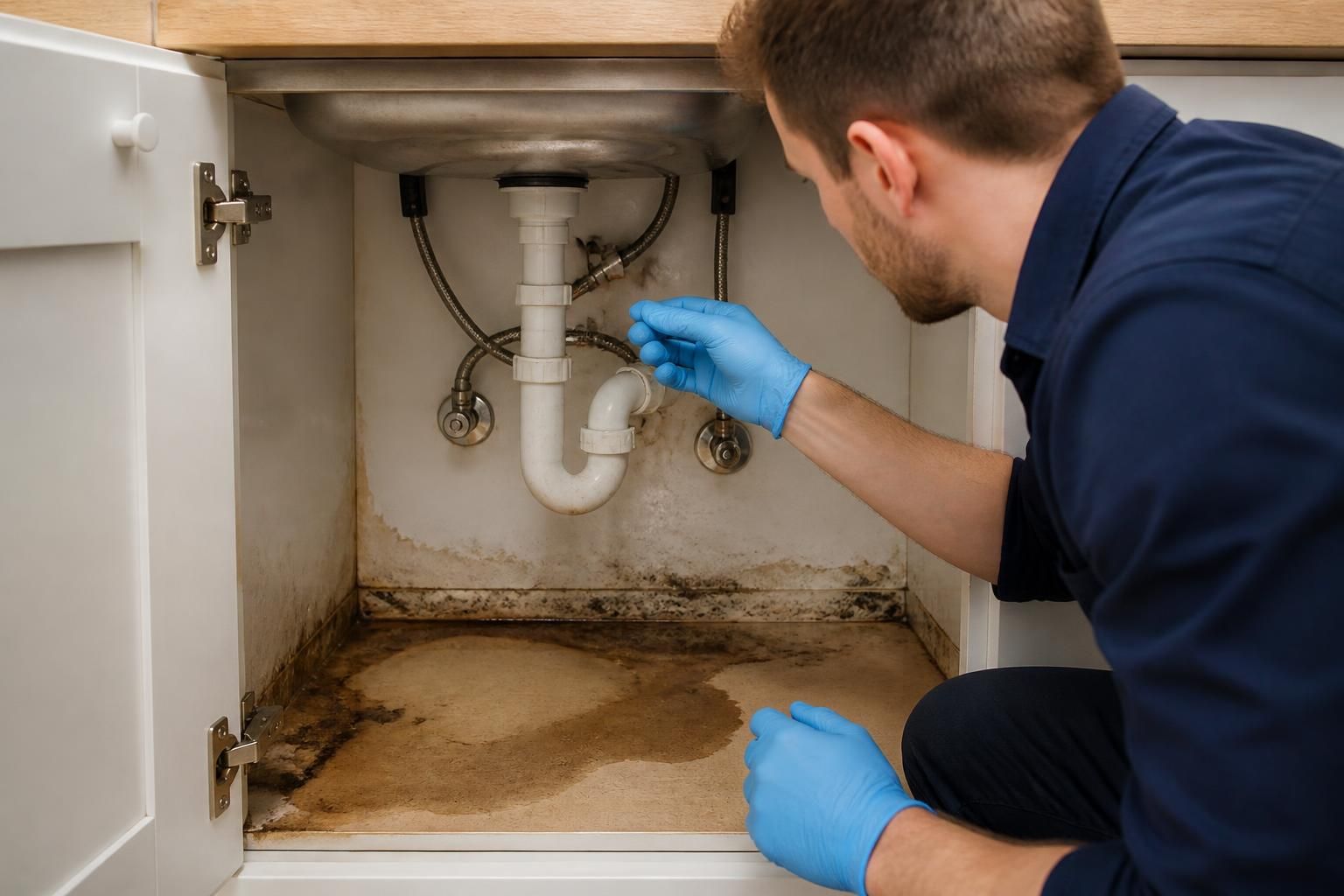
Kitchen sink plumbing can damage kitchen units when water escapes from a supply pipe, waste connection, trap, tap fitting or appliance hose and remains inside the cabinet. The risk depends on the amount of water, how long it has been present, the material of the unit and whether moisture has reached the cabinet base, wall or adjoining units.
Common signs of plumbing-related unit damage include:
- Swollen or blistered chipboard around the cabinet base or door edges
- Peeling laminate, bubbling veneer or discoloured surfaces
- A musty smell, dark marks or visible mould
- Soft flooring beneath the sink cabinet
- Warped shelves, doors or hinges that no longer align correctly
- Water marks on the wall or the back of an adjoining cupboard
Some leaks are obvious, such as water dripping from a waste joint when the sink is emptied. Others are slower and may only appear as dampness around a compression fitting or a stain beneath the sink. A supply leak can continue while the tap is not being used, whereas a waste leak usually becomes more noticeable when the sink is draining. Condensation on cold pipes can also create moisture, although persistent or localised wetting should not be dismissed without checking the plumbing.
Several parts of the installation can cause damage if they are loose, worn or incorrectly sealed. These include the tap tails, isolation valves, flexible tap connectors, sink waste, trap, overflow connection and dishwasher or washing machine waste hose. Movement beneath the sink, poor support, degraded washers and overtightened plastic fittings can all contribute to failures. A blocked or partially blocked waste can increase the time water remains in the sink and place additional stress on joints when it drains.
The cabinet material affects how well it withstands a leak. Solid timber may dry and remain serviceable if the exposure is limited, although it can still stain, warp or develop mould. Moisture-resistant board offers more protection but is not waterproof. Standard chipboard can absorb water through exposed edges and fixing holes, causing it to swell and lose strength. Once a cabinet base has become soft or badly distorted, drying it may not restore its structural condition, and replacement of the affected panel or unit may be necessary.
Water can also travel further than the visible leak. It may run behind a plinth, beneath flooring or along the wall before appearing at a different point. This is why a dry-looking area directly below a pipe does not always prove that the cabinet is unaffected. If the leak has been present for some time, the surrounding wall, floor and adjacent units should be checked for concealed dampness.
Where it is safe to do so, remove items from the cupboard and place a container or absorbent material beneath the suspected leak. Dry accessible surfaces and avoid using the sink or connected appliance until the source is understood. Do not repeatedly tighten plastic nuts or dismantle a waste fitting without identifying how it is assembled, as this can damage threads, distort seals or create a second leak. If water is near electrical connections or an appliance, take appropriate safety precautions and seek professional assistance.
A proper repair should address both the escaping water and the reason the connection failed. This may involve replacing a washer or seal, renewing a flexible connector, correcting the alignment of a waste pipe, securing a trap, clearing a restriction or replacing a damaged section of pipe. The area should then be tested while the tap runs and the sink drains, with the cabinet and surrounding surfaces checked again for signs of moisture. Simply drying the cupboard or applying sealant over a leaking joint is unlikely to provide a lasting repair.
Professional inspection is particularly sensible when the leak cannot be located, the unit base feels soft, mould is present, the water has reached flooring or plasterboard, or a leak returns after a fitting has been tightened. A plumber can distinguish between a plumbing failure and damage that requires separate cabinet, flooring or mould remediation work. Recording the location and extent of any damage can also help homeowners, landlords and tenants explain the issue accurately before repair work begins.
Preventive checks can reduce the chance of serious unit damage. Periodically inspect visible connections for corrosion, staining or movement, keep the cabinet reasonably clear so leaks can be seen, and avoid storing items where they press against pipework. A leak-detection tray or moisture alarm may provide an early warning, but it should supplement rather than replace inspection and maintenance. Ideal Plumbing Services provides kitchen sink plumbing repairs for homeowners, landlords and tenants in Birmingham and across the West Midlands where a leak, faulty connection or drainage problem is affecting the surrounding units.