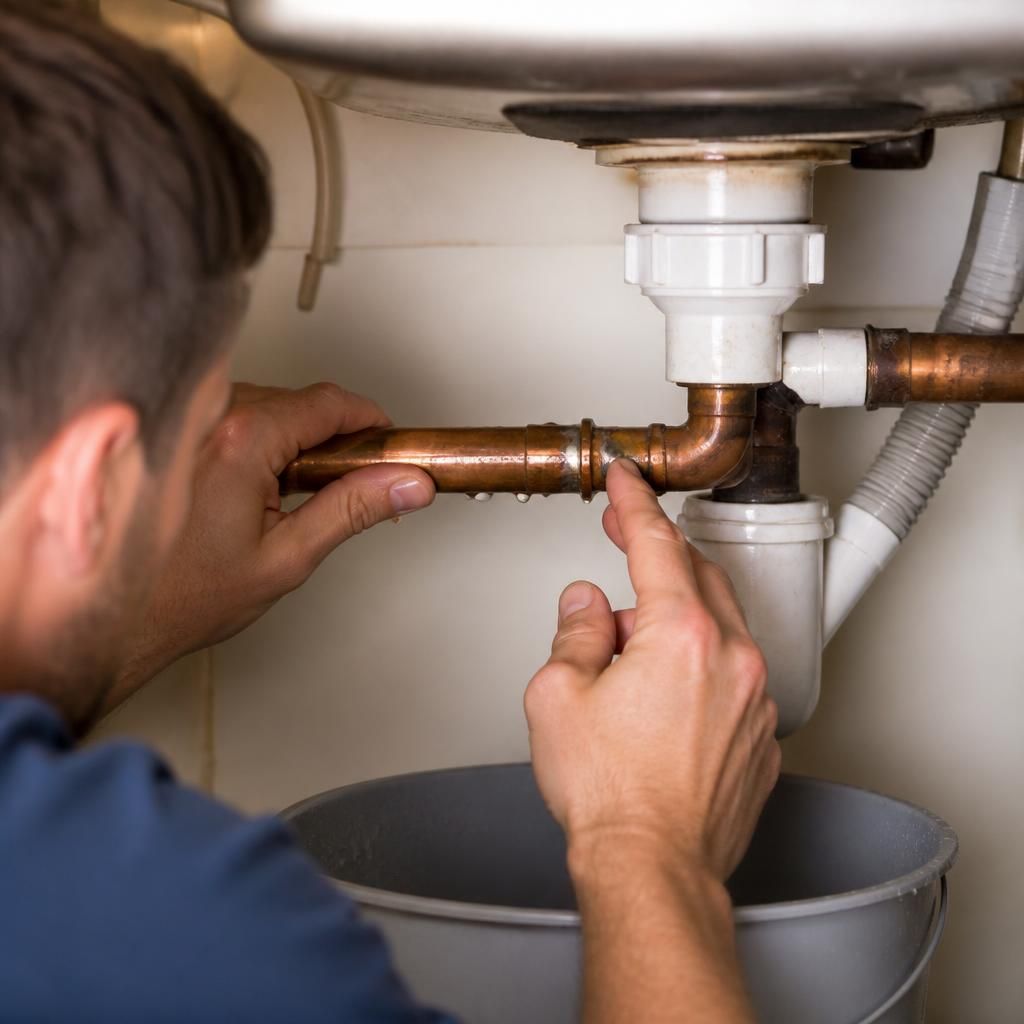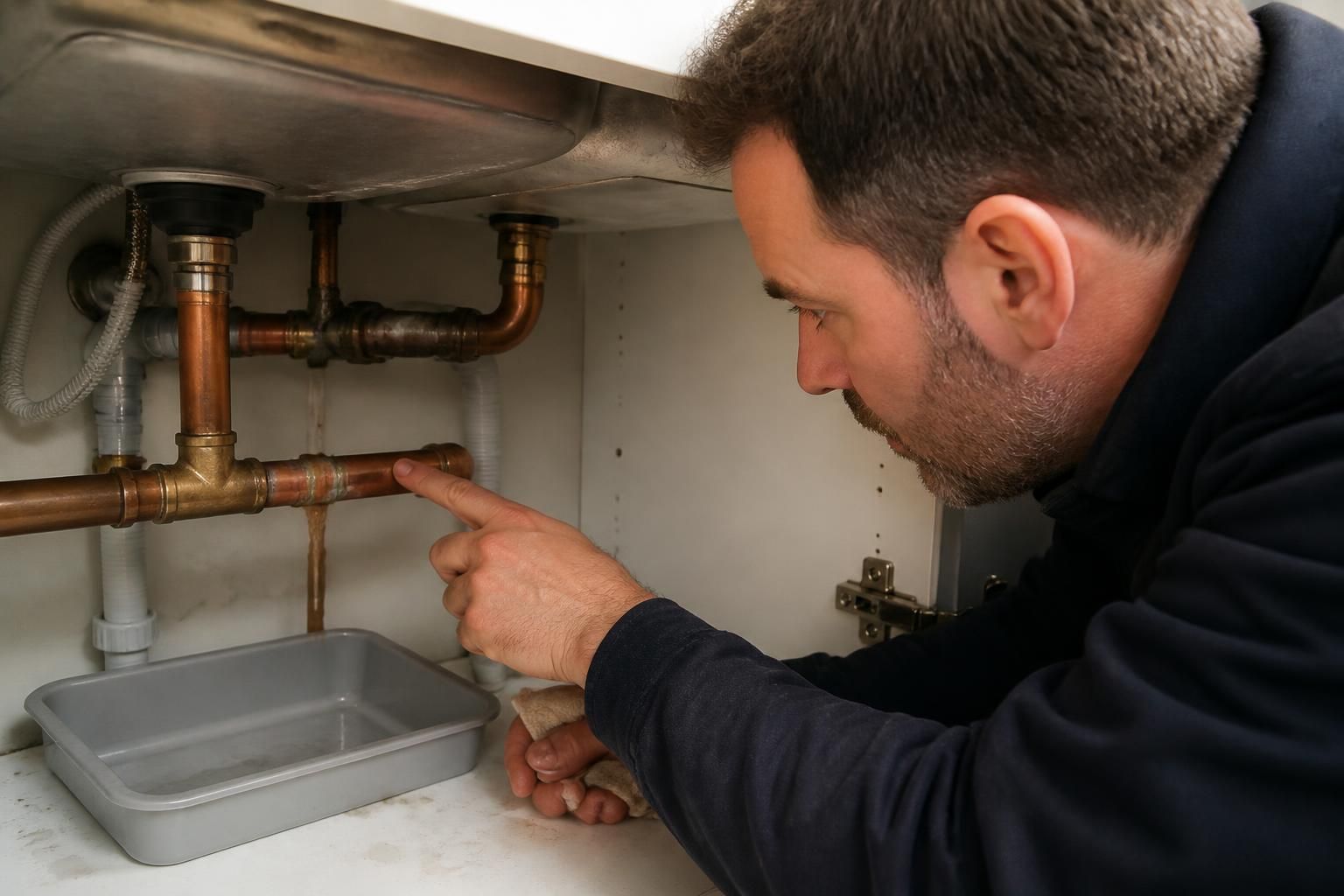
In many cases, the joint itself can be repaired while the surrounding copper pipe remains in place. Whether this is suitable depends on the type of joint, the reason it has failed, how accessible it is, and whether the copper around it is still sound.
The first step is identifying the joint and the source of the leak. Water may appear at a joint even when the original fault is nearby. For example, condensation, movement in the pipework, corrosion or a small split can allow water to track along the copper before it drips. The area should therefore be dried and inspected carefully before any repair is selected.
With a soldered joint, the water supply must be isolated and the pipe fully drained before work starts. A plumber can then inspect the fitting, remove any damaged solder or contamination, prepare the mating surfaces and remake the connection. Solder will not bond reliably to wet, dirty or heavily oxidised copper, so simply applying more solder over an existing leak is unlikely to provide a sound repair.
Compression joints are repaired differently. Once the pipe has been isolated, the nut and fitting can be checked for movement, damaged threads, a distorted olive or a poor pipe end. Depending on the condition, the connection may be reassembled correctly or the worn sealing component may be renewed. Excessive tightening is not a reliable solution and can damage the fitting or deform the pipe.
Some copper pipework uses push-fit connectors. These can be disconnected and inspected if the system and fitting allow it, but the pipe must be cut square and free from scratches, burrs or deposits before it is refitted. The connector’s internal seal and support components also need to be in suitable condition.
Replacing the whole pipe is more likely to be necessary when:
- the copper is pitted, weakened, visibly corroded or split;
- the pipe has been damaged by freezing, impact or previous work;
- the joint has failed because the pipe is under strain or poorly supported;
- the leaking area is concealed and cannot be safely accessed or tested; or
- there is more than one weak point in the surrounding pipework.
If the pipe is sound but the fitting is awkwardly positioned, access may still affect the repair method. Flooring, boxing-in or cabinets may need to be removed carefully, and any work involving heat requires protection from nearby timber, insulation and other combustible materials. A soldered repair should never be attempted while water remains in the pipe, because steam can form and prevent the joint from heating correctly.
After the work, the supply should be restored gradually and the joint checked under normal system pressure. The area should be dried and monitored for renewed moisture, while nearby surfaces should be checked for signs of hidden water damage. A professional assessment is advisable where the leak is inside a wall, ceiling or floor, where the isolation valve does not work, or where the cause is not clear.
A Birmingham plumber can assess the joint and explain whether a local repair is technically appropriate or whether replacing a larger section would provide the more dependable result. The key consideration is not simply stopping the visible drip, but restoring a properly supported, pressure-tight connection without leaving weakened copper or an underlying cause untreated.