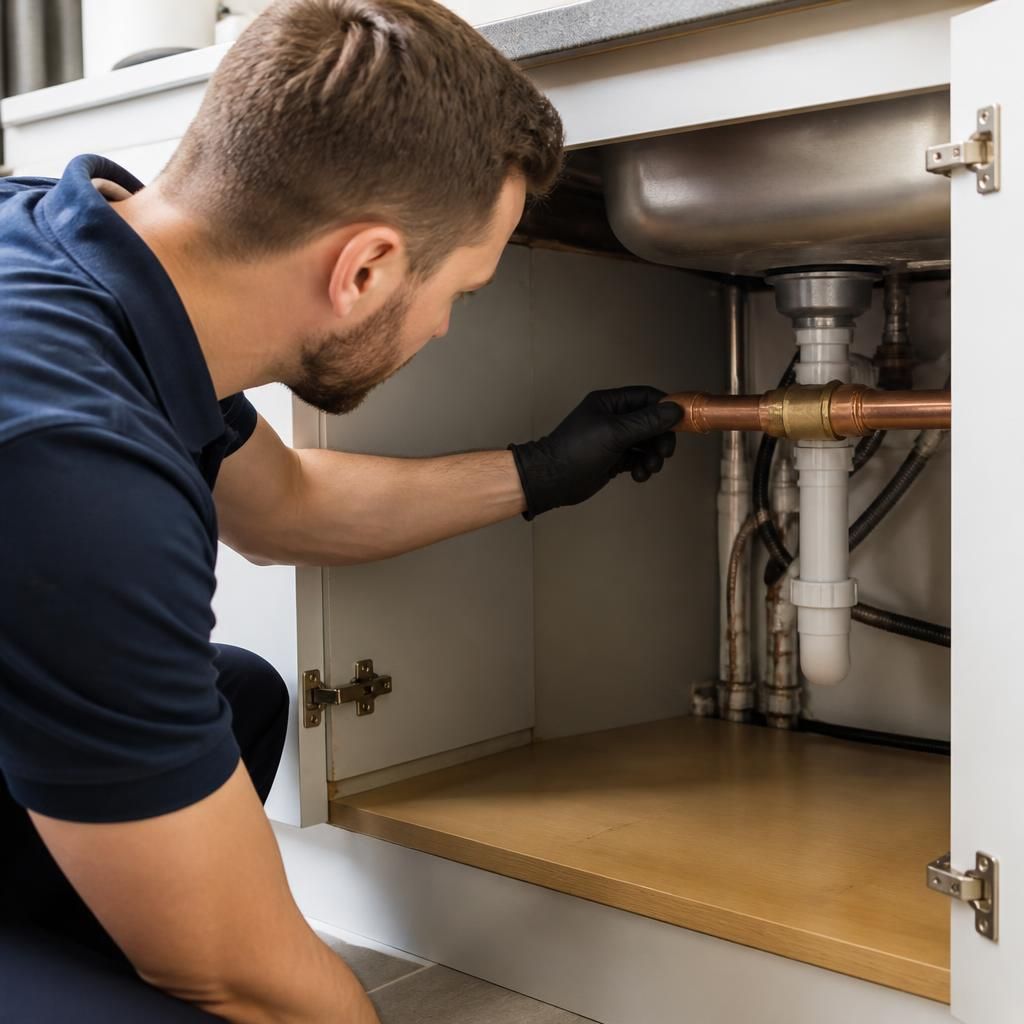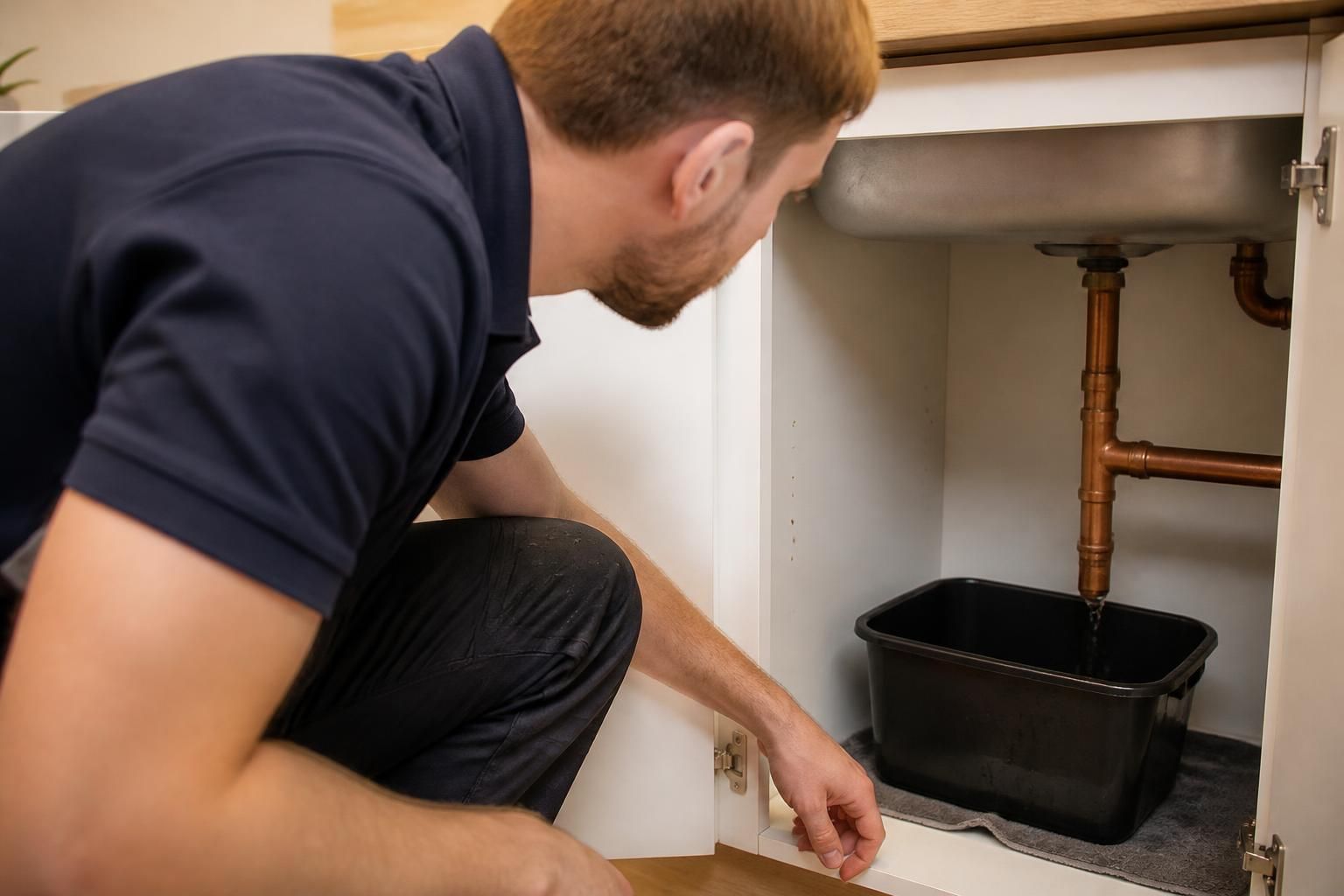
Before a copper pipe leak repair visit, focus on safety, access and useful information rather than attempting a permanent repair yourself. Preparing the area properly helps the plumber assess the damaged section, identify the cause and choose an appropriate repair method.
Check the area for electrical risks. Water near sockets, switches, appliances, boilers or other electrical equipment can create a serious hazard. Do not touch electrical fittings or wet equipment. Keep people away from the affected area and, if it is safe to do so, arrange for a qualified electrician to deal with any electrical concern separately.
Protect belongings and surfaces. Remove furniture, stored items and soft furnishings from around the pipework where this can be done safely. Place waterproof protection over flooring and nearby surfaces that cannot be moved. Avoid placing weight against exposed pipes, as this can worsen damage or disturb a joint.
Leave temporary repairs in place only if they are safe. If you have used a repair clamp or tape as a short-term measure, tell the plumber when they arrive and explain when it was fitted. Do not apply additional adhesive, solder or sealant immediately before the visit, because it can obscure the damaged area and make the condition of the copper pipe or joint harder to assess.
Gather relevant information. Make a note of:
- Any previous repair to the same pipe, joint or fitting
- Whether the pipe supplies a tap, radiator, toilet, washing machine or another appliance
- Any changes in water pressure, discoloured water or problems using the connected fixture
- Whether the pipe is visible, inside a cupboard, beneath flooring or behind a wall
- Any signs of staining, mould, lifted flooring or damage to plaster and decoration
Photographs taken before the area is cleaned or covered can also provide a useful record, particularly where the leak is intermittent and the affected surface has dried.
Arrange suitable access. Make sure the plumber can reach the relevant room, cupboard, loft space or service panel. Remove items that block inspection points, but do not dismantle boxing, flooring, fitted units or wall coverings unless this has been agreed in advance. If the pipe is concealed, explain where you believe it runs and identify any access restrictions.
Confirm permission where necessary. Tenants should notify their landlord or managing agent and check whether approval is required before repair work starts. Landlords should ensure the occupant knows when access is needed. Keep any maintenance records, previous invoices or details of building work available, as these may help establish how the pipe was installed and whether alterations could have affected it.
Finally, keep children and pets away from the work area and avoid using the affected fixture until it has been inspected. The plumber can then determine whether the fault is limited to a replaceable copper joint, requires a section of pipe to be renewed, or points to a wider plumbing problem.