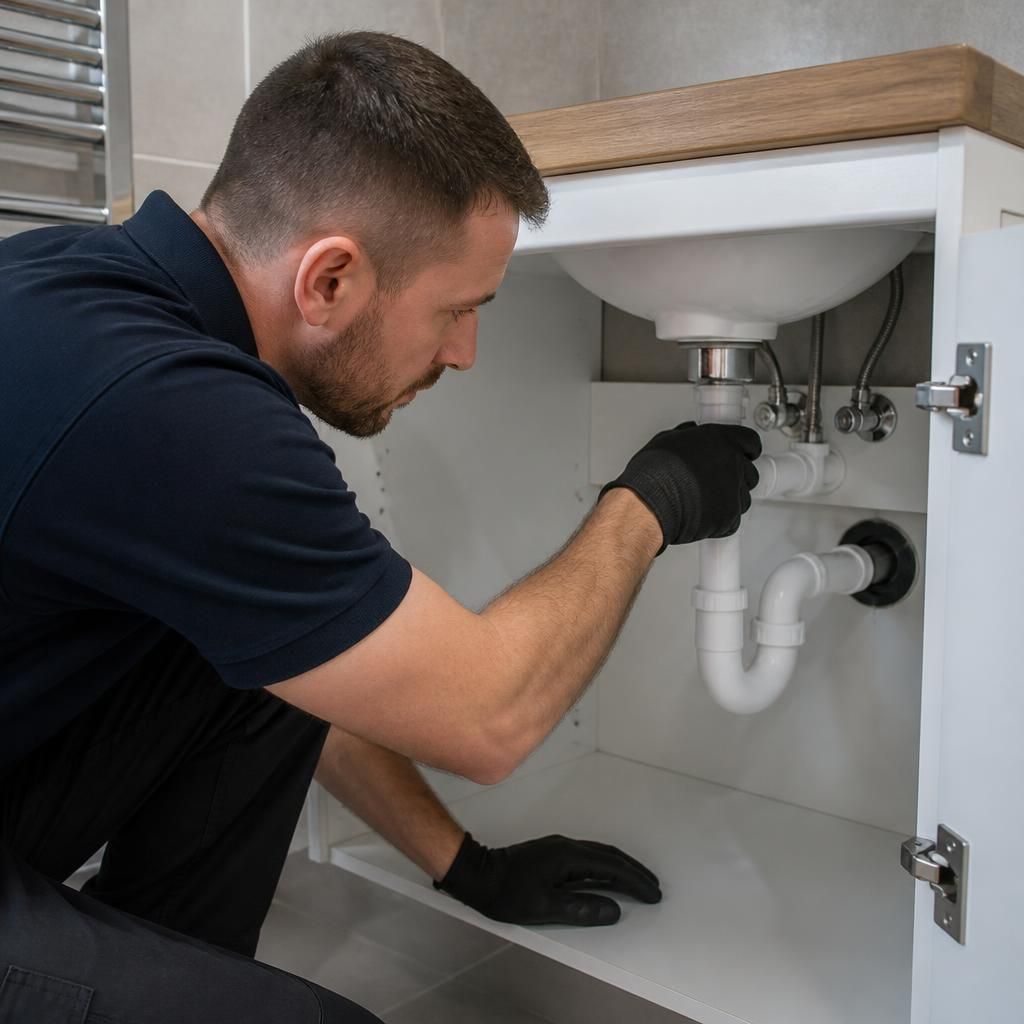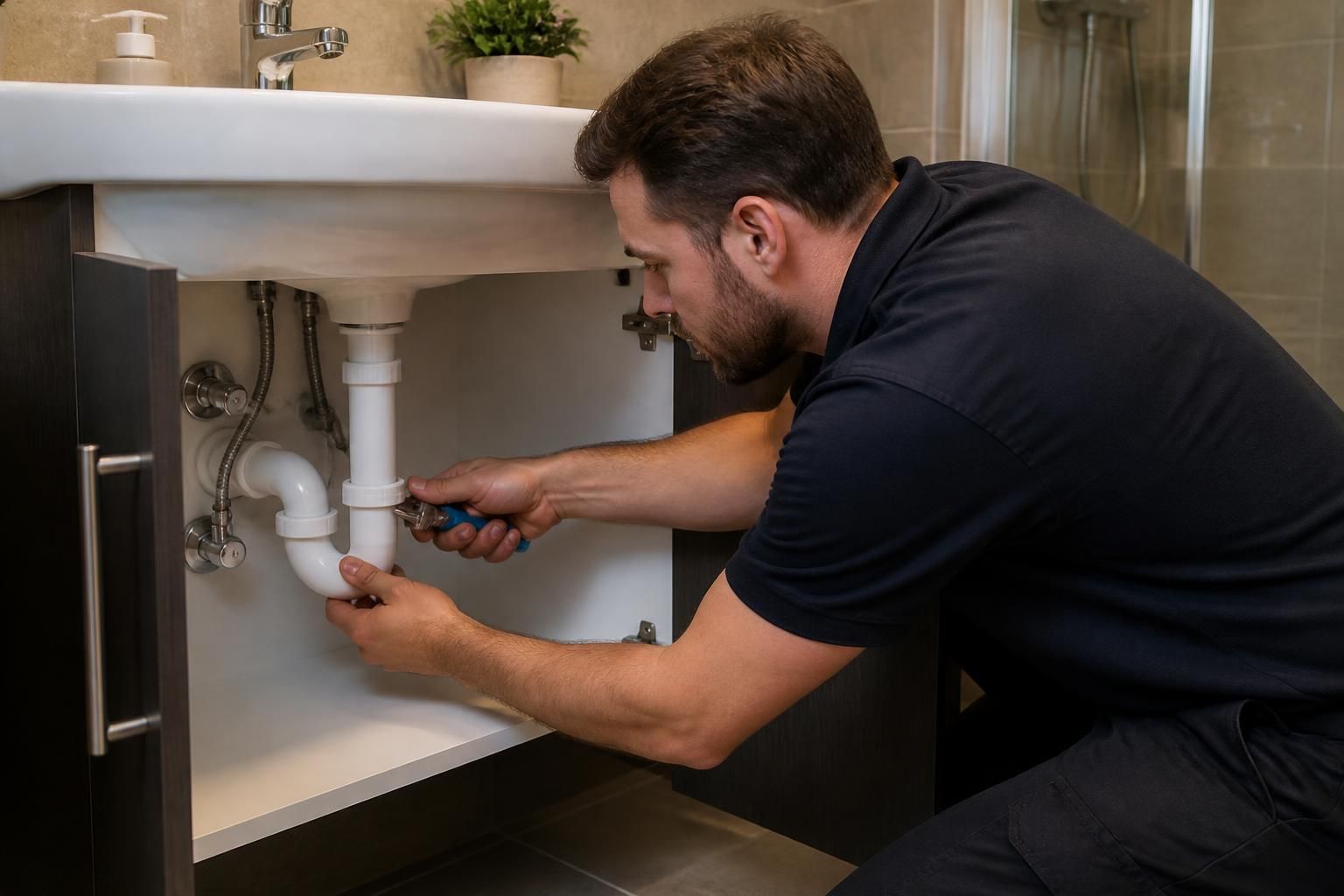
Under-sink leaks in bathrooms and kitchens can usually be repaired by tracing the water to its source, assessing the condition of the surrounding fittings and replacing or resealing the failed part. The repair method is broadly similar in both rooms, but the type of waste arrangement, pipework and nearby fixtures can affect the inspection.
In a bathroom, water may be coming from the basin waste, trap, supply connection or tap base. Small leaks can travel along the underside of the basin or inside the vanity unit, making the visible drip appear away from the original fault. A plumbing inspection should therefore include the tap connections, waste assembly, pipe joints and the point where the pipework enters the wall or floor.
Kitchen units often contain more equipment and stored items, which can restrict access beneath the sink. The leak may involve the sink waste, pipe connections, supply hoses or plumbing serving an appliance. Where a dishwasher or washing machine connection is nearby, each connection needs to be checked separately so that an appliance hose is not mistaken for a sink waste problem.
A typical repair involves:
- Removing stored items and protecting the cupboard or surrounding surfaces.
- Drying the pipework and checking each joint while the tap or connected appliance is used.
- Inspecting seals, threaded connections and pipe sections for movement, wear or damage.
- Replacing the defective fitting, seal or section of pipe where necessary.
- Running water through the sink and checking the repaired connections for further signs of leakage.
The extent of the work depends on whether the leak is from a serviceable connection or from a damaged fitting that has deteriorated. Tightening a loose joint may be sufficient in some cases, but forcing a connection can damage threads or distort a seal. Replacing a worn component is often more appropriate when tightening does not provide a reliable seal.
Moisture damage should also be considered. A persistent leak can affect the base of a kitchen cabinet, bathroom vanity, flooring or the wall behind the sink. Damp materials may need to dry fully before the area is closed up, and signs such as swelling, staining, mould or a musty smell should be reported during the inspection. Repairing the pipework addresses the source, but damaged surrounding materials may require separate attention.
If water is close to an electrical appliance or socket, avoid using the appliance and keep clear of the wet area until it is safe to do so. Place a container beneath an accessible drip, remove items that could be damaged and use the relevant isolation valve if you can identify it without forcing the handle. For concealed or continuing leaks, a professional inspection helps establish whether the problem is limited to the under-sink fittings or extends into the wall, floor or connected drainage.