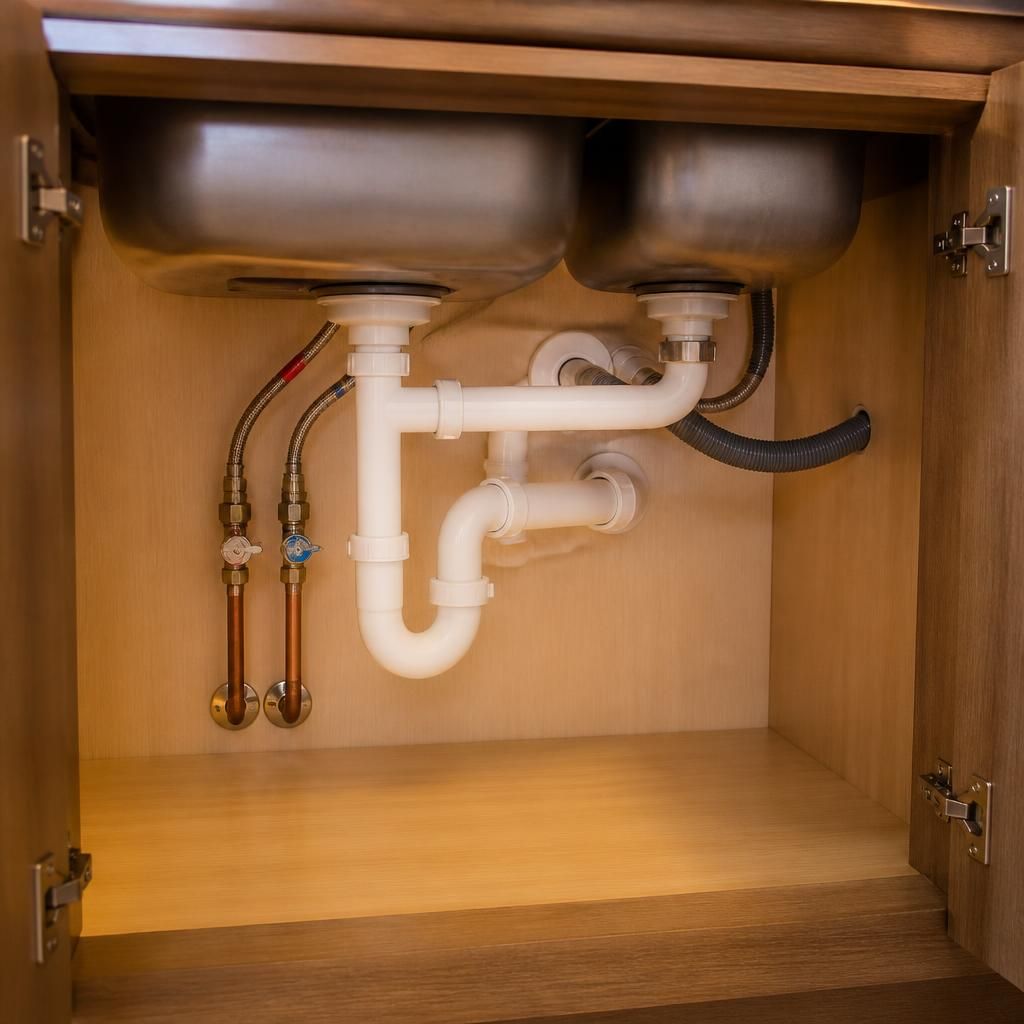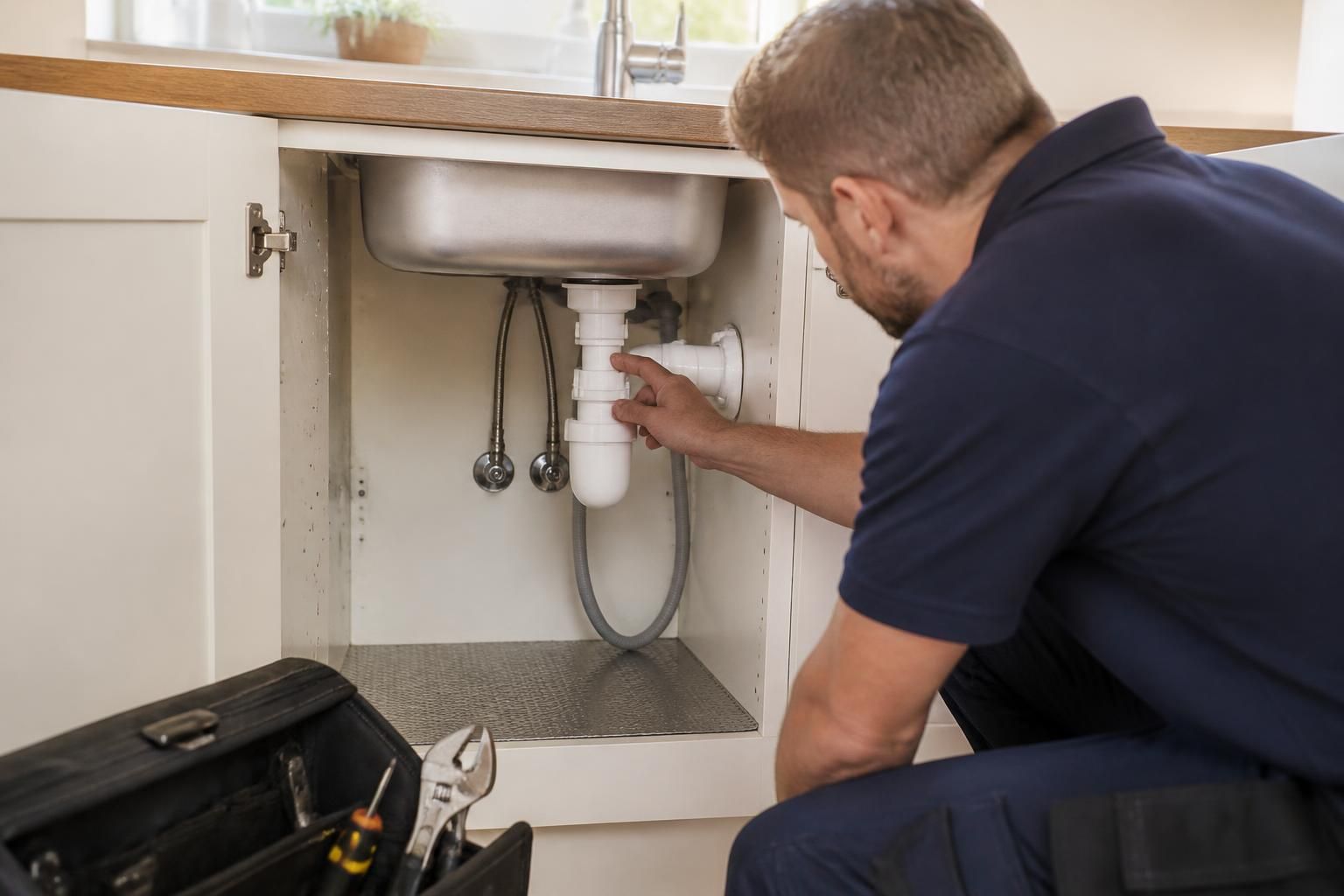
The access required depends on which part of the plumbing is leaking and whether the faulty connection can be reached without disturbing surrounding fittings. A visible trap, waste connection, flexible hose or isolation valve can usually be repaired from the front of the sink unit. More extensive access may be needed where pipework runs behind fixed panels, through the wall or beneath the floor.
During an inspection, a plumber will normally need to see the underside of the sink, the waste outlet, supply connections and nearby pipe joints. They may also check for moisture around the cabinet base, wall and adjacent units, because water can travel away from the original leak. This helps distinguish an active pipe leak from damage left by an earlier escape of water.
- Exposed pipework: Access to the visible joint is generally sufficient for tightening, resealing or replacing a small component.
- Pipework behind a removable panel: The panel may need to be taken off carefully to reach the connection and create room for tools.
- Built-in appliances or adjoining units: A dishwasher, washing machine or fixed cupboard can restrict access to supply and waste connections. Moving an appliance or removing part of a unit may be necessary, depending on its position.
- Concealed pipework: If the leak is within a wall, floor or inaccessible section of cabinetry, the repair may require a carefully sized opening or removal of a finished panel.
Not every leak requires the same type of work. A leaking compression joint or trap may only need a replacement seal or fitting. A damaged flexible connector may be replaced as a complete part. If the pipe has split, corroded or shifted, the affected section may need to be cut out and renewed, which requires enough space to make secure connections on sound pipework.
Access can also be affected by the condition of the cabinet. Swollen chipboard, fixed shelving, sealant, stored waste pipes and pipework passing through the back of the unit can make a straightforward repair more difficult. A plumber should explain before removing panels, appliances or finishes and identify whether making good is included in the proposed work.
If water is still escaping, close the accessible isolation valve for the affected supply where safe to do so, or use the property's main stop tap if the leak cannot be isolated locally. Protect the cabinet and floor from further water damage, but avoid dismantling pipework before it has been inspected. Ideal Plumbing Services can assess under-sink pipe leaks and advise whether the existing access is sufficient or whether a larger opening is justified.