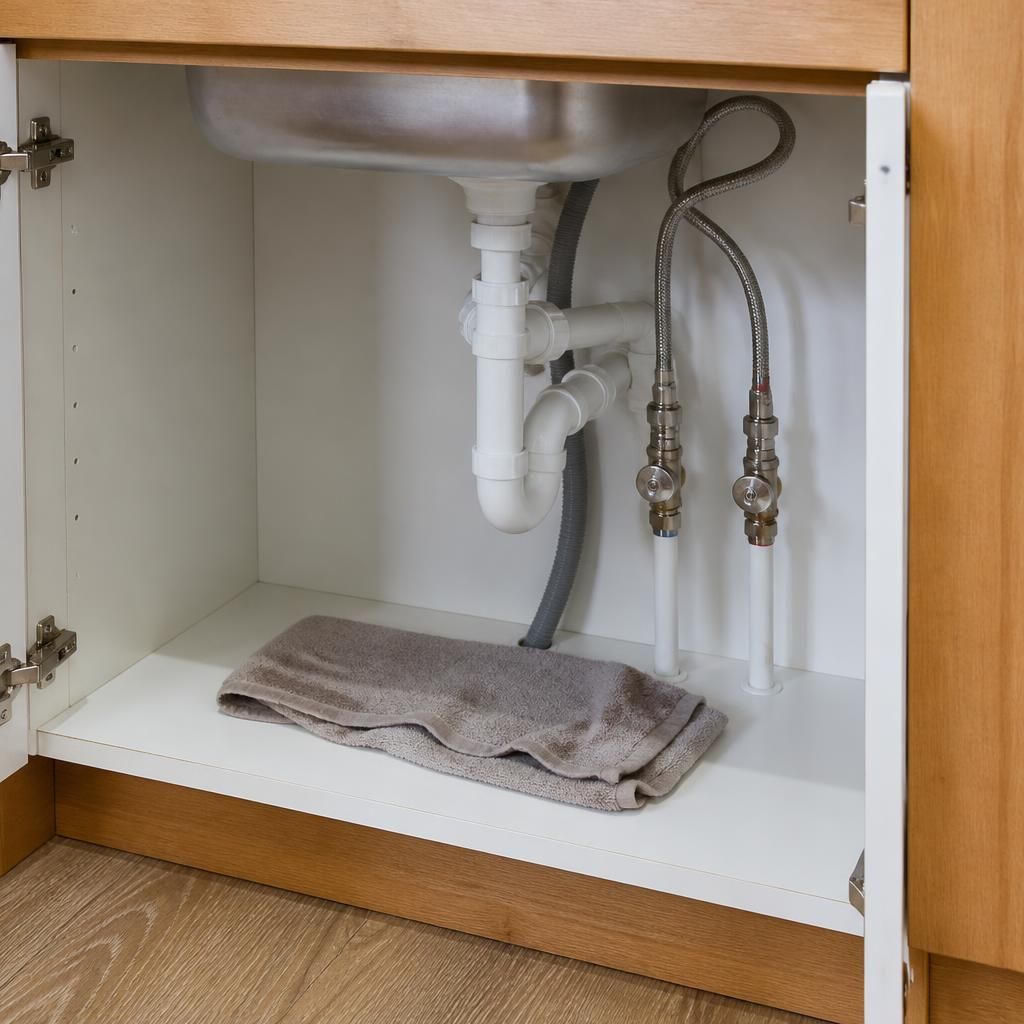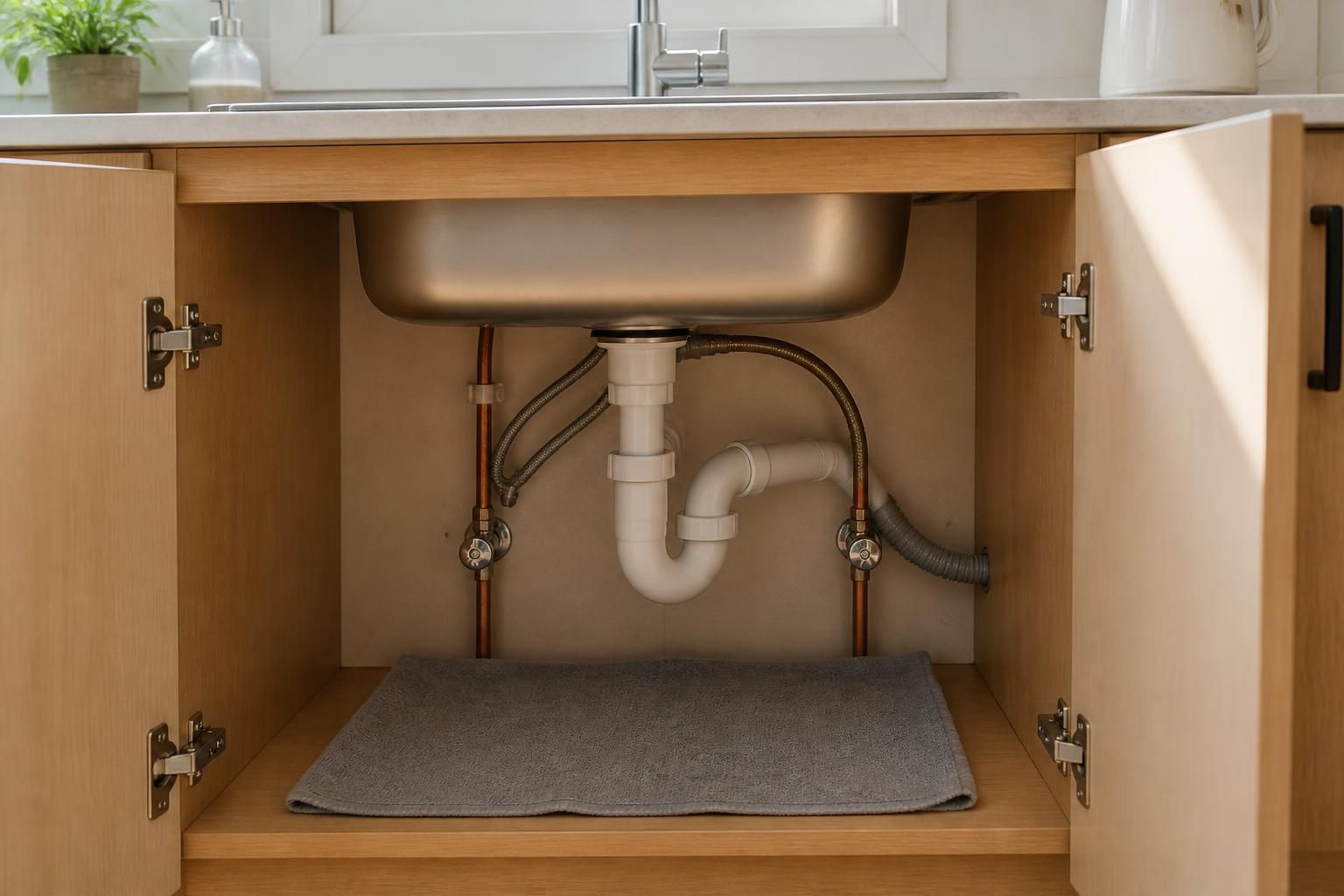
Before an under-sink leak inspection, stop using the affected sink, make the area safe, provide clear access to the plumbing and collect any useful information about the problem. These steps help the plumber examine the source without creating additional damage or disturbing evidence of the fault.
Make the area safe first. If water has reached a socket, appliance connection or other electrical fitting, do not touch wet electrical equipment. Keep people and pets away from the affected area and seek appropriate electrical assistance where necessary. Do not use the sink or any connected appliance until the pipework has been assessed.
Provide access beyond the cupboard. Clear objects from the floor in front of the sink and move nearby items that could obstruct inspection equipment. If the sink is fitted inside a kitchen unit or vanity cabinet, avoid dismantling panels, sealant or shelving unless this can be done without damaging the furniture. A plumber may need to inspect the waste trap, supply connections, isolation valves, flexible hoses, tap base and the pipework leading into the wall or floor.
Keep useful information available. Make a note of any previous repair, replacement or alteration around the sink, and mention whether the problem is associated with using the tap, draining the basin or running an appliance. If there is visible staining, swelling, mould or damage to the cabinet, photographs can help record its condition before inspection. Do not apply sealant, tape or adhesive over a joint before the plumber arrives, as this can conceal the original fault and make assessment more difficult.
Check for related signs without disturbing the fittings. Look at the underside of the worktop, cabinet base, skirting board and adjacent flooring for discolouration, lifting, soft timber or a musty smell. Water can travel along pipework or behind units, so the wettest visible point is not always the location of the leak. Report any signs beyond the cupboard, but avoid probing damaged materials or pulling pipes to test them.
Prepare access and practical details. Ensure the plumber can reach the property and the affected room, and arrange permission if you are a tenant or the property is managed by a landlord. If the sink is in a shared or commercial area, tell other users not to operate it during the inspection. Keep details of any visible property damage available so the inspection can distinguish the plumbing fault from secondary damage.
During an inspection, the plumber will usually examine the visible joints and fittings, look for traces of water, and assess whether the problem comes from the supply side, waste system, tap or a concealed connection. They may run or test individual components in a controlled way where it is safe to do so. The outcome of this assessment determines whether the repair involves tightening or replacing a connection, renewing a seal or fitting, or investigating pipework hidden behind a unit or wall.
For an accurate assessment, avoid attempting a temporary repair immediately beforehand. If the leak is beyond a simple visible fitting, a qualified plumbing inspection is safer than dismantling the cabinet or wall yourself. Ideal Plumbing Services provides under-sink leak inspection and repair support for homes across Birmingham and the West Midlands.