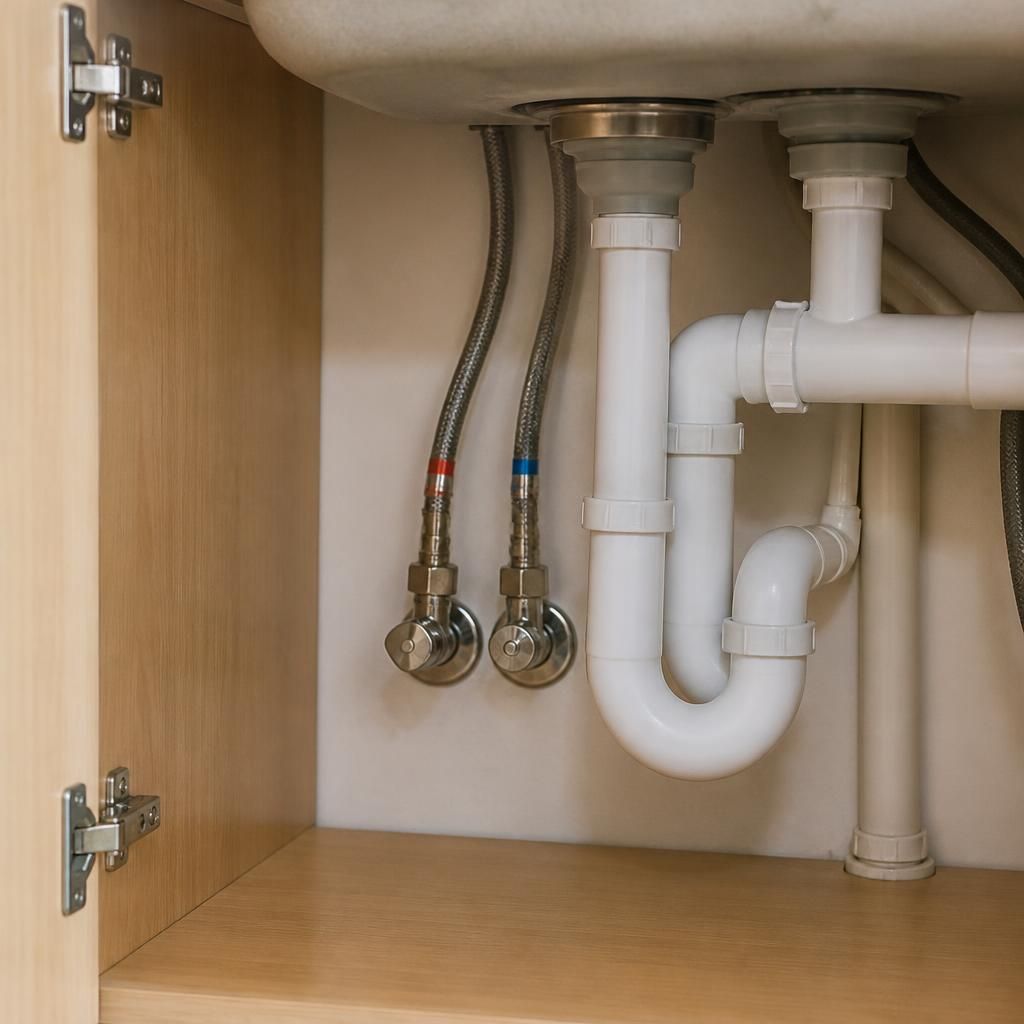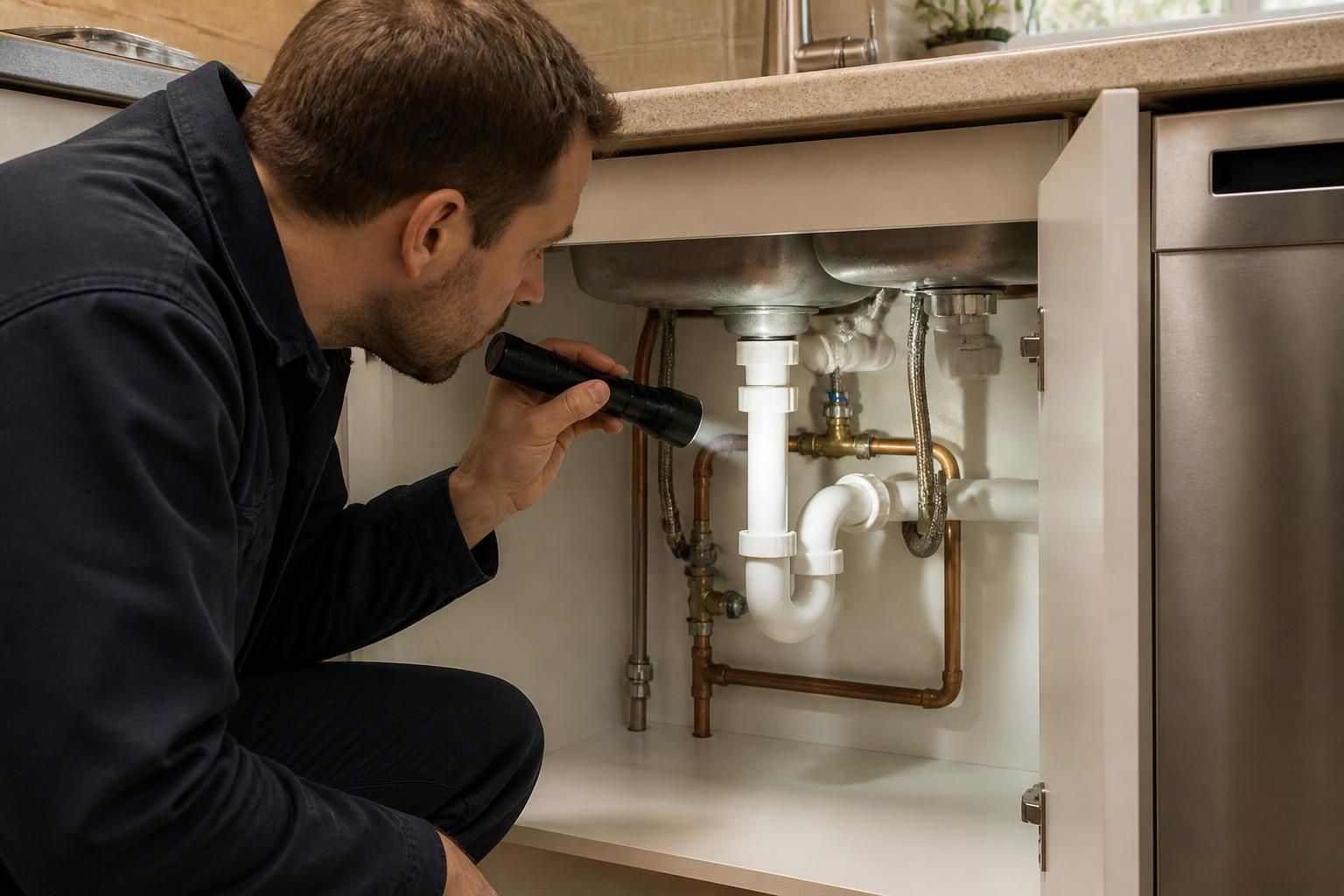
The most reliable way to identify a sink leak is to compare when it occurs with where moisture first appears. A leak from the pressurised supply side can continue while the sink is unused, whereas a fault in the tap body, waste fittings or drain connections is usually linked to operating the tap or emptying the basin. Tracing the first damp point is more useful than following the trail of water, which can run along cabinet surfaces and make the source appear elsewhere.
Check for these less obvious signs:
- Moisture inside the tap cabinet: Dampness at the back or sides of the cupboard may come from a small compression fitting, flexible connector or isolation valve. Look for water marks above the base of the cabinet, not just directly below the sink.
- Mineral deposits or green staining: White, chalky residue around a joint can indicate repeated evaporation from a slow leak. Green or blue deposits on copper fittings may show prolonged moisture and should not be treated as dirt alone.
- Swollen or softened cabinetry: A leaking connection may have been present for some time even if there is no active drip during inspection. Warped chipboard, peeling edging and a musty smell are signs that moisture may be entering the unit or surrounding flooring.
- Movement at the tap: If the tap body moves when operated, its mounting may have loosened. This can allow water to pass beneath the base and into the worktop or cabinet, even when the visible spout appears sound.
- Intermittent dampness: A very small leak may show only after the pipes have been under pressure for a while. A dry cupboard at one inspection does not rule out a problem, particularly if there are recurring marks or odours.
To investigate safely, remove stored items from the cupboard and use a dry piece of kitchen roll around each accessible fitting. Paper often reveals a small amount of moisture more clearly than looking for a visible stream. Check one area at a time, then leave the paper in place briefly while the tap is operated and the basin is emptied. Avoid wrapping your hand around a joint or tightening a nut by force, as this can disturb a seal or damage a plastic fitting.
You can also carry out a simple isolation check. Close the small isolation valve serving the tap, if one is fitted, and monitor whether the dampness continues. If the moisture stops, the fault is likely on the tap's supply side or within the tap itself. If water remains or appears after the basin is used, the problem may involve the waste assembly, trap or another connection. Do not rely on this test where the valve is seized, damaged or difficult to identify; use the main stop valve only if you know how to operate it safely.
Water that has reached the underside of the worktop, wall, flooring or electrical equipment needs particular care. Keep the cabinet ventilated, remove standing water and avoid using the affected fitting until the source has been established. Persistent dampness can damage timber-based units and encourage mould, while a leak near electrical connections creates an additional safety concern.
A plumber should inspect the sink where the source cannot be isolated, the leak returns after a basic adjustment, or there is corrosion, cracked pipework, a damaged valve or evidence of concealed water damage. Professional diagnosis is also appropriate where several fittings appear damp, because water may be travelling from a higher connection or from pipework behind the cabinet rather than from the visible tap or trap.
When arranging an inspection, note whether the moisture appears during tap use, draining, or while the sink is untouched. A photograph of any staining and details of when the problem was first noticed can help distinguish a tap fault from a pipe or connection leak and reduce unnecessary dismantling.